




 Parenting Guide


 Child Health & Growth


 Learning & Skills Development


 Food & Nutrition


 Bournvita





Introduction
Iodine deficiency in children can affect thyroid hormone production, which is important for normal growth and brain development. Because the body cannot make iodine, it must come from the diet. Signs that may raise concern include unusual tiredness, difficulty concentrating, slower growth, or swelling around the neck, although these symptoms can have many other causes.
Getting enough iodine matters, but more is not necessarily better. A balanced diet that includes iodine-rich foods and appropriately uses iodized salt can help children meet their needs without relying on unnecessary supplements.
Understanding Iodine Deficiency in Children
Iodine is needed to make thyroid hormones, which regulate metabolism and support brain and bone development. Severe deficiency during pregnancy can also affect the developing baby's brain, making adequate iodine particularly important for pregnant and breastfeeding women.
How Much Iodine Do Children Need?
Current NIH recommended amounts are:
| Age group | Recommended iodine intake |
| Birth–6 months | 110 mcg/day* |
| 7–12 months | 130 mcg/day* |
| 1–8 years | 90 mcg/day |
| 9–13 years | 120 mcg/day |
| 14–18 years | 150 mcg/day |
These infant values are Adequate Intakes rather than RDAs. Pregnant teens and women need 220 mcg/day, while breastfeeding teens and women need 290 mcg/day according to NIH; WHO recommends 250 mcg/day during pregnancy.
When iodine intake is too low, the thyroid may not produce enough hormones. Iodine deficiency can contribute to goitre and hypothyroidism and, when severe during pregnancy, can cause serious problems with a child's growth and intellectual development.
The good news is that iodine can be obtained from several everyday foods. Here are some natural iodine-rich foods and fortified options that parents can include in age-appropriate portions.
Best Iodine-Rich Foods for Kids
Iodine content can vary considerably between foods and even between different varieties of the same food. Seafood, dairy, eggs, seaweed, and iodized salt are among the better-known sources.
Seaweed
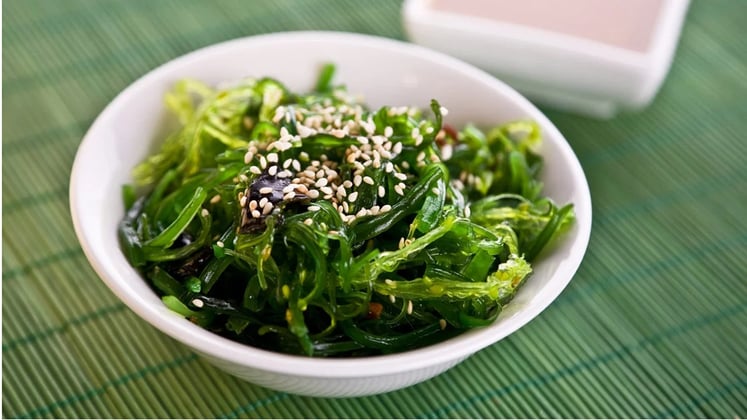
Seaweed is one of the richest natural sources of iodine, but its iodine content can vary dramatically depending on the type.
Kombu: Can contain extremely high amounts, with some products reaching about 2,984 mcg/g.
Wakame: Around 66 mcg/g in the figures provided.
Nori: Roughly 16–43 mcg/g in the cited range.
Seaweed can be added in small amounts to salads, soups, or other dishes. Because some varieties contain far more iodine than children need, especially kombu, portion control is important. Avoid giving children large amounts or concentrated seaweed/kelp supplements unless advised by a healthcare professional.
Seafood
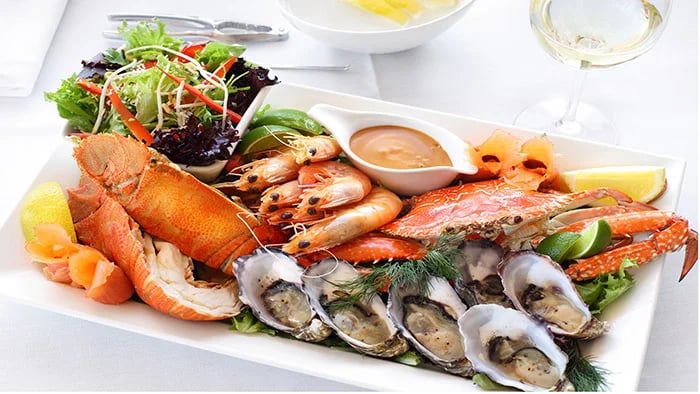
Fish and seafood are useful sources of iodine, along with protein and other nutrients. NIH lists cod, oysters, shrimp, and other seafood among good iodine sources.
Approximate examples include:
- Cod, 3 oz: about 146 mcg
- Oysters, 3 oz: about 93 mcg
- Shrimp, 3 oz: about 35 mcg
Serve age-appropriate portions of properly cooked seafood. For children, choose fish according to local food-safety guidance and vary the types of fish offered to limit exposure to mercury. Avoid routinely serving high-mercury fish such as swordfish, shark, and king mackerel; follow current local guidance for tuna portions.
Iodized Salt
Iodized salt is one of the simplest ways to add iodine to household meals. The NIH lists about 78 mcg of iodine in ¼ teaspoon of iodized table salt, although the actual amount varies by product and country.
Use salt in moderation and check the label to make sure it is iodized. Rock salt, Himalayan salt, and many specialty or sea salts are not necessarily iodized and should not be assumed to provide iodine.
Dairy
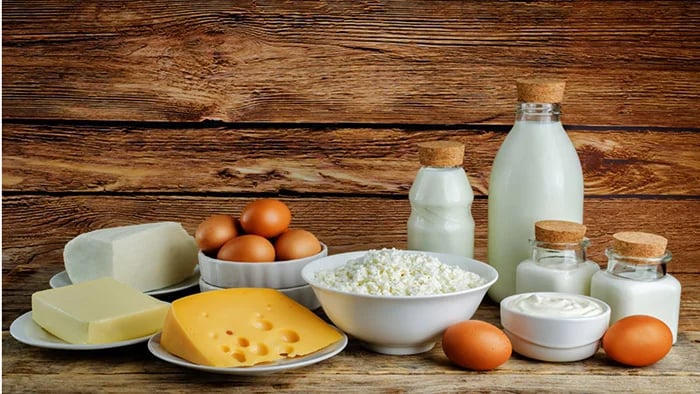
Milk, yogurt, and cheese can provide iodine, although the amount varies between products.
Approximate examples include:
- Milk, 1 cup: about 84 mcg
- Greek yogurt, ¾ cup: about 87 mcg
- Cheddar cheese, 1 oz: around 12 mcg
Serve dairy as milk with breakfast, yogurt with fruit, or cheese in sandwiches and other meals.
Meat, Poultry, and Eggs
Eggs provide some iodine, while meat and poultry can contribute to overall nutrition even though their iodine content is generally less predictable.
- Hard-boiled egg, 1 large: about 31 mcg
- Liver: can provide iodine along with other nutrients, but the amount varies.
Eggs can be served boiled, scrambled, or added to an omelette. Meat and poultry can be included as part of a varied diet.
Nuts
Nuts and seeds are not major iodine sources, but some can contribute small amounts.
- Sunflower seeds: about 6.8 mcg
- Walnuts: around 3.1–7.5 mcg/100 g
- Pine nuts: around 2–2.5 mcg
- Hazelnuts: around 0.2 mcg
They can be offered as snacks or added to porridge and homemade mixes, but they should not be relied upon as the main source of iodine.
Prunes
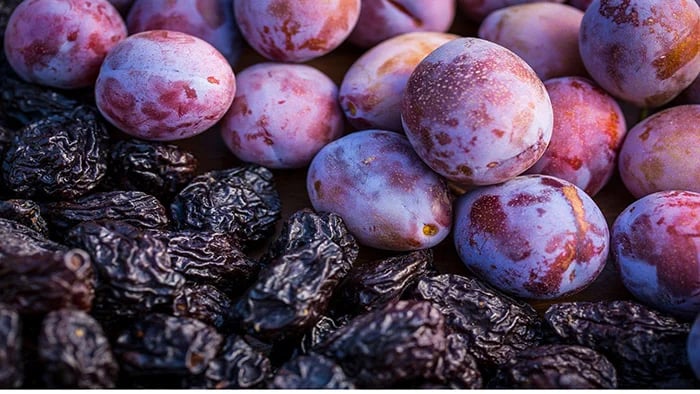
Prunes can contribute a small amount of iodine and are also a source of fibre. The source material cites about 13 mcg in five dried prunes.
They can be chopped into a trail mix, blended into a smoothie, or served as part of a snack. Because prunes can have a laxative effect, avoid giving large amounts to children, especially if they already have loose stools.
Signs Your Child May Have an Iodine Deficiency
Signs of iodine deficiency can overlap with many other nutritional or health conditions, so parents should not try to diagnose a deficiency based on symptoms alone.
Possible signs or consequences include:
- Tiredness or low energy
- Difficulty concentrating or changes in school performance
- Slower growth or development
- Dry skin
- Swelling in the neck, which may indicate an enlarged thyroid or goitre
- Symptoms linked to low thyroid hormone, such as feeling unusually cold or sluggish
Goitre is one of the more visible signs associated with iodine deficiency, while iodine deficiency can also affect mental development and school performance when severe.
If you notice persistent symptoms, swelling in the neck, or concerns about your child's growth or development, speak with a paediatrician rather than starting iodine supplements on your own.
Conclusion
Iodine is particularly important during pregnancy, infancy, and childhood because thyroid hormones support brain and physical development. Pregnant and breastfeeding women also need special attention to iodine intake because their requirements are higher.
For everyday coverage, include suitable iodine-rich foods such as dairy, eggs, seafood, and small amounts of seaweed, while using appropriately iodized salt in moderation. If you suspect iodine deficiency in children, consult a paediatrician before considering iodine supplements, as excessive iodine can also affect thyroid health.
Frequently Asked Questions
What foods are highest in iodine for kids?

Seaweed can contain very high amounts of iodine, while seafood, dairy, eggs, and iodized salt are more practical everyday sources. Because seaweed levels vary greatly, children should have only age-appropriate portions.
Is iodized salt enough to meet a child's daily iodine needs?
Iodized salt can be an important source of iodine, but the amount depends on the product and how much is consumed. Children should not be given extra salt simply to increase iodine intake; a varied diet is preferable.
Can too much iodine be harmful for children?
Yes. Excessive iodine can affect thyroid function and may cause problems similar to deficiency. Children should not use high-dose iodine or kelp supplements unless recommended by a healthcare professional.
Her love for storytelling began with reading her grandfather’s speeches, where Tarishi saw the power of words in creating lasting memories. Combining her passions for food and writing, she has turned her life into a fulfilling path of sharing stories that celebrate flavours and how food brings communities together.
The views expressed are that of the expert alone.
Popular Topics