




 Parenting Guide


 Child Health & Growth


 Learning & Skills Development


 Food & Nutrition


 Bournvita





Introduction
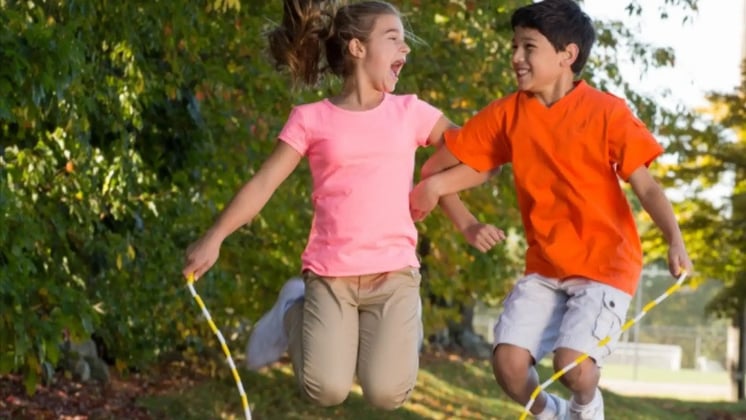
Nearly every kid has grown up playing with the jumping rope or at least trying it, be it during recess or sports practice. While the activity is engaged in a fun manner by kids, athletes train and practice with jumping ropes to build their endurance and get some cardio. For parents, jumping rope is like nostalgia, except it was often the basic borrowed clothesline that many naughty kids used to skip and jump for hours at a stretch. But kids nowadays often find more pleasure in video games than outdoor ones. This is a result of their busy lifestyles, which afford them little leisure, most of which is sedentary. Therefore, it is time to bring jumping ropes back into your kid’s life. Physical activity offers multiple health benefits to your kids, ranging from enhanced stamina and muscle endurance to improved joint mobility and a full-body workout. Wondering how to make this physical exercise appealing to your kid? Then read on to find out.
What Is Jump Rope Exercise and Why Is It Popular for Kids?

Rope skipping consists of rhythmic jumping over a rope swung regularly under the feet. Every jump takes perfect timing, coordination between the two sides of your body, and the ability to anticipate and adjust your footwork. The skill becomes the automatic movement of the fluid through constant practice.
Benefits of Jump Rope Exercises for Kids
Improves Cardiovascular Fitness and Stamina
Ten minutes of skipping rope continuously is the same as running at an 8-minute mile pace. Skipping is the most practical stamina exercise due to its time efficiency.
Supports Full-Body Workout and Muscle Strength
A jump-rope full-body workout works your calves, quadriceps, hamstrings, glutes, and core simultaneously. Rotational rope control also engages the shoulders and forearms. This total-body involvement produces balanced muscle development that no single-movement activity can match. Kids build all-around strength with no gym equipment or facilities whatsoever.
Helps in Weight Management and Fat Burn
Jump rope weight-loss support burns about 10 to 15 calories per minute. Few childhood physical activities burn calories at a similar rate with equal ease. Improvements in cardiovascular fitness consistently increase total daily energy expended in all activities. Healthy weight is a natural consequence of better fitness, not of isolated caloric arithmetic.
Enhances Coordination, Balance, and Agility
Performing a steady skipping exercise requires accurate timing and bilateral arm-leg coordination. Proprioceptive awareness and quick footwork adjustment grow together with practice. Kids who jump rope regularly consistently show better bilateral coordination in physical education. Children who skip regularly show measurable improvements in reaction time and agility.
Boosts Mental Focus and Reduces Stress
To skip rope all the time, one needs to maintain continuous rhythmic concentration throughout the process. The physical attention training naturally translates into the development of academic focus. The successful jump’s meditative rhythm engages the present moment through movement, thereby reducing anxiety. Skipping activity disrupts the rumination cycles that anxious children experience when sedentary.
Easy, Affordable, and Portable Exercise
A good children’s jump rope is priced between 100 to 500 rupees in Indian markets. It will easily fit in a school bag and is maintenance-free. A whole session fits into any space of about 3 by 3 metres. Productive daily practice does not require a partner, coach, or group participation.
Beginner Jump Rope Exercises for Kids
Regular Jumps (Basic Skipping Exercise)
The skipping exercise starts with the basic two-foot jump over the rope at the same time. Both feet go over the rope together and land just before the next jump. First, children should learn the footwork without the rope, then gradually add in the rope part.
Jumping Jacks with Rope
Jumping jacks with the rope are moving the feet side to side at the same time as the rope timing. This builds lateral agility and the basic rope coordination skill needed later on. Kids who learn this variation generally move on to advanced techniques much faster overall. The broader footwork tests spatial awareness in a way that jumping alone does not.
Alternate Foot Skips
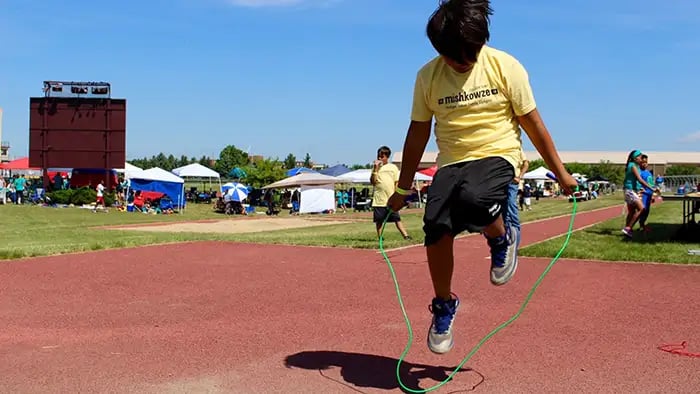
Alternating foot skips reduce the bilateral demand of the regular two foot jump. The child goes over the rope, one foot and then the other alternately. Many children find this easier to learn at first before two-foot timing consolidates.
Intermediate Jump Rope Workouts to Build Stamina
Running in Place with Rope
Skipping workout at intermediate level is running footwork with constant rope swing. The rope moves steadily along while the feet move back and forth in a running motion. This is a big demand on your cardiovascular system, and more than just basic jumping. This variation directly contributes to the development of advanced rope skill by developing footwork coordination.
Butt Kicks
Rope butt kicks involve alternating heel to butt movement while keeping time. Hip flexor stretch and hamstring activation with a coordination demand at the same time. This one intermediate variation works well for both mobility and coordination. Children who master butt kicks typically demonstrate greater hip mobility during physical activity.
High Knee Jumps
High knee jumps build hip flexor strength, core stability and explosive leg power. The rope timing component turns a simple plyometric into a true skill activity. This is one of the highest-value intermediate stamina exercise variations because it involves multiple simultaneous physical demands. This variation builds core strength improvements that transfer to athletic performance in every sport.
Heel Taps
Heel taps are a specific type of skipping jump that land on the heel of a foot. All the pressure is accumulated in your kids’ heels, benefiting ankle control, weight transfer mechanics, and proprioceptive awareness. Most sports require these qualities in children to enable dynamic athletic movement. This variation yields coordination dimensions that cannot be solved solely by regular jumping practice.
Advanced Jump Rope Exercises for Athletic Kids
Double Unders
Double unders are when the rope passes under the feet twice in one jump. It requires greater jump height, rope speed, and timing precision simultaneously. This is the most practiced advanced jump rope drill technique in athletic training. Double unders are a staple in the communities of boxing, CrossFit, and competitive skipping.
Criss-Cross (Feet Xs)
Criss-cross skipping involves crossing feet during the jump in alternate lateral directions. Hip rotation control, lateral movement coordination, and spatial awareness all develop at the same time. This is visually impressive for children to do, and really motivating to work at. The lateral coordination benefits carry over measurably to athletic agility in multiple sports.
High-Speed Skipping Routine
Maximum speed intervals of fifteen to thirty seconds are effective in developing explosive cardiovascular power. The high-speed skipping requirement recruits fast-twitch muscle fibers. This is the most accessible high-intensity interval training format for children. Equipment needs and space requirements are the same as for basic beginner jumping sessions throughout.
Fun Jump Rope Games for Kids
Group Skipping Challenges
Long rope games bring cardiovascular benefit as well as social engagement and competitive motivation. Two turners swing, and multiple children take turns jumping in the rope. Coordination and timing are challenged by the simultaneous addition of participants, the calling of signals, and the execution of moves. Besides competition, social cooperation also makes group games more motivating than individual practice all the time.
Timed Jump Rope Competitions
Personal best timed challenges provide intrinsic motivation for self-improvement throughout the session. Children count the number of jumps in a row before a miss, or count within sixty seconds. The format of this competition keeps the kids’ jump rope games’ practice going for weeks of steady effort. No need for outside prizes or competitive rivals for real motivation here.
Rhythm-Based Skipping Games
Jump rope rhymes combine the timing of jumping with spoken words or music. Cognitive-physical integration renders rhythmic formats highly engaging for musically sensitive children The combination of physical practice, counting challenges, and musical tempo adds educational value. These games encourage voluntary participation for longer periods than pure athletic practice.
Sample Jump Rope Workout Routine for Kids
Beginner Routine (5–10 Minutes)
Jump rope routine for beginners. Alternating 30 seconds of jumping with 30 seconds of rest. You’ll do five to eight sets, which is three to four minutes of actual jumping. This low volume approach builds technique and coordination without overdoing it. This consistent approach allows children to be competent with ropes in two to three weeks.
Intermediate Routine (10–15 Minutes)
Intermediate level jump rope workout continues with continuous jumping intervals of one minute. There are thirty-second rest periods between each working interval during the session. The session uses two to three different jump styles to develop different physical qualities. The total jump time is always eight to ten minutes and is a great cardiovascular workout.
Advanced Routine (15–20 Minutes)
The advanced jump rope routine is three-minute long jump rounds during the workout. The one-minute rest separates each high-intensity working interval quite well. 3 to 4 variations with double unders that total twelve to fifteen minutes of jumping. This method consistently develops cardiovascular conditioning comparable to sustained running.
Safety Tips for Jump Rope Exercises
Right Surface and Footwear
Practicing on a smooth resilient surface such as wood flooring or firm grass. Concrete and tile floors do not provide enough cushioning to collect the harmful repetitive impact. Supportive athletic shoes with ankle support and forefoot cushioning dampen impact loading. All children should always refrain from barefoot jumping on hard surfaces.
Warm-Up Before Skipping
Ankle circles, calf stretches, light jogging, shoulder rotations get the tissue in the right place. A five-minute warm-up before jump rope exercises always minimizes the risk of injury. Calf and Achilles tissues are especially prone to injury if not warmed up properly. Most rope injuries are caused by jumping cold tissue under high sudden load demands.
Avoid Overtraining
Jumpers who are new to the sport should start with sessions of ten to fifteen minutes only. As conditioning develops, duration increases by no more than 10% per week. Skipping rope continuously stresses the calf and Achilles, which quickly accumulates in tissue not conditioned to it. The most important safety principle for the new practitioner is gradual progression.
Proper Rope Length and Technique
The rope should reach to the armpits when standing in the middle of the rope. Too long a rope results in inconsistent timing and frequent, unnecessary tripping during practice. Too short a rope forces one into a cramped posture, reducing efficiency and increasing the frequency of trips. Proper sizing allows for the relaxed stance that proper technique requires at all times.
Common Mistakes Kids Make While Skipping Rope
Jumping too high
Too much jump height wastes energy and does not help the rope clearance requirements at all. Immediately, their timing improves when they are taught to jump just enough to clear the rope. Appropriately low jump heights dramatically improve endurance over longer sessions. Height controlled properly always improves, together with efficiency and rhythm.
Incorrect posture
Hunched shoulders, forward head position, and bent knees all greatly reduce jumping performance. Over time, poor posture under load can lead to compensation patterns that result in musculoskeletal discomfort. Emphasize upright posture, a neutral spine, and relaxed shoulders from the very beginning. Kids naturally find the correct position of the head and spine by looking forward during practice.
Using arms instead of wrists
Full arm rotation reliably produces inconsistent rope speed and early shoulder fatigue. Learning wrist rotation while keeping the upper arms relatively still speeds skill development. When children switch from arm to wrist rotation, endurance across sessions improves immediately. This one correction gives the biggest immediate technique improvement most beginners experience.
Skipping on hard surfaces
The joints take a beating over the course of a workout on concrete, tile, and other hard, uneven surfaces. Proper footwear reduces, but does not eliminate, impact loading on hard surfaces. It matters to get a consistent indoor floor or outdoor grass habitat from the start. Among the most common preventable injuries seen are overuse complaints from hard-surface jumping.
How to Make Jump Rope a Daily Habit for Kids
Combine with playtime
The use of a skipping rope is natural and voluntary when it is part of the daily outdoor play. Play-framed activity never generates the resistance that scheduled exercise obligations do. Exercise that’s driven by play, rather than instruction, feels different. Kids who skip in play settings come back on their own, without needing parents to remind them to.
Reward-based consistency
Tracking weekly personal bests provides positive reinforcement that sustains daily practice. Visual completion charts and recognition of milestones for continuous sustained jumps encourage children. Skill-based progression goals keep the intrinsic motivation, which keeps jump rope exercises practiced.
Short, fun routines
It’s much better to do five to ten minutes a day, consistently, than to do longer sessions on an off day. The jump rope workout habit is best established with short, consistent sessions, and this will offer better long-term results. Children who want to practice every day do it on their own without constant encouragement from parents.
Conclusion

Jump rope workouts combine cardio fitness, strength, coordination, and genuine fun all in one. A single jump rope is a lifelong fitness tool that costs nothing extra to use. Awkward at first but with consistent practice everyday it becomes a confident fluid skill in weeks. One of the best physical investments a child can make during his or her developing years is the jump rope workout habit developed in childhood.
Frequently Asked Questions
Is skipping rope good for kids daily?

Skipping exercise is best positioned as fitness development for healthy body composition and physical activity.
How long should kids do jump rope exercises?
Jump rope exercises should be practiced for five to ten minutes daily for beginners. The move to fifteen to twenty minutes is gradual as fitness and skill improve.
Does skipping help in weight loss for kids?
With just weeks of regular practice, school-age children can experience measurable improvements in weight loss.
What is the best age to start jump rope?
Bilateral coordination for basic skipping rope skills generally develops between 5 and 6 years of age. Most five-year-olds are reasonably suited for simple two-foot jumping with a slow-swinging rope.
Can jump rope improve stamina?
Rope skipping is one of the best tools for stamina exercises for kids. Skipping continuously stresses the aerobic energy systems that are necessary for the development of stamina.
Kaushiki Gangully is a content writing specialist with a passion for children's nutrition, education, and well-being. With more than five years of writing experience and a science-based background, she provides nuanced insights to help families raise happy, healthy kids. Kaushiki believes in making learning and healthy eating fun, empowering parents with practical, easy advice.
The views expressed are that of the expert alone.
Popular Topics