




 Parenting Guide


 Child Health & Growth


 Learning & Skills Development


 Food & Nutrition


 Bournvita





Introduction
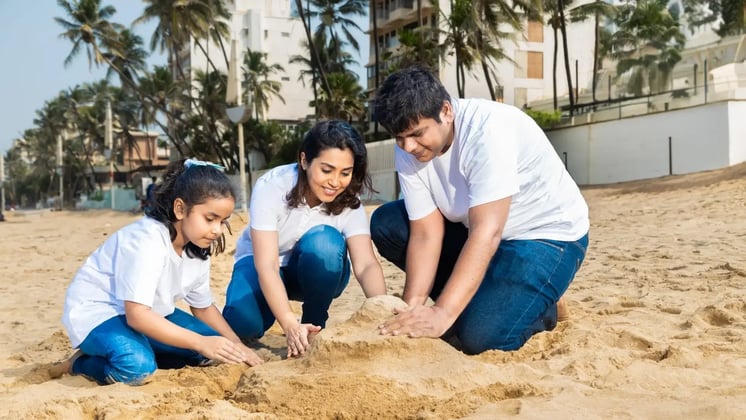
Kids who play with sand are learning how to use their hands and feet more precisely by digging and sculpting, how to coordinate their movements by carrying and pouring, how to think about space by building and measuring, and how to integrate their senses by feeling the material all the time. These are not just side benefits of playing outside; they are the direct results of spending time with one of nature's most useful learning tools.
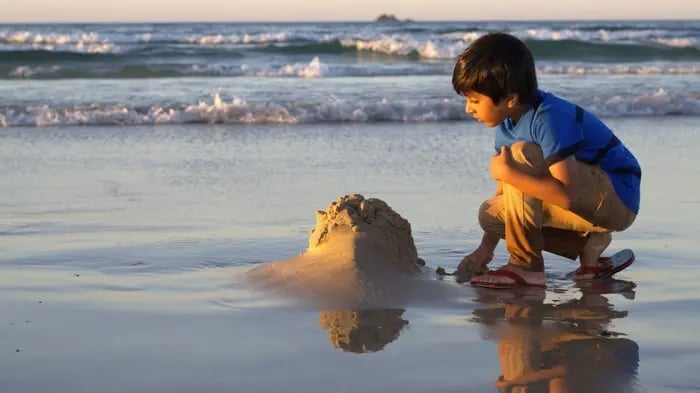
Sand play activities that are designed to help kids grow turn trips to the beach, sandpits, and outdoor play sessions into rich, multi-domain learning experiences. The Indian Academy of Pediatrics voices that regular outdoor sensory play, like activities that involve sand, leads to stronger fine motor skills, better sensory processing, and more confident physical self-expression in kids of all primary school ages than play areas that are mostly indoors.
10 Creative Sand Play Activities For Kids
1. Sand Sculpting Competition
Asking kids to sculpt animals, buildings, vehicles, or abstract shapes out of wet sand is one of the most open-ended sand play activities that helps kids develop three-dimensional spatial reasoning while also building their creative confidence and fine motor skills. Shaping and smoothing sand surfaces requires a lot of touch, which builds hand strength and coordination between the two sides of the body through long periods of physical activity.
2. Buried Treasure Hunt
One of the most sensory-rich sand play activities for kids of all ages is to hide things at different depths in a sandpit and have them find them with only their hands. This helps kids learn to tell the difference between things by touch and remember where they are in space. The tactile focus needed to identify objects in sand helps build the sensory acuity that reading Braille, playing musical instruments, and other fine tactile skills depend on.
3. Sand Measurement and Volume Experiments
Using containers of different shapes to pour, measure, and compare sand volumes is one of the most hands-on ways for kids ages five to ten to learn about capacity, volume, and estimation. Children learn about conservation of volume by doing things like testing a tall, narrow container and a short, wide one to see if they hold the same amount of stuff.
4. Mini Construction Site Play
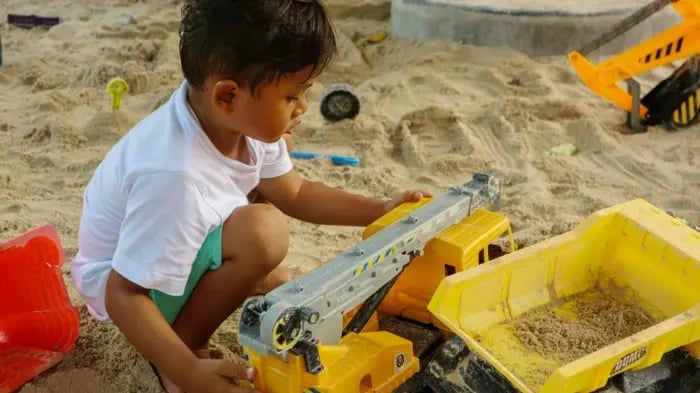
Making a tiny building site with roads, tunnels, bridges, and buildings in wet sand is one of the most creative and imaginative ways to play with sand. It helps kids learn how to plan cities and build things at the same time. Kids who build small environments learn how to plan spaces, make creative decisions, and work together to negotiate, which are all skills that come naturally when several kids work on a construction project at the same time.
5. Sand Patterns and Mandala Making
Drawing complicated repeating patterns and symmetrical mandalas in smooth, flat sand is one of the most calming sand play activities for the brain. It helps kids learn about mathematical symmetry, improve their fine motor skills, and focus on meditation. The fact that sand designs don't last teaches kids that putting in creative effort is valuable even if the result doesn't last. This is a valuable lesson for their development.
6. Sand Castle Engineering Challenge
Building the tallest structurally sound sand castle with only a certain amount of dry and wet sand is one of the most physically demanding sand play activities for kids. It helps them develop upper-body strength and structural reasoning. Kids learn through trial and error that structural stability needs an amount of moisture in the sand. This is a practical lesson in physics.
7. Shadow Puppet Sand Theatre
One of the most creative ways for kids to play with sand outside at night is to use sticks to make shadow puppets whose shadows fall on a lit sand surface. This teaches kids about light, shadow, and storytelling. Along with learning about how shadow size and shape change with stick angle and distance from light, kids also learn how to build a story, develop characters, and gain confidence in their performances.
8. Fossil Making With Impressions
Pressing natural things like shells, leaves, coins, hands, and patterned surfaces into smooth wet sand to make impression fossils is one of the most discovery-based sand play activities for kids that helps them learn about archaeology while also improving their fine motor skills. When kids compare the impressions of different things, they learn how to read physical evidence, which is the most important skill in both archaeology and forensic science.
9. Sand Timer Making
Making simple sand timers out of two connected plastic bottles and timing how long it takes for certain amounts of sand to flow between them is a fun way for kids ages seven and up to learn about measurement. Kids learn that the amount of sand and the size of the hole both affect the flow rate. This is a hands-on way to learn about the factors that affect physical processes.
10. Collaborative Sand Map Drawing
Making a map of an imaginary territory in sand with other kids, including geographical features, settlements, roads, and landmarks, is one of the most socially complex sand play activities there is. It helps kids learn how to work together, communicate, and build a creative world. Kids must discuss how to make decisions about the landscape, agree on symbolic representation, and keep the space consistent in a project they all work on together.
Conclusion
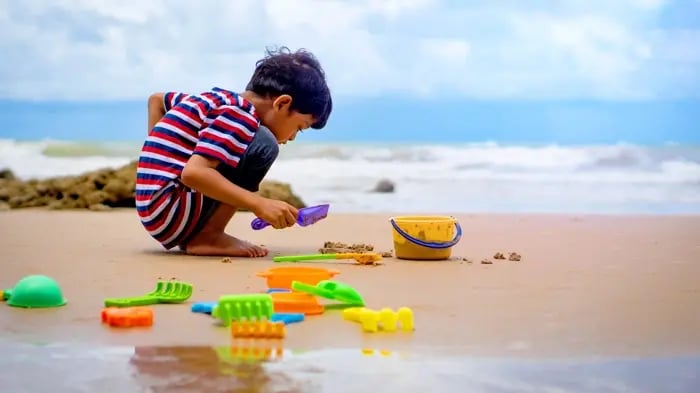
Creative sand play activities deliver sensory, cognitive, and physical development benefits that indoor play environments rarely replicate with equivalent variety or neurological depth. Children who play regularly in sand develop stronger fine motor skills, better spatial reasoning, and a confident physical relationship with natural materials that shapes learning curiosity and outdoor engagement throughout their entire developmental journey.
Smriti is a content writer who creates clear, practical, and informative content backed by science and relevant data. With a strong understanding of structured writing, she breaks down complex topics into simple, actionable insights. Her work is focused on helping readers prepare, learn, and grow with confidence and clarity.
The views expressed are that of the expert alone.
Popular Topics