




 Parenting Guide


 Child Health & Growth


 Learning & Skills Development


 Food & Nutrition


 Bournvita





Introduction
You hardly need expensive toys or gadgets to be bored at home. Hours of laughter can come from easy games for kids to play at home. Many families underestimate the power of unstructured play. Kids can make more fun than what they can buy in a store. That's precisely why equipment-free games to play at home with kids are so important. All these games take is imagination, and open space. Younger children enjoy simple rounds of chase or guessing at home. Instead older kids can play storytelling or strategy-based games. Rainy days at home with kids don’t have to feel stale. Rotate through games to play at home with kids. Sibling bonding can be sped up through shared, unscripted play sessions. Here is a list of 30 ideas organized by age and energy. Parents often forget how little it takes to have fun. A further 2015 systematic review found that unstructured, active play is linked to better physical health, creativity, and resilience. Both findings show why simple, equipment-free games to play at home with kids deserve a daily spot. Try a few tonight and watch boredom leave fast. Keep this list nearby for the next quiet afternoon.
30 Fun Games to Play at Home with Kids Without Any Equipment
1. Freeze Dance
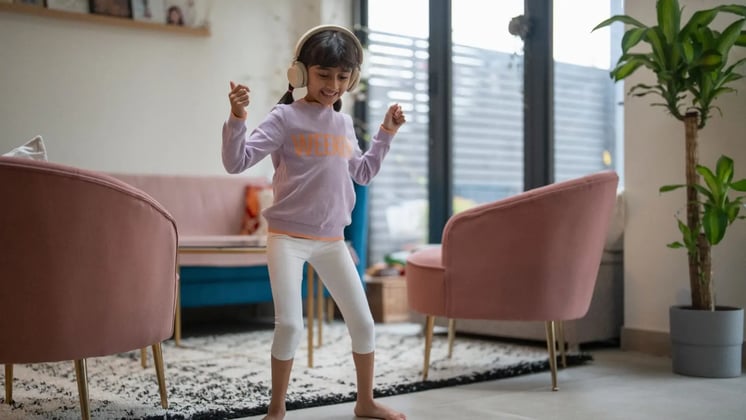
Put on a happy song and let the children dance around the room freely. Play the music and then cut it off at random times. Everybody has to stand like statues. Perfectly still. Whoever blinks first is playfully out. This simple game for kids to play at home builds listening skills, quick reflexes, and pure joyful energy for all ages.
2. Simon Says
One player that gives simple physical commands is 'Simon'. Other people only act when the words “Simon says” are said first. Forget that queue, and no one should move at all. This classic game teaches focus, self-control, and quick thinking. It’s still one of the easiest games to play at home with kids of all ages.
3. Hide and Seek
One child calls out the numbers while the others hide around the house. When the counting is finished, the seeker looks into every room. Whoever is caught first becomes the next seeker. This timeless favorite fits in almost any home layout. It develops patience and strategy and real excitement with no equipment at all.
4. Charades
Write simple words or phrases on small pieces of paper. One player silently acts out the clue using only gestures. Others have a time limit and guess the answer. When you are acting, there must be no talking or sound effects. This develops creativity, quick thinking, and confident nonverbal expression in children of all ages.
5. Story Chain
It was odd to find a book in the middle of the road. Each player adds a sentence to the story. The story takes hilarious sudden turns. No one really knows where the ending will fall. The playful format builds imagination, listening skills, and collaborative storytelling easily among siblings or friends.
6. Twenty Questions
One player thinks silently of something or someone or somewhere. Others take turns asking only simple yes/no questions. The aim is to guess correctly in twenty questions in total. This classic sharpens your logical thinking and deductive reasoning skills. It works beautifully on car rides, in waiting rooms, or during quiet indoor afternoons together.
7. Balloon Keep-Up
Inflate one balloon and toss it up gently. It can't touch the floor. You can only bounce it with your hands, elbows, or heads. Add rules such as taking turns to make it more challenging. This fun game for kids to play at home builds coordination, teamwork, and lots of shared laughter.
8. Sock Puppet Theatre
Make simple hand puppet characters from old unmatched socks. Draw faces with markers or glue on small buttons for eyes. Create a small stage using a cardboard box. The kids do short silly plays for families to see. This creative activity uses household leftovers to build storytelling skills, confidence, and imaginative play.
9. Pillow Fort Building
Gather up couch cushions, blankets, and spare bed sheets. Let the children build their own fort. For a more dramatic nighttime atmosphere, add flashlights inside. Forts are instant reading nooks, hideouts, or imaginary headquarters. This activity happily develops spatial thinking, planning skills, and real collaborative sibling teamwork.
10. Would You Rather
Prepare a list of silly, tricky either-or questions in advance. Ask questions, and take turns defending your answer of choice. Anything from funny to really thought-provoking questions. It makes people laugh, argue, and sometimes have surprisingly profound family discussions. Great for mealtime, car rides, or quiet wind-down time before bed.
11. Musical Statues
Put on some music and let the children dance freely in an open space. Suddenly stop the music without any warning. Everyone freeze right now in whatever position you are in. Wobbling or moving means you are playfully eliminated from that round. This builds balance, self-control, and joyful physical movement, especially for young children.
12. Indoor Scavenger Hunt
Make a simple list of household items to find. Let the kids have a time limit to locate everything on the list. Hide more challenging items in less obvious places around the home. Reward the fastest finders with small prizes or extra play time. This develops observation skills, problem-solving, and real excitement without the need to purchase any special equipment.
13. Shadow Puppets
Turn down the lights and shine a torch on a wall. Make simple animal or character shapes with hands. Finger positions to form practise bird, dog or rabbit shapes. Add a short story to give life to the shapes. This quiet activity builds fine motor skills and creative storytelling, especially before bedtime.
14. Memory Card Game
Draw simple pictures on paper cards to make matching pairs. Shuffle and place all the cards face down in neat rows. Players turn over two cards, trying to find two of the same kind. Unmatched cards are soon turned back down again. This homemade version develops concentration, memory, and patience with just paper and markers.
15. Staring Contest

Two players are seated close together, facing each other. Both must make eye contact first, without blinking. There is to be no talking, no funny faces, no distractions—all technically. The first person to blink or laugh loses that round. A silly little simple game that builds focus and guarantees lots of shared giggles.
16. Balloon Volleyball
String a piece of string or yarn from wall to wall across a room. Divide the players into two teams on either side. Hit one balloon up and over it. Points are lost if the balloon touches the ground. Play this active indoor game at home with kids to develop coordination and lighthearted sibling competition.
17. Blanket Tug of War
Fold a thick, strong rope lengthwise out of a sturdy blanket. Two players hold opposite ends and pull steadily back. The one who pulls his opponent across a marked middle line wins. Soften the surface and make it safe for tumbling. This fun strength game provides friendly competition and real physical exertion safely indoors.
18. Guess the Sound
One player closes their eyes while the other makes sounds like household appliances. You may hear sounds like clapping, tapping or keys jingling around you. Each mystery sound has to be guessed correctly by the blindfolded player. Take turns so that everybody gets a chance to guess. This develops listening skills, concentration and curiosity about the everyday household noises around them.
19. Paper Airplane Contest
Draw a line somewhere across the floor of the living room. Each player shoots his plane at a target in the distance. Measure with the plane that travelled the furthest. It develops fine motor skills, an understanding of basic physics, and lots of competitive fun.
20. Living Room Bowling
Stack plastic cups or bottles like small bowling pins. Knock down as many as you can with a soft ball. Set up a couple rounds and keep a score sheet running. Change pin order every round for more variety. It’s an active indoor game that combines the development of hand-eye coordination and simple counting skills.
21. Dress-Up Fashion Show
Check closets for unused clothes, scarves, and old accessories. Have each child make up a silly, imaginative costume of his own. Use hallway or living room space to make a “runway.” Take turns walking, posing, and making a dramatic announcement for each outfit. This supports imaginative pretend play to develop creativity, confidence, and joyful self-expression.
22. Alphabet Scavenger Hunt
Give each child a random letter from the alphabet. Race to find items in the house that start with that letter. Keep energy up by setting a reasonable time limit. When time is up, compare the items found together. It builds vocabulary, quick thinking, and observation abilities through simple exploration and searching in the home.
23. Mirror Game
Two players are facing each other at close distance. One player slowly shifts arms, face, or body stance. The other has to copy each movement as a mirror. After a minute or two of play, change roles. This quiet and focused game helps to develop concentration, body awareness, and cooperative nonverbal communication skills.
24. Word Association
First, one player says any random word. Then the next player has to answer with a related word. Move quickly round the group, with no long pauses being allowed. If the player takes too long, he's playfully out. This fast-paced verbal game builds vocabulary, quick thinking, and genuine mental agility all at the same time.
25. Balancing Book Walk
Put a light book flat on the head. Cross the room carefully. Be sure that it doesn’t fall. Add obstacles like cushions or mild turns for challenge. Try to beat your previous records and time each attempt. Naturally develop posture, balance and core body control indoors with this fun exercise.
26. Categories Game
Choose a category, such as animals, foods, or countries. Players take turns to name things in that category. If you repeat a name that has been said, you are immediately eliminated. Keep going until there's only one confident player left. Simple verbal competition develops vocabulary, memory, and skills of quick recall.
27. Human Knot
Everyone forms a circle, and everyone takes the hands of two different people. Hold hands and work as a team to untie the knot. Communication and patience are an absolute must for eventual success. This works best with 4 or more willing participants. This encourages teamwork, problem solving, and physical cooperation between siblings or classroom friends.
28. Pretend Restaurant
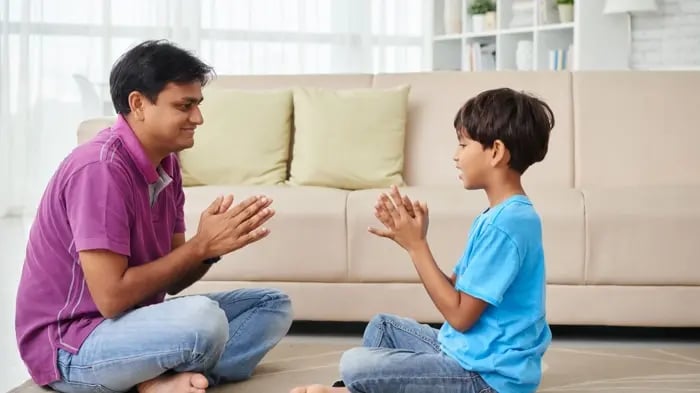
Create a small table with menus made of handmade paper. One child is the waiter, and the others order imaginary meals. Use play money or paper slips to act out payments. Rotate roles so everyone gets equal experience with serving and ordering. This imaginative role-play develops social skills, maths practice, and real creative collaborative storytelling fun.
29. Sock Ball Toss
Roll up a few pairs of socks into little soft round balls. Get a laundry basket or box. Take turns throwing socks from greater and greater distances. Score it so you can see who lands the most. This easy, low-mess game for play at home with kids develops aim and coordination.
30. Silent Ball
Stand in a circle and throw a soft ball from one to another. Technically, no talking, laughing, or any kind of sound is permitted. If you talk or drop the ball, you sit down quietly. Keep going until there’s only one quiet, intent player left standing. This relaxing game helps develop self-control, focus, and, surprisingly, the ability to restrain giggles.
Conclusion
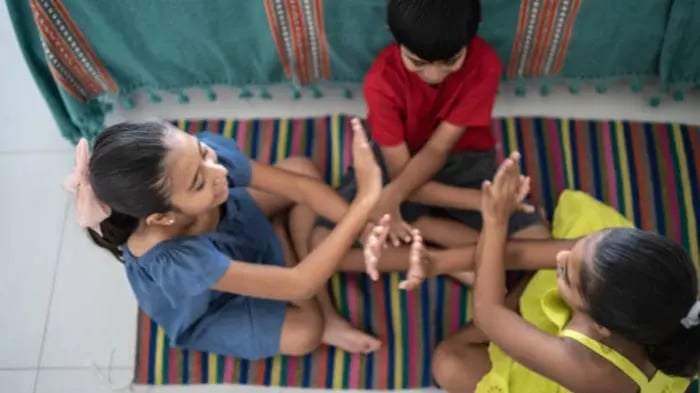
Games to play at home with kids are fun with no equipment whatsoever. The Hong Kong wellbeing study confirmed that unstructured play really does make people happier. Play builds bonds, sparks creativity, and creates lasting family memories. Rotate a few faves each week to keep it fresh. Let your child pick tonight’s game and have fun.
Smriti is a content writer who creates clear, practical, and informative content backed by science and relevant data. With a strong understanding of structured writing, she breaks down complex topics into simple, actionable insights. Her work is focused on helping readers prepare, learn, and grow with confidence and clarity.
The views expressed are that of the expert alone.
Popular Topics