




 Parenting Guide


 Child Health & Growth


 Learning & Skills Development


 Food & Nutrition


 Bournvita






Introduction
Discipline is one of the most misunderstood terms in parenting, often confused with punishment, when the two have completely different developmental purposes and produce measurably different outcomes. Punishment is a method of communicating the consequences of unacceptable behavior. Discipline, from the Latin root meaning "teaching and guidance," develops the internal self-regulation, values, and decision-making capacity that produces genuinely good behavior from the inside out and not simply compliant behavior maintained through fear of external consequence.

The best discipline methods have one thing in common. Different methods of discipline maintain the parent-child relationship as a safe, warm, trustworthy base, while also communicating clear expectations and consistent consequences that children can work with in understanding. This combination—warmth and structure—is what developmental research consistently identifies as the parenting style most reliably associated with positive long-term behavioral and psychological outcomes.
According to a study published in Developmental Psychology (2019), children raised with authoritative parenting — high warmth combined with clear, consistent structure and natural consequences. This demonstrated significantly stronger self-regulation, better academic achievement, and more positive social outcomes.
Five Effective Ways To Discipline Without Punishment
1. Natural and Logical Consequences
Natural and logical consequences are among the best different methods of discipline because they connect behavior with its real-world consequences and give children an opportunity to see the real consequences of their choices rather than an adult-imposed penalty that might seem arbitrary or unfair. A child who consistently delays doing homework and subsequently experiences the pressure of racing to complete it is gaining knowledge from the natural consequence of their choice to organize their time in a particular manner that parental lecture and restriction cannot replicate with the same effect.
2. Positive Reinforcement of Desired Behavior
Positive reinforcement is one of the most studied of all the different discipline methods. Catching children doing the right thing and specifically praising it results in more lasting behavioral change than punishing children doing the wrong thing because it creates the child's positive behavioral self-concept rather than merely reducing unwanted behavior through deterrence. A child who is given specific, authentic recognition of their patient waiting, thoughtful sharing, or responsible completion of responsibilities without reminder develops an identity as a patient, thoughtful, responsible person, and identity consistency motivation then carries the behavior even without ongoing reinforcement.
3. Clear, Calm, and Consistent Expectations
Children do best in environments where they know ahead of time what is expected of them, and the basis for all other types of discipline rests on consistent family expectations that children actually understand. Expectations that vary according to adult mood are communicated by correction after the fact rather than in advance, or vary between adults in the household. Creating the behavioral uncertainty that leads to exploration of limits rather than confident navigation within them.
4. Problem-Solving Conversations After Behavioral Challenges
Children do best in environments where they know ahead of time what is expected of them — and the basis for all other types of discipline rests on consistent family expectations that children actually understand. Expectations that vary according to adult mood are communicated by correction after the fact rather than in advance, or vary between adults in the household, creating the behavioral uncertainty that leads to exploration of limits rather than confident navigation within them.
When behavioral challenges occur, the most developmentally productive response from parents is often a calm, curious problem-solving conversation about what happened and why the child made the choice they did. What a better approach might look like in the future, turning the behavioral incident into a learning conversation. Because it develops reflective capacity and ethical reasoning that are genuinely good for future behavior, this approach is one of the most growth-oriented methods of discipline available, rather than producing compliance through discomfort, which behavioral learning research does not consistently support as a developmental mechanism.
5. Privilege and Responsibility Connections
Connecting privileges to demonstrated responsibility instead of to absolute rule compliance provides children with a motivating, ownership-producing, different methods of discipline framework that cultivates the understanding that freedom and responsibility are truly related instead of arbitrarily connected by adult authority. A child who understands that extended screen time is tied to proven responsible completion of household and academic responsibilities before screen time begins is experiencing a logical cause-and-effect relationship rather than an arbitrary restriction and release.
Things To Keep In Mind
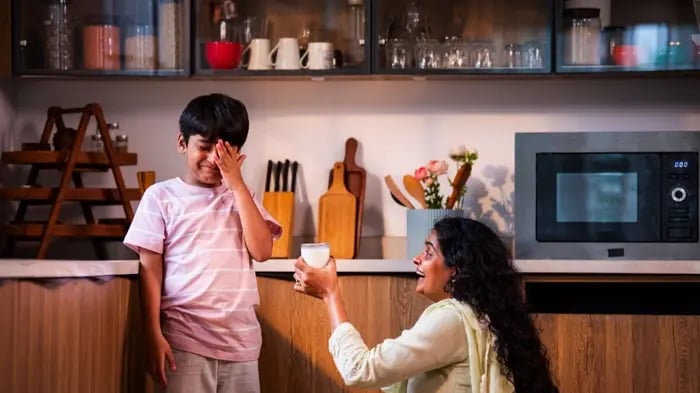
Adults in the household need to be consistent with each other, just as they need to be consistent with individual discipline strategies—children are most confident when they know what to expect and both parents are on the same page with respect to how they respond to the same behavior.
Discipline conversations should always separate the behavior from the child— "That choice was not safe” rather than "You were bad.” Children who get behavior-focused feedback develop the growth mindset that improvement requires.
All discipline is delivered through the medium of the relationship between parent and child. Discipline from a trusted, warm, reliable adult produces completely different behavioral outcomes than the same technique delivered within a distant or fear-based relationship.
Age-appropriate expectations are really important—for example, expecting self-regulation in a four-year-old and impulse control in an eight-year-old or adolescent is a recipe for frustration for both parent and child because the developmental mismatch makes the expectation genuinely unreasonable, regardless of the child's motivation.
Warmth, structure, and responsive guidance rather than punishment had significantly stronger self-regulation, better behavioral outcomes, and more positive mental health through adolescence than their peers from predominantly authoritarian or permissive parenting approaches throughout childhood.
Conclusion

Seeing different methods of discipline as development and not control gives parents tools that build the inner qualities—self-regulation, ethical reasoning, and responsibility—that truly good long-term behavior depends on. Children who are guided by consistent warmth, clear expectations, and reflective conversation develop the behavioral self-direction that external punishment cannot instill and that no amount of supervision can sustain throughout life.
Smriti is a content writer who creates clear, practical, and informative content backed by science and relevant data. With a strong understanding of structured writing, she breaks down complex topics into simple, actionable insights. Her work is focused on helping readers prepare, learn, and grow with confidence and clarity.
The views expressed are that of the expert alone.
Popular Topics