




 Parenting Guide


 Child Health & Growth


 Learning & Skills Development


 Food & Nutrition


 Bournvita





Introduction
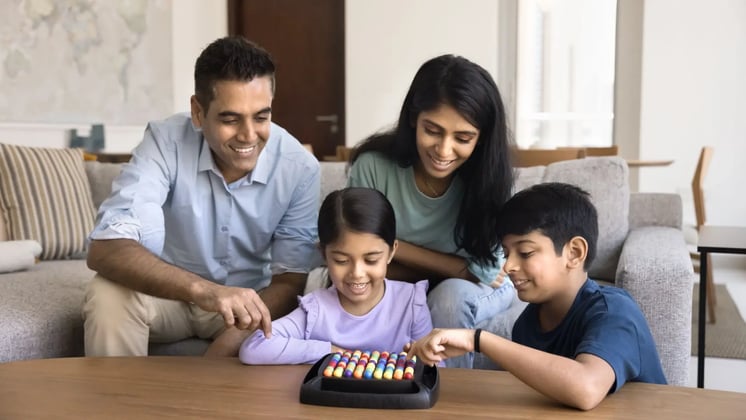
Board games have a special developmental role in the lives of children. A structured play format brings together social interaction, strategic thinking, and emotional regulation. Children's board games develop a depth of skills that screen entertainment cannot compete with. Playing board games face-to-face allows for the development of communication and social cue interpretation at the same time. Regular board game play helps kids develop socially critical skills such as patience, turn-taking, and graceful losing.
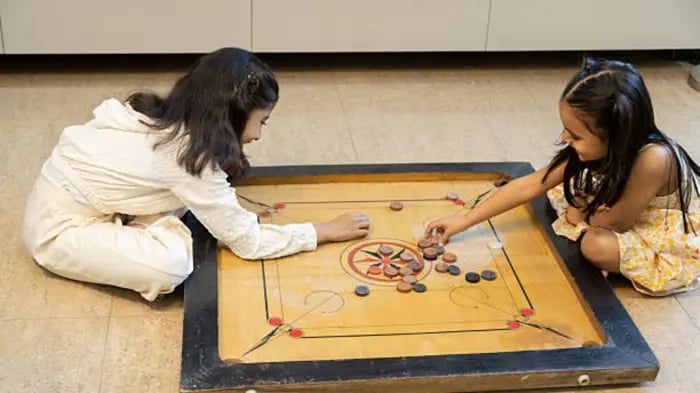
The competitive aspect of educational board games for kids adds another level of complexity to this, and genuine academic content is interwoven within it. Children do not regard this activity as academic work but as practicing mathematics, language, geography, and logical reasoning. The most productive base for learning is intrinsic engagement, and the motivational structure of gameplay—earning points, working toward a goal, competing with real stakes—generates this engagement. Parents who trade just one weekly screen time for board games see their child’s strategic thinking and social confidence improve noticeably within weeks.
According to the American Academy of Pediatrics, children who engage in regular structured social play such as board games show measurable improvements in executive functioning, better conflict resolution skills, and more positive peer relationships. Board games for children’s education can make the learning process a real pleasure, not an obligation.
7 Most Popular Educational And Entertaining Board Games For Kids Of All Ages To Play
1. Scrabble Junior and Standard Scrabble
Scrabble develops strategic word building, spelling and vocabulary at the same time. The junior version adds board games for kids aged six to nine years, with simplified tiles and two-sided boards. Standard Scrabble is a good game for children aged ten and up with a good vocabulary. Children are taught that the longer and less common the word is, the better it is than the simple and known. Strategic placement of tiles near bonus squares encourages the development of mathematical thinking along with vocabulary. This educational board game for kids also teaches children to think several moves ahead before they commit.
2. Chess
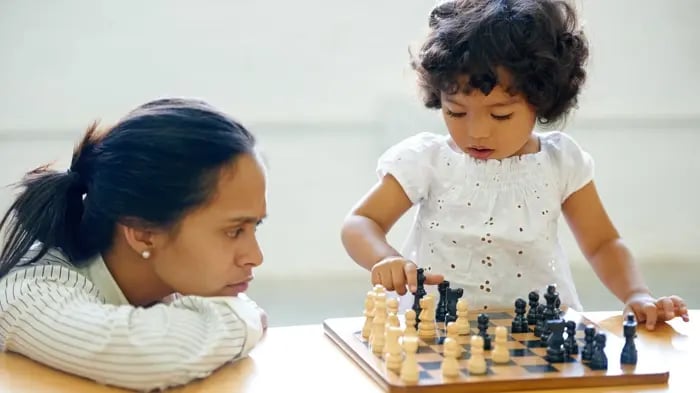
Chess is one of the most cognitively demanding board games ever invented for children. In more advanced play, it can involve forward planning of as many as seven moves simultaneously. Kids who train in chess gain a deep insight into strategic consequence thinking, concentration, and pattern recognition. The game teaches children that every action has a chain of consequences that extend beyond the action itself. Chess is suitable for children seven years and older, provided they have constant adult supervision during the learning stage. The results of this educational board game for children are purely based on skills; there is no luck involved whatsoever.
3. Monopoly Junior and Standard Monopoly
Monopoly teaches your kids financial literacy with real competition. Junior Monopoly is appropriate for children ages five to eight because of its simplified property buying mechanics. The classic Monopoly game brings added financial strategies for ages eight and up. Kids learn how to negotiate. How to budget. How to manage resources. How to take calculated risks. This is a children’s board game that makes the money mechanics personally meaningful for math. Property investment decisions teach children about asset accumulation and long-term strategic thinking.
4. Pictionary Junior and Standard Pictionary
Pictionary is all about fast word association, fast creative thinking, and fast visual communication. One person draws a word that teammates have to guess within a strict time limit. This board game for kids teaches children that communication is more than just verbal and written language. The practice of drawing under time constraints develops the visual-spatial thinking that is essential to art, design, and architecture. Junior Pictionary uses a simpler vocabulary suitable for children between the ages of six and ten. This is an educational board game for children, intended to build confidence in children who may be reluctant to traditional art activities to express themselves visually.
5. Trivial Pursuit Junior
Trivial Pursuit Junior tests kids on science, geography, history, entertainment, and general knowledge. Children answer questions to collect colored wedge pieces representing different fields of knowledge. The game is a rare example of a traditional learning method that uses a competitive incentive for children to encourage the development of real general knowledge. Kids who are regularly into playing games show a more curious intellectual attitude toward learning and a broader academic vocabulary. The category system tells children that knowledge is multidimensional and consists of many different domains. This educational board game is best suited for children of eight years of age and above with a good general knowledge level so that they can play in a competitive way.
6. Sequence for Kids and Standard Sequence
Sequence is a pattern recognition and card play game on a board surface. Children match hand cards to board positions, and chips are placed to make rows of five. At the same time, this board game for kids develops a sense of rivalry and strategic thinking in space. Children have to make their own sequence and not allow their opponents to complete theirs. The dual offensive-defensive requirement naturally develops cognitive flexibility and strategic adaptability through play. Sequence for Kids does a great job teaching the basic mechanics to kids ages 3-6. The Standard Sequence is suitable for children aged seven and up, and it provides a fairly deep level of strategy.
7. The Game of Life Junior
The Game of Life Junior is a life simulation game that teaches kids about decision-making and exploring consequences. Children walk a colorful path during the game, making choices at every junction. This kids' board game teaches that choices create different outcomes, not always the same. Children learn to adapt their plans, to respond to unanticipated events, and to manipulate resources. The life simulation format gives children a tangible understanding of abstract concepts such as financial planning and career choice. This is an educational board game for kids that helps stimulate organic family discussions about personal goals, priorities, and values during gameplay.
How To Encourage Children To Play These Games
Start With One Game the Child Chooses
The best way to introduce board games to children is to allow them to decide where to begin. The child who picks the first game is coming with motivation, not obligation. This personal investment carries over into later sessions, fostering sustained engagement. Parents who give their children a variety of options and let them make real choices instill a sense of ownership of the game from the start. The first positive experience with educational board games for children is the motivational basis for all further game sessions.
Play Consistently at the Same Weekly Time
The most important way that board games develop for children is through consistent, repeated use, not occasional marathons. A regular family game time each week creates anticipation and a sense of ritual. During the week, children are aware that Saturday afternoons are for board games and eagerly await the session. Consistency creates the sort of ongoing exposure that both game mastery and genuine developmental benefit need over time. The full developmental depth of educational board games for children can be revealed only through repeated practice.
Model Genuine Competitive Engagement
The children’s involvement in the board games for children is more authentic if the parents play a real competitive game with the children and do not let them win easily. When a parent plays strategically and narrates what they are thinking, the child can watch and learn from the parent’s thinking process. Children see that adults can be disappointed and deal with it in positive ways when they suffer real losses. The most developmentally beneficial educational board games for children are those where the competitive dynamic is genuinely there, not put there by adults at each meeting.
Introduce Complexity Gradually as Confidence Builds
Start with easy junior versions and then go to the regular difficulty levels of any board game for children. A child who is overwhelmed by the complexity of the rules in the first session develops avoidant rather than enthusiastic behaviors in subsequent sessions. Once the child has mastered the basic game mechanics, introduce one new rule variant per session. Educational board games for children are most effective in promoting development when the increase in difficulty matches the child’s growing confidence and ability as they progress up the learning curve.
Celebrate Strategic Thinking Rather Than Winning Outcomes
Parents who understand the value of strategy, smart moves, and gracious losses will encourage more board game play in children than those who are only concerned about the result of each game. That was a really smart blocking move that is more developmental than well done for winning. The key to the formation of the strategic thinking identity is process-oriented recognition. Educational board games for kids are designed to develop in every competitive childhood session.
Conclusion

Board games for kids develop social, cognitive, and emotional competencies that screen time cannot consistently develop to the same depth of development. Research shows that children who play educational board games for children develop enhanced strategic thinking skills, improved emotional regulation, and greater confidence in academic reasoning. Parents playing weekly family games offer their children real developmental benefits that add up to a lot over the course of their childhood and into adolescence.
Smriti is a content writer who creates clear, practical, and informative content backed by science and relevant data. With a strong understanding of structured writing, she breaks down complex topics into simple, actionable insights. Her work is focused on helping readers prepare, learn, and grow with confidence and clarity.
The views expressed are that of the expert alone.
Popular Topics