




 Parenting Guide


 Child Health & Growth


 Learning & Skills Development


 Food & Nutrition


 Bournvita





Introduction
Guru Purnima is an age-old Indian festival of spiritual importance. This day is celebrated by children all over India every year, but many do not know the deep mythology behind this day. It is a cultural holiday that helps to connect personally with India’s deepest educational values through an understanding of the story of Guru Purnima. In Sanskrit, the word “guru” has a specific meaning: one who takes away the darkness of ignorance with the light of knowledge. This bond between teacher and student has been one of the foundations of Indian civilization for thousands of years of unbroken tradition. Guru Purnima is based on the life and achievements of Sage Veda Vyasa, one of the greatest intellectual personalities in the history of India. The children learn the great significance of their culture in the transmission and acquisition of knowledge by understanding the identity of Veda Vyasa, his accomplishments, and why he is revered on this full moon day. Each year, children listen to the story of Guru Purnima and develop a meaningful relation to this rich heritage.

The Sacred Story Of Guru Purnima And The Legend Of Sage Veda Vyasa Explained
1. Who Was Sage Veda Vyasa?
The story of Guru Purnima begins with one of the greatest scholars in human history. Veda Vyasa, also known as Krishna Dvaipayana, was born thousands of years ago on a full moon day in the Hindu month of Ashadha. He is also credited with compiling the four Vedas (Rigveda, Samaveda, Yajurveda, and Atharvaveda) into the form that has survived for millennia. The Vedic knowledge was preserved in oral traditions. Before compilation by Vyasa, it was scattered among various groups. He was able to arrange this vast knowledge in accessible and preserved texts. This is one of the greatest acts of scholarly service in history . Vyasa also composed the Mahabharata (the world’s longest epic poem) and the eighteen Puranas, along with the Brahmasutras. Children who understand the contribution of Veda Vyasa develop a true appreciation for the gift of organized, preserved human knowledge that spans generations.
2. Why Is Guru Purnima Celebrated on This Specific Day?
In the lore of Guru Purnima, this occasion marks the birth anniversary of Sage Veda Vyasa. In the Hindu tradition, the full moon of the month of Ashadha (June or July) is considered particularly auspicious. It is an important date in Buddhist tradition, the day Buddha delivered his first discourse at Sarnath after attaining enlightenment. It is celebrated in the yogic tradition as the day on which Shiva, regarded as the first yogi, began to impart knowledge to his first seven disciples, the Saptarishis. The confluence of these many traditions on the same full moon day is emblematic of the real universality of the reverence for teachers and knowledge transmission across India’s many philosophical traditions. Kids who learn this convergence understand that respect for teachers is not sectarian but deeply human, whatever their traditions or communities.
3. The Guru-Disciple Tradition in the Story of Guru Purnima
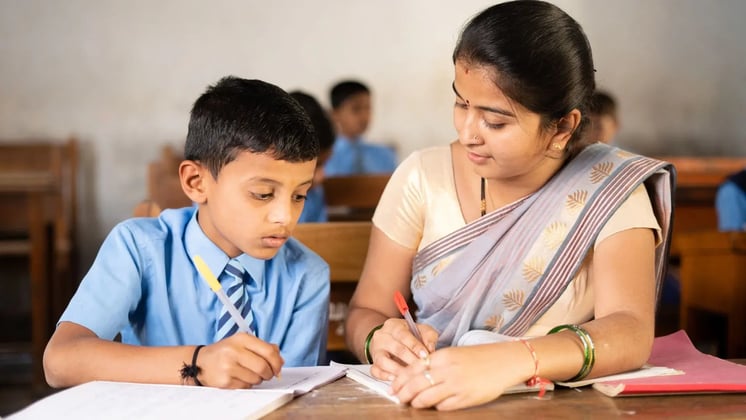
The narrative of Guru Purnima preserves the guru-shishya parampara, a particular pattern of teacher-student relationship. This tradition refers to an exceptionally deep connection in which a student pledges himself entirely to the teacher’s direction in return for life-changing knowledge. Veda Vyasa himself was the perfect example of the tradition of dedicating one’s entire life to the preservation and transmission of knowledge for future generations. In this tradition, the guru is not just a teacher who teaches curriculum content for examination purposes. The guru is perceived as a transforming presence who sees potential in a student that the student cannot see independently. With this knowledge, the children no longer view their teachers as authority figures demanding compliance but as guides who truly want to make a difference in each student. Teaching children this facet of the guru role helps them develop a greater sense of gratitude for the teachers already in their lives.
4. How Veda Vyasa Served Future Generations
The story of Guru Purnima is the story of the real preservation of the work of Veda Vyasa. It is most important when it is understood by children. If his compilation and organization had not been done, the Vedic knowledge that was found all over India might have been scattered and lost forever in the centuries of political and social changes that followed. Vyasa’s decision to record this knowledge in text, rather than to keep it in the oral tradition, was an act of profound generational service. He was not in fact concerned about his own generation but about the generations to come, about the children who are living today. And this understanding tells children something remarkable about the kind of teacher Veda Vyasa is. He is a teacher who sacrifices his own recognition for the benefit of future students he will never meet. Kids who get this concept have a richer understanding of selfless service that extends beyond the walls of the classroom.
5. How the Story of Guru Purnima Lives in Modern India

The story of this tradition is kept alive through the observance of Guru Purnima annually, connecting the modern Indian child to this thousands-of-years-old tradition. Every year on this day, students all over India pay their respects to their teachers by presenting them with flowers, thanking them and appreciating them. Spiritual seekers visit their gurus in ashrams and meditation centers across the country. Musicians play at the feet of their teachers. Athletes respect coaches. Guru Purnima is a story that tells us that there is no achievement without passing knowledge from one person to another through time. It is not just that children have academic knowledge of this cultural value, but those who partake in this tradition every year create a living relationship with it. The tradition teaches that gratitude for learning is not a one-time act but a lifelong annual practice of honoring those who generously gave the gift of knowledge.
Why It Is Essential For Kids To Know This Story
- The children who know the legend of Guru Purnima develop a real respect for teachers, not just social compliance. They understand that the teacher-student relationship is one of the most sacred and significant in human civilization, across cultures and centuries.
- The story of Guru Purnima teaches children that knowledge is something that is passed down from generation to generation and that the material they learn in school has been carefully gathered and preserved by scholars who dedicated their lives to teaching future students they would never meet.
- The extraordinary example of Veda Vyasa in the story of Guru Purnima shows children the highest level of dedicated service to knowledge and motivates them to show more dedication to their academic duties and learning relationships.
- Research consistently identifies the story of Guru Purnima as a protective factor for children’s psychological wellbeing and academic motivation because it links children to India’s unbroken intellectual heritage over thousands of years, creating a sense of cultural pride and identity.
- According to NCERT, children who develop a strong cultural identity through meaningful narrative traditions demonstrate better academic engagement and psychological resilience.
Conclusion

The story of Guru Purnima is one of the important cultural stories that parents can tell their children. It shows that teachers are not just experts in their subject, but they are the living link in an unbroken chain of transmission of human knowledge stretching over thousands of years. Children who know the story of Guru Purnima have a real understanding of all the learning relationships they will have in their entire education and personal lives.
Smriti is a content writer who creates clear, practical, and informative content backed by science and relevant data. With a strong understanding of structured writing, she breaks down complex topics into simple, actionable insights. Her work is focused on helping readers prepare, learn, and grow with confidence and clarity.
The views expressed are that of the expert alone.
Popular Topics