




 Parenting Guide


 Child Health & Growth


 Learning & Skills Development


 Food & Nutrition


 Bournvita





Introduction
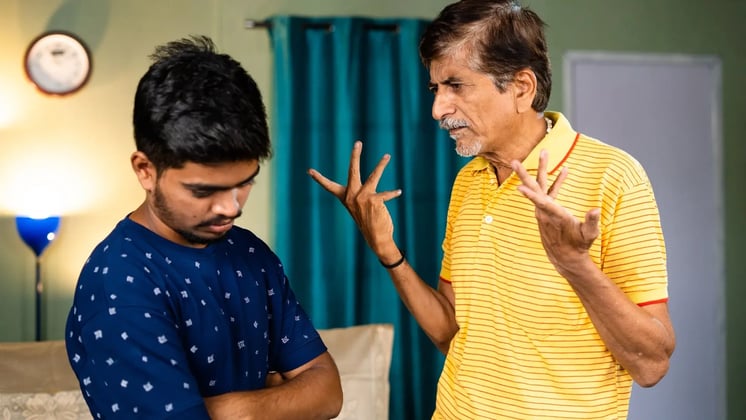
Parents who understand this developmental fact approach guidance of teenage behavior with a fundamentally different orientation than parents who experience adolescent boundary testing as a personal challenge or family crisis. The goal changes from control to cultivation—not enforcing compliance, but developing self-awareness and an understanding of consequences and personal responsibility that, over time, leads to self-directed, responsible behavior without external enforcement.
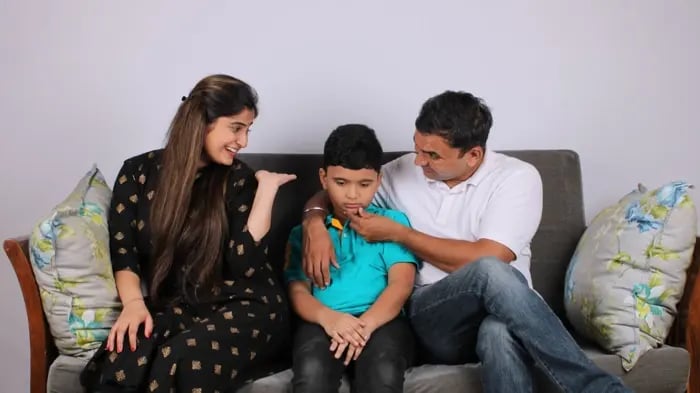
Realistic approaches to creative punishments for teenagers have a common developmental orientation. Behavior is tied to meaningful learning, not to the imposition of adult-controlled discomfort. The parent-adolescent relationship is preserved even as consequences are communicated. The adolescent’s emerging autonomy is honored by making the teen an active participant in understanding and rectifying behavioral difficulties, rather than a passive recipient of adult-driven discipline. Adolescents guided by their parents through collaborative, autonomy-supportive strategies showed significantly better behavioral self-regulation, a higher quality parent-adolescent relationship, and more positive developmental outcomes throughout their teenage years.
7 Creative Guidance Approaches That Actually Work
1. Community Service as Perspective Building
Creating opportunities for teens to engage in meaningful community service after behavioral challenges, rather than imposing punitive restrictions, promotes the empathy, perspective-taking, and social responsibility that adolescent moral development requires as truly productive behavioral growth. A teenager volunteering at a community kitchen, animal shelter, environmental cleanup, or senior care facility experiences realities that naturally reframe self-centered behavioral choices through direct human connection, rather than through adult lecture, such as getting creative punishments for teenagers.
2. Reflective Journaling for Self-Awareness Development
Asking a teenager to thoughtfully write about a behavioral incident—what happened, what they were feeling, what they were hoping to achieve, and what a different approach might have looked like—develops the reflective self-awareness that behavioral change genuinely requires rather than the surface compliance that behavioral restrictions temporarily produce. These creative punishments for teenagers are particularly useful for adolescents who tend to get defensive in face-to-face behavioral discussions but are more open and honest in their writing.
3. Skill Development in Areas Connected to the Behavioral Challenge
Behavioral problems in teenagers are often a result of actual skill deficits: a teenager who responds aggressively to conflict may not have the communication skills to engage in constructive conflict resolution. A teenager who mismanages time may lack the organizational tools for effective time management. The focus on the real developmental need, not just on discouraging the surface behavior, points the way toward developing the particular skill that the behavior challenge revealed.
4. Collaborative Development of Personal Accountability Plans

The teenager has to be part of the solution and help design the accountability structure for their own behavior, rather than have the parent impose consequences unilaterally. This is the ownership and agency that adolescent behavioral change specifically requires. A youth who has helped develop the plan understands the rationale behind it, has had their own brain power in designing it, and is much more inclined to follow through on commitments they’ve had a hand in shaping rather than follow rules that they have perceived as imposed by others without their input.
5. Creative Project Completion as Restorative Action
When a teen’s behavior has harmed others—in ways that include hurtful words, damage to property, failure to keep a commitment, or social harm. Channeling directed energy toward a focused, restorative, and creative project that responds meaningfully to the harm done builds the moral reasoning and empathetic accountability that is essential to behavioral learning. Some creative punishments for teenagers that build genuine moral accountability as active engagement rather than passive suffering of restriction include writing a thoughtful letter, making a creative project that shows understanding of the effect produced, or spending personal time and effort to repair something broken.
6. Increased Responsibility in Areas of Demonstrated Competence
One of the most effective creative punishments for teenagers is counterintuitive: identify and expand their areas of responsibility in which they evidence genuine competence. At the same time, they also exhibit behavioral immaturity in one area. This approach communicates that the behavioral challenge does not define the parent’s overall assessment of the teenager—that their capability and trustworthiness are recognized as a specific area needing development.
7. Real-World Learning Experiences Connected to the Behavioral Pattern
When we provide authentic learning experiences that directly address the understanding or empathy gap that a behavioral pattern reveals, we give teenagers a real-world perspective that abstract consequence-delivery cannot. A teen who routinely shows poor money habits could benefit a lot from spending a day learning about household budgeting, going with a parent to financial management appointments, or taking on real management of a household purchasing responsibility. Learning that no simulated consequence equivalently generates comes from real-world exposure to the complexity and consequences of the area where behavioral development is needed.
Things To Keep In Mind
-
Keep the relationship central to all guidance – a teenager who feels genuinely understood and respected by a parent will be infinitely more responsive to guidance than one who experiences the parent primarily as an authority figure demanding compliance. The relationship is the vehicle through which all effective guidance is delivered.
-
Understand that behavioral challenges in adolescence are developmental data, not personal deficiencies, conveying what the teen has not yet learned, not what they are at the core, and responding from this perspective results in far more productive mentoring conversations.
-
Don’t publicly guide or correct—public correction is social humiliation for teens, and social humiliation in adolescence breeds resistance rather than the reflective engagement upon which behavioral learning depends. All meaningful guidance conversations should take place in private.
-
Keep the expectations and what the parent models themselves consistent. A teenager who is told to manage their time responsibly but sees parental time management chaos is navigating a credibility gap that is a huge blow to the effectiveness of the guidance given no matter how it is given.
-
A Journal of Research on Adolescence study (2019) discovered that teens who were raised with consistent warm parental guidance when facing behavioral challenges have much stronger moral development, better self-regulation, and more positive parent-adolescent relationships than peers from primarily punitive parenting environments during adolescence.
Conclusion

Creative guidance approaches for teenagers that prioritize learning, autonomy, and relationship maintenance over punishment produce the self-aware, accountable, empathetic young people that effective parenting aspires to develop. Parents who approach teenage behavioral challenges with curiosity and collaborative creative guidance give their adolescents the developmental opportunities that restrictions alone can never provide—experiences that genuinely shape character rather than simply managing behavior throughout the teenage years.
Smriti is a content writer who creates clear, practical, and informative content backed by science and relevant data. With a strong understanding of structured writing, she breaks down complex topics into simple, actionable insights. Her work is focused on helping readers prepare, learn, and grow with confidence and clarity.
The views expressed are that of the expert alone.
Popular Topics