




 Parenting Guide


 Child Health & Growth


 Learning & Skills Development


 Food & Nutrition


 Bournvita




Introduction
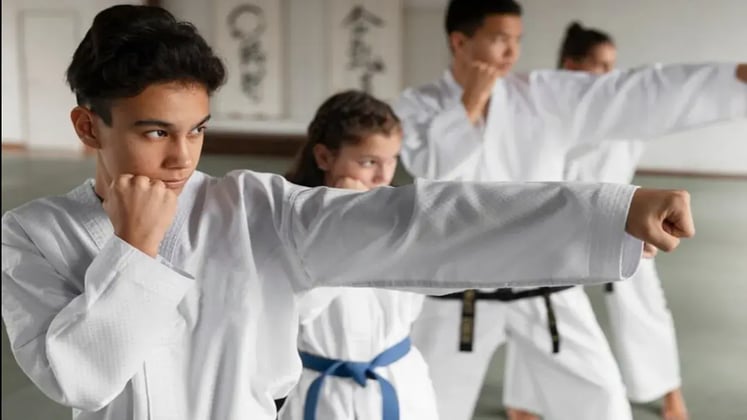
"Martial arts" is a broad term, including various fitness and combat techniques to increase fitness, strength, resilience, and mindfulness in kids. From the Shaolin secrets of kung fu to karate chops to the fierce kicks of Israeli krav maga, martial arts have been embraced across cultures and centuries by humanity to discipline their minds and bodies. Martial arts offer a wide range of benefits for modern children. Since kids nowadays live a more sedentary life, restricted to benches, desks, chairs, and finally beds, their posture and physical fitness have undergone dramatic changes, and not for the better.
Digitalization of entertainment and education has ensured children spend their days stuck at their study table like corporate office goers, undergoing bone demineralization, muscle loss, low stamina, and poor posture. To avoid such harmful lifestyle changes and support your kid’s health, enroll them in martial arts. Its added benefit of protection and self-defense only further sweetens its case. Martial art forms like kung fu, karate, kickboxing, krav maga, and MMA (mixed martial arts) do wonders for your kid’s mental and physical well-being in the following ways.
What Are Martial Arts? Understanding Training for Kids
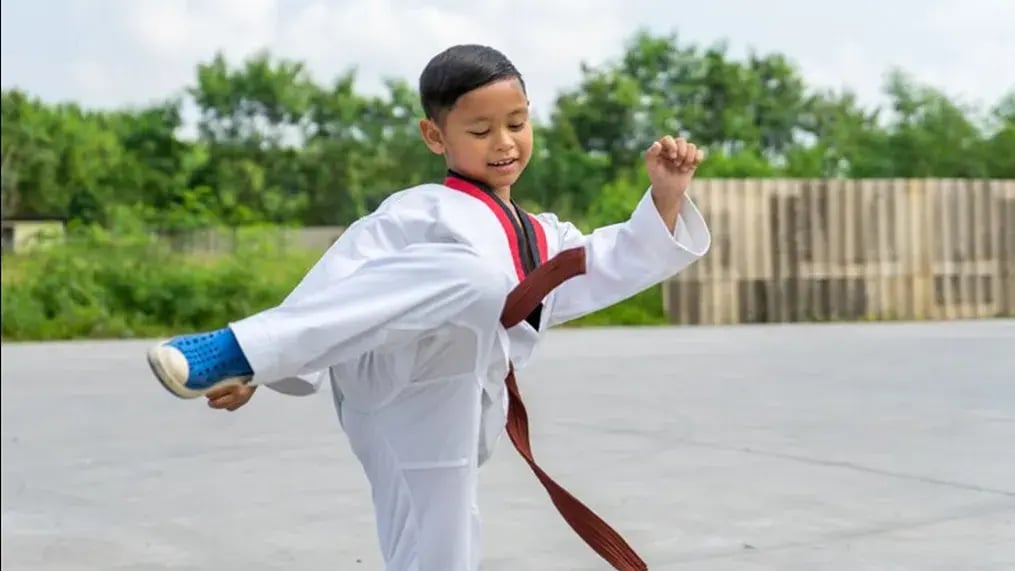
Martial arts are codified systems of physical practice that develop fighting techniques and mental discipline. For the kids, the developmental purpose always comes first, over any competitive fighting application. Training develops character through simultaneous, systematic physical and ethical education.
Karate builds striking technique through disciplined kata and controlled partner practice. High-kick speed, agility, and Korean philosophical respect traditions are emphasized in Taekwondo. Older kids get a cardiovascular workout along with striking in kickboxing. Youth MMA is a mix of grappling and striking that is taught in heavily supervised training settings for teenagers.
Combat sports are about the results of competition in rule-based competitive contexts. Structured martial arts training emphasizes the developmental process over the competition performance results.
Why Martial Arts Are Important for Child Development
Sedentary lifestyle vs active training
Indian urban children are spending more hours a day in screen based sedentary activities. Generations are losing physical confidence, coordination and embodied competence. This developmental gap is effectively addressed through structured martial arts for kids.
Holistic development
Martial arts for kids builds strength, fitness and coordination in addition to focus. Ongoing training builds emotional regulation, resilience, and respectful social behavior. Martial arts is the only childhood activity that combines these dimensions so completely.
Growing demand for self-defense skills
Self-defense awareness is increasingly being seen by parents as a real benefit to child safety. Properly taught martial arts develop physical competence and ethical judgment at the same time. Children learn when they should respond physically and not just how to respond.
Key Benefits of Martial Arts for Building Resilience and Discipline
Builds Strong Discipline and Routine
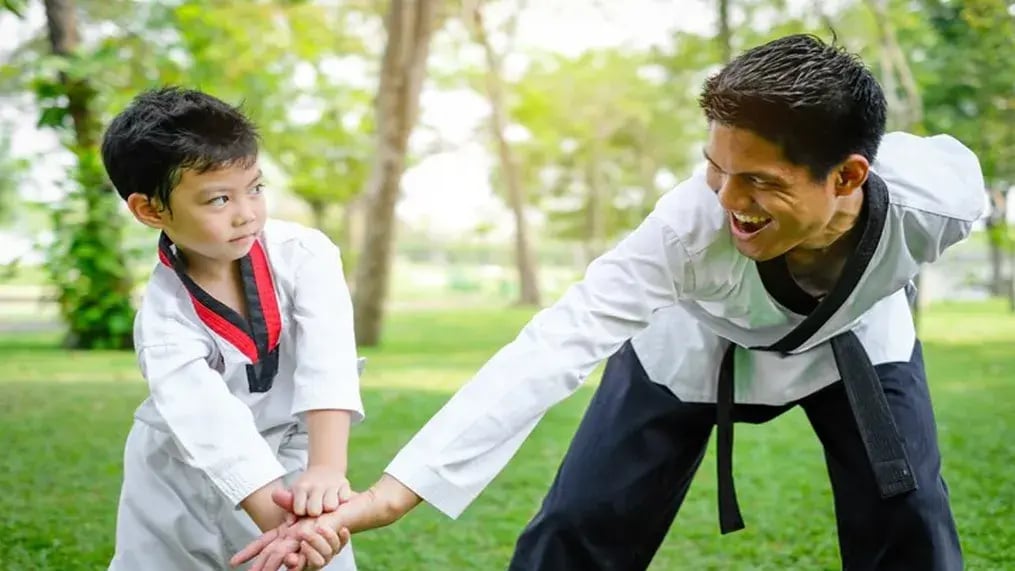
Martial arts training follows a rigidly structured sequence each session. Bowing, respectful address, precise training order, and behavioral codes are all applicable. These standards are internalized by children as their own values, not as imposed values.
Develops Physical Strength and Endurance
Kids benefit from karate by gaining measurable improvements in strength, endurance, and coordination. Striking combinations, partner drills, and kata systematically build full-body physical capacity. The Sports Authority of India says that young martial artists generally have better coordination in multi-directional movement.
Improves Mental Resilience and Focus
Training in martial arts requires your full concentration every single class. Children process situations quickly, and at the same time cope with physical pressure. Actually doing a difficult technique until it works builds mental resilience directly. Kids build up resilience over a whole bunch of physical evidence.
Enhances Self-Confidence and Self-Esteem
The most obvious benefits of karate for kids are the physical skills they develop over time. Belt progression is based on demonstrated skill, not just participation. Children have a sense of their own competence that isn't manufactured by praise. This confidence comes from having faced genuinely intimidating challenges again and again with effort.
Teaches Goal-Setting and Achievement Mindset
The belt system’s well-defined assessment criteria facilitate structured goal setting. Children learn that important goals take time, take certain preparation, and take honest self-examination. The key learning is deliberate practice towards criteria-based achievement. This mindset carries over directly into later academic and professional life.
Acts as a Natural Stress Reliever
It’s an excellent way to metabolize stress hormones through sustained physical exertion. Demanding physical practice is one way of discharging academic pressure, social tension, and family stress. A child who comes in anxious about an exam leaves having productively discharged that anxiety. Technical practice is the complete cognitive attention that takes the form of directed mental activity.
Teaches Practical Self-Defense Skills
Martial arts for self-defense teach situational awareness and verbal assertiveness skills. Consistent training develops physical escape techniques and self-protection skills. The ethical framework for proper use is always taught simultaneously.
Builds Responsibility, Respect, and Dedication
Every interaction in the dojo builds respect directly through behavior experience. Taking care of equipment, arriving prepared, and bowing all cultivate personal responsibility. Dedication is the fruit of persistent return to difficult practice in the face of slow, visible progress. These qualities are built through training culture, not explicit verbal instruction.
Types of Martial Arts for Kids and Teenagers
Karate for Kids
Kids' karate begins at age five through age-appropriate beginner programs. The most popular Indian formats are Shotokan, Goju-ryu, and Wado-ryu. Karate classes are offered through school programs, community dojos, and national federation affiliates. Striking technique, kata memorization, and dojo etiquette are developed together at progressive belt levels.
Taekwondo Training
Taekwondo emphasizes high kicks, fast footwork, and competitive sparring formats. Taekwondo classes follow a standard Kukkiwon curriculum with clear progression pathways. Suitable for physically energetic children with a strong preference for lower-body coordination. Every class is permeated by respect and self-improvement, the Korean philosophical tradition.
Kickboxing and Combat Sports
For older children seeking a high cardiovascular challenge, combat sports like kickboxing may be a good fit. Structured competitive training formats combine intense conditioning with striking technique. This format is suitable for athletically minded teens who want training beyond the practice of pattern-based forms. Reputable facilities stress technique, control and sportsmanship in classes on a consistent basis.
Mixed Martial Arts (MMA) for Youth
MMA-style youth martial arts is suitable for teenagers aged 14 or older with prior training. In India, hand-to-hand combat and striking techniques are trained under closely controlled conditions. Good youth MMA programs focus on technique, control, and competitive sportsmanship above all else. Parents should stay away from any unaccredited centers that lack defined safety protocols.
How Martial Arts Improves Child Behavior and Discipline
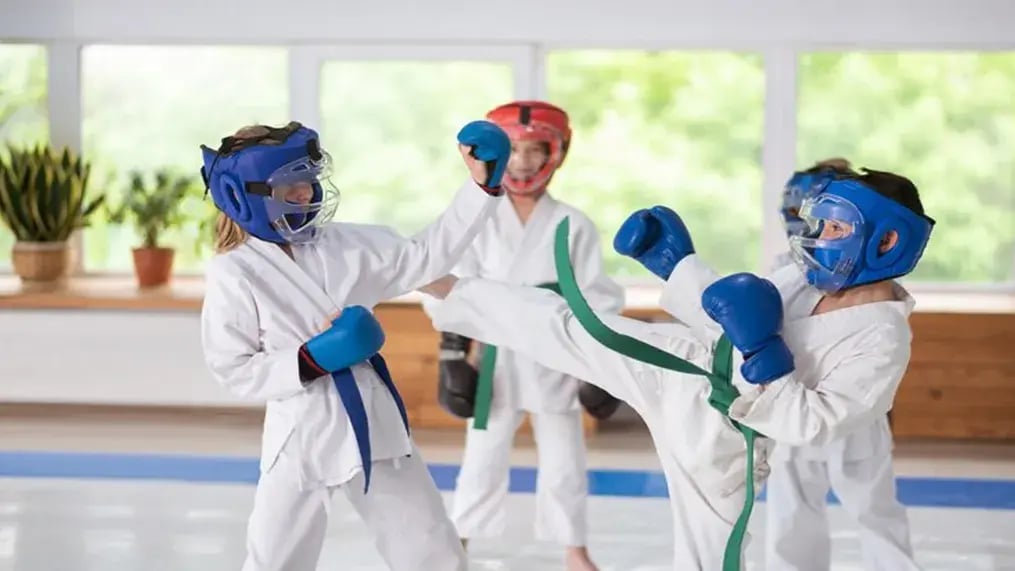
Reduces aggression
Structured martial arts training always decreases, not increases, aggression in children. Physical energy is conveyed through disciplined technique, not reactive impulsiveness. The ethical framework instructs when physical capability can never be used.
Improves attention span
In martial arts classes, kids must maintain a high level of concentration the entire time they are in class. Kids who have regular training show measurable improvements in classroom attention spans, with remarkable consistency. This behavioral improvement is repeatedly confirmed by teacher assessments of Indian school martial arts programs.
Encourages structured thinking
Sequential technical learning, strategic sparring application, and kata memorization are the development of structured thought. Martial arts develop outcome-oriented problem-solving approaches more quickly than verbal instruction. These cognitive skills translate directly into academic and real-world problem-solving demands.
Best Age to Start Martial Arts for Kids
Age-wise suitability
Programs designed for children as young as four emphasize movement and listening. The best age to start belt progression training is between seven and ten years old. Teenagers can start at any level and move fast through the basic curriculum. Each age group needs fundamentally different ways of teaching, not miniaturized adult programming.
Beginner vs advanced training
Beginner programs focus on quality of fundamental movement, basic technique and patterns of safety. Sparring is introduced at the advanced level, once solid baseline competencies are consistently demonstrated. Never compromise true physical and behavioral readiness in the interest of belt acceleration.
How to Choose the Right Martial Arts Classes for Kids
Trainer experience
The most important selection criteria are the instructor’s qualifications and experience teaching children. Behavioral culture in every class is as critical as technical knowledge. Parents should observe several classes before deciding to enroll.
Safety standards
Requirements for protective equipment, controlled sparring protocols, and injury-prevention practices should be clearly visible. Contact management must be age-appropriate and consistently applied in every class. Parents should steer clear of unstructured classes with no explicit safety management.
Class structure
Classes should start with a structured warm-up and move to clear technical instruction. Supervised practice, consistent behavioral expectations, and a formal structured ending are critical. Developmental benefits will not be seen from unstructured martial arts classes without clear progression.
Online vs Offline Martial Arts Training
Kids do not need to be near your local facility to access martial arts training online. Digital cannot replace partner practice, physical corrections from the instructor or immersion in dojo culture. Online formats work best as supplementary resources to in-person attendance, not replacements.
Safety Tips for Martial Arts Training
Before Training
Warm-up routines
Prior to each training session, there is a five to ten-minute structured warm-up, which is safe. There must be combined mobilization, muscle activation and progressive increase of heart rate. Sudden martial arts demands on cold tissue exponentially increase the risk of injury.
Proper gear
Gloves, shin guards, mouth guard, headgear, and a clean uniform must fit properly. All protective equipment must be required and enforced by the instructor at all times. If you are a parent, invest in high-quality gear for your children rather than buying cheap, inferior products.
During Training
Supervision
All partner practice must be supervised by instructors at all times during classes, with no exceptions. Need to monitor contact intensity, technique safety, and emotional management between partners. “Immediate response to unsafe practice developing during sessions prevents serious injury all the time.
Controlled sparring
Before the start of each round, the intensity of sparring must be clearly agreed upon. Contact levels are constantly adjusted according to the experience gap of training partners. The supervision instructor must immediately and without delay stop uncontrolled escalation.
After Training
Recovery and nutrition
Post-training nutrition within thirty to sixty minutes can help repair muscles effectively. Children also need protein and carbohydrate foods after a session, along with plenty of hydration. Get enough sleep and physical rest before the next hard session to train sustainably.
Common Mistakes Parents Make with Martial Arts Training
Forcing kids into training
None of the benefits are gained by kids who are made to learn martial arts against their will. Real voluntary engagement produces developmental results that reluctant compliance never achieves. The infinitely better thing is the parent who is interested in the child's real welfare.
Ignoring rest and recovery
Adding martial arts classes to an already full schedule will lead to exhaustion and no benefit. If another activity is removed before martial arts is added, recovery and real enjoyment are protected. Kids who are too tired to enjoy training will quit regardless of their initial enthusiasm.
Over-focusing on competition
Character development is completely undermined when belt examinations are made the primary purpose of training. For sensitive children, training becomes aversive due to performance anxiety about competitive outcomes. The central parental priority in training should always be the developmental process itself.
Conclusion
Martial arts make whole human beings, not just skilled fighters. Consistency over time with training builds discipline, resilience, and physical confidence. This is consistently confirmed by the benefits of karate for kids and taekwondo outcomes in Indian training programs. Children who train systematically are more regulated, confident, and respectably socially engaged throughout life.
Frequently Asked Questions
What are the benefits of martial arts for kids?

Kids' martial arts builds strength, cardiovascular fitness, focus, and resilience. They learn self-discipline, emotional regulation, respectful behavior, and practical self-defense awareness.
Which is the best martial art for children?
What the best martial art for kids is is entirely up to the individual child’s disposition. Kids' karate suits improve practice form. Graduated structured seekers, Technical development Taekwondo suits physically energetic children who have good lower-body coordination.
Is karate good for discipline?
Karate teaches disciplined behaviour in every single training interaction and every single transition. Discipline is acquired by dojo etiquette and patient repetition of kata, but it is the experience of it that builds true behavioral discipline. This formation comes from living the standards, not being told about them.
At what age should kids start martial arts?
Children can begin martial arts programs at age 4 and up. The optimal time for structured belt-progression training programs is seven to ten years. Teens can start at any level and quickly move through the basic curriculum.
Do martial arts help with self-defense?
Martial arts for self-defense offer situational awareness, assertiveness, and physical competence. Escape techniques develop in concert with the ethical judgment that governs their appropriate use. Responsible self-defense instruction for kids always teaches ethical frameworks and physical techniques equally.
Kaushiki Gangully is a content writing specialist with a passion for children's nutrition, education, and well-being. With more than five years of writing experience and a science-based background, she provides nuanced insights to help families raise happy, healthy kids. Kaushiki believes in making learning and healthy eating fun, empowering parents with practical, easy advice.
The views expressed are that of the expert alone.
Popular Topics