



 Parenting Guide


 Child Health & Growth


 Learning & Skills Development


 Food & Nutrition


 Bournvita





Introduction
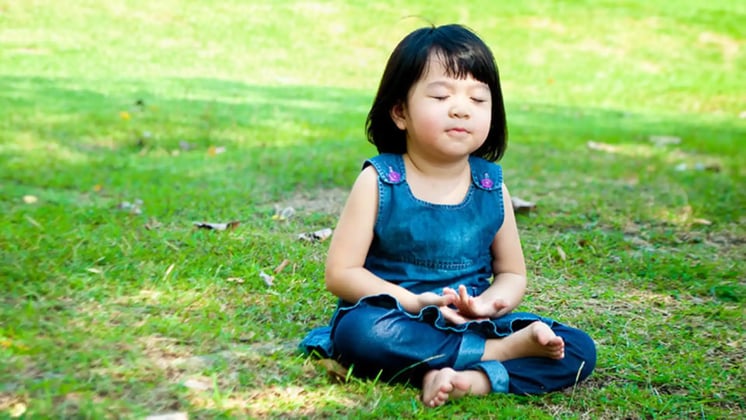
Breathing is the most natural and innate reaction in humans. We breathe heavily when we are scared or active, deeply when we are calm or asleep, and lightly but consistently when we are doing something. Mindfulness is a practice that makes us savor every moment and every breath, teaching all to accept the bad and celebrate the good in the same, grateful manner. And breathing exercises are the easiest way to introduce kids to mindfulness. The main benefits of trying breathing exercises are that they improve blood and oxygen supply to various parts of the body, along with the development of your kid’s frontal and prefrontal cortex of the brain.
How Breathing Exercises May Help Kids
Slow, comfortable breathing exercises can help to activate the body’s natural calming response and may help to ease feelings of stress or overwhelm in children. Used regularly, these techniques can help a child notice and control strong emotions, providing a simple tool to use in the moment when frustrated, worried, or overstimulated.
It's worth being clear that breathing exercises are a supportive practice, not a treatment for any diagnosed anxiety disorder or other mental health condition, and evidence on their specific effects in children is still developing rather than definitive.
The aim of these exercises is slow, comfortable breathing, not forceful deep breaths or long breath-holding, both of which can cause dizziness or discomfort rather than the desired calming effect. These techniques are presented in a gentle, low-pressure way and can become part of a child’s normal emotional toolkit, useful in everyday moments rather than being reserved only for crisis.
Breathing Exercises For Developing Mindfulness In Kids
1. Belly breathing
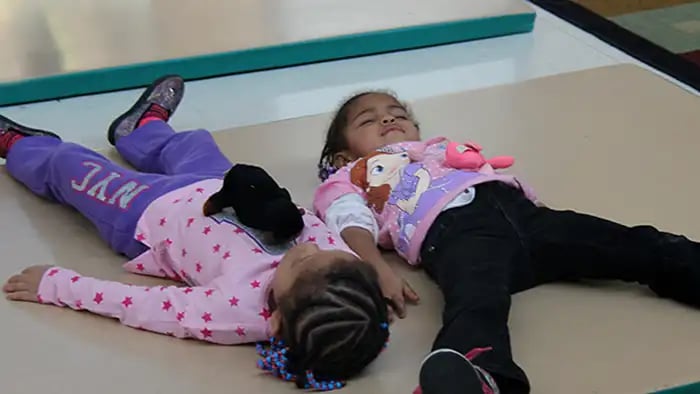
Belly breathing is a simple mindfulness exercise where children lie down and breathe slowly and deeply into their belly. Kids can also feel their body taking each breath with palms on the belly and eyes closed. It helps them focus, slow down, and keep the distractions away.
Steps:
- Have your child lie back on the floor and close his eyes.
- Get them to put their palms on their stomach.
- Close your mouth and breathe in through your nose to the count of 8.
- Breathe in and hold for 2 counts.
- Exhale through the nose for a count of 5.
- Repeat a few times, feeling the belly go up and down.
Advantages
- Slows the body down: Slow deep breathing helps children to relax and settle. This can be helpful, especially before bedtime or after a busy day.
- Builds awareness: Feeling the belly rise and fall helps kids become aware of their breath and body. It is this simple awareness that forms the basis of mindfulness.
- Reduces Distractions: When you close your eyes and concentrate on one thing, you keep your mind from wandering. It teaches kids to be in the moment for a few quiet moments.
2. Breathe and Connect
Partner breathing exercise—breathe and bond. This is an exercise in which a child practices mindful breathing with a family member or sibling. One rests their head on the other's stomach or holds their hand, feeling every breath. It makes quiet breathing something to do together that kids love.
Steps
- Have your child select a family member or sibling to be their buddy.
- Tell them to lie next to each other on the floor.
- Let the buddy rest its head on your child’s tummy, or hold your child’s hand.
- Encourage your child to breathe slowly and deeply.
- Have them watch the head or hand of their buddy move.
- Switch places for the next round.
Advantages
- Builds connection: Doing the activity together creates trust and closeness among family members. It turns quiet time into a time of bonding.
- Builds empathy: A child paying attention to a friend’s breathing is learning to tune into someone else. It makes them see other people and not just themselves.
- Keeps kids interested: The partner aspect makes the breathing practice feel like a game. It also teaches patience, taking turns.
3. Dragon's Breath
Children love this mythical theme and have fun with dragon breath, a fun breathing exercise. They sit or kneel with a straight back, breathe in slowly through the nose, and then breathe out through the mouth, visualizing a dragon breathing out flames. The story keeps kids engaged as they learn to breathe slowly and with control.
Steps
- Have your child sit or kneel with eyes and mouth closed.
- Check your posture: back straight, chest open, head up.
- Invite them to inhale slowly through the nose for a count of 8.
- Hold for 2 counts.
- Next, have them blow their breath out for a count of 5.
- Have them comfortably stick out their tongue and breathe out like a dragon blowing out fire.
- Repeat a couple times.
Advantages
- Fun to practice: The dragon story gives children a reason to want to practise. They stay longer when they are playing imaginatively.
- Teaches Breath Control: Counting each breath helps kids slow down and control their breathing. This can help them be calmer when emotions are high.
- Encourages good posture: Sitting upright with an open chest allows you to breathe completely. It also develops body awareness.
4. Candle Breathing
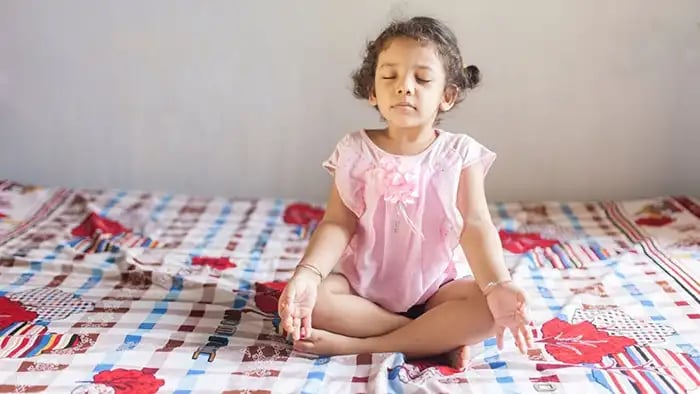
Candle Breath is a mindfulness activity to help you build focus and attention. Children stand in front of a lit candle, take a deep breath in through the nose and breath out as gently as possible so the flame does not go out. It teaches them balance between breathing in and out, later they can just imagine the candle.
Steps
-
Sit your child in front of a lit candle at a safe distance in the lotus (cross-legged) position and let an adult supervise.
-
Let them imagine a flower in their mind and take a deep breath through their nose of its fragrance.
-
Hold breath for a count of 2.
-
Exhale through the nose, softly enough so that the candle does not blow out.
-
Repeat, equalise your in-breath and out-breath.
-
Once they are comfortable, remove the candle and ask them to imagine it.
Advantages
- Increases concentration: The flame offers the mind a point of focus. This can build up attention that carries over into schoolwork.
- It teaches balanced breathing: The flame shows immediately if the breath is too forceful. Children are instructed in even breathing.
- Develops a portable skill: Once children can visualize the candle, the technique can be used anywhere. No candle necessary, so good for class or bedtime.
5. Volcano’s Breath
Volcano Breath is a visualization exercise that involves breathing with simple arm movements and is suitable for kids of all ages. Children breathe in, raising their hands up over their heads, and breathe out, lowering their hands to the sides of their bodies, as if lava were flowing down a volcano. It is a motion and imagination to deep breaths.
Steps
- Ask your child to sit or stand tall with their palms together over their heart.
- On the inhalation, have them raise their hands, clasped together, until they are above their head.
- Ask them to let their hands separate as they exhale, moving down to their sides like lava flowing down the volcano.
- Repeat for a few times.
Advantages
- Good for fidgety kids: Kids who find it hard to sit still do better when breath is combined with movement. They are still breathing deep; they are still active.
- Gently stretches the body: Moving arms, shoulders, and upper body by reaching overhead and lowering the arms. It’s more like play than working out.
- It unleashes big feelings: the image of an eruption gives a safe outlet to energy or frustration. Kids can imagine those feelings flowing out with the lava.
6. Shoulder Roll Breathing
Shoulder roll breath is a simple exercise that combines deep breathing with shoulder movement to help you relax tense muscles and increase mindfulness. They breathe in as they lift their shoulders up to their ears. They breathe out as they roll their shoulders down. This is easy to do anywhere and helps kids to release tension that has built up.
Steps
- Seat your child in a comfortable position.
- As they inhale deeply through the nose, have them lift their shoulders up toward their ears.
- As they exhale, have them roll their shoulders back and down.
- Repeat 4 to 5 times.
Advantages
- Releases tight shoulders: Lifting and dropping the shoulders releases tension which builds up from school bags, desks, or screens. It can make the neck and upper back feel lighter.
- Develops body awareness: Kids learn to be aware of where they hold tension. Finding it early helps them relax on their own.
- Quick and easy: A few breaths and you can do it sitting anywhere. Which is handy for homework or between classes.
Breathing Exercises by Age
- Young children (3-6 years old): Simple, playful techniques such as “smell the flower, blow out the candle” are effective at this age, as the imaginative framing makes the exercise feel like a game, not a formal practice.
- School-aged children (7–11 years): More structured techniques such as tracing a hand for five-finger breathing work for this age of developing attention span and ability to follow multi-step directions.
- Teens (12 years+ ): Teens tend to do better with longer, more structured breathing exercises, such as counted breathing patterns, and they may do better if they understand the basic rationale as to how this technique can help, rather than just the mechanics of it.
According to NIH, The complexity and framing of an exercise should be changed according to the developmental stage of a child so that there is a higher chance of actually practicing the exercise and gaining benefits from it, instead of finding it confusing or boring.
When to Practise Breathing Exercises
- In quiet times first: You can introduce and practice the breathing exercises when the child is already relaxed, so they learn the technique without the added pressure of a stressful moment.
- Prior to a known stressor: Practicing right before something like a test or performance can help a child feel more prepared and calm when it’s time to go.
- In times of mild stress: Once the technique is learned, a child can use it to deal with the minor frustrations of everyday life, such as a disagreement with a sibling or a difficult homework problem.
- As a part of the bedtime routine: While gentle breathing exercises before sleep can be part of a calming pre-sleep routine, they are not necessarily a magic cure for sleep problems.
WHO suggests, getting to know the technique in times of low stress makes it more accessible and effective when a child really needs it in a more difficult moment.
Safety and When to Stop
- Keep breathing slow and easy. Avoid strenuous deep breathing or holding the breath for long periods in exercises, as this is likely to bring on dizziness, lightheadedness or real discomfort rather than a soothing effect.
- If dizziness occurs, stop. If at any point the child becomes dizzy, lightheaded, or uncomfortable, the exercise should be stopped immediately and the child should be returned to normal breathing.
- Watch for trouble breathing. If the child is really having trouble breathing, not just trying to keep up with the pace of the exercise, stop and have him checked out by a physician.
- Consider any existing medical conditions. Children with breathing conditions such as asthma should check with their doctor before starting any new breathing exercises. Some methods may need to be adapted to their particular illness.
These exercises are supposed to be easy and comfortable all the way through. Any exercise that causes real distress rather than mild focus is not being done correctly and should be adjusted or dropped.
Conclusion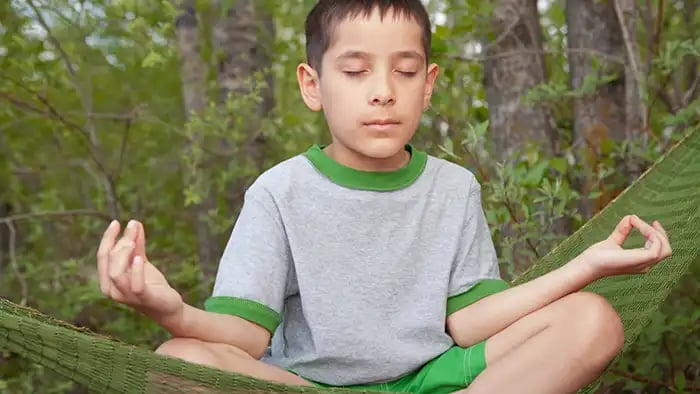
Various other kinds of breathing exercises are available, like rainbow breathing and bunny breaths, which are wonderful for kids. But these listed breathing exercises cater to the diverse needs of kids of all ages. Mindfulness is an awareness that is instigated by these breathing exercises, not created by them, as it pre-exists in every human adult and kid. All you need to do is activate that awareness and appreciation in them again with the help of the above-mentioned breathing exercises.
Frequently Asked Questions
What are the best breathing exercises for kids?

Simple methods such as "flower and candle" breathing or five-finger breathing work well, with playful framing suitable for a child's age and attention span.
How often should children practise?
In calm moments, a few minutes at a time, several times a week, helps to build familiarity before a child needs the skill under stress.
Can breathing exercises help with anxiety?
Breathing exercises can help a bit, but this is not a treatment for diagnosed anxiety disorders that need treatment and evaluation by a professional.
When should a child stop an exercise?
If at any point during the exercise a child feels dizzy or lightheaded or has any real difficulty with breathing, they should stop right away.
Smriti is a content writer who creates clear, practical, and informative content backed by science and relevant data. With a strong understanding of structured writing, she breaks down complex topics into simple, actionable insights. Her work is focused on helping readers prepare, learn, and grow with confidence and clarity.
The views expressed are that of the expert alone.