



 Parenting Guide


 Child Health & Growth


 Learning & Skills Development


 Food & Nutrition


 Bournvita




Introduction

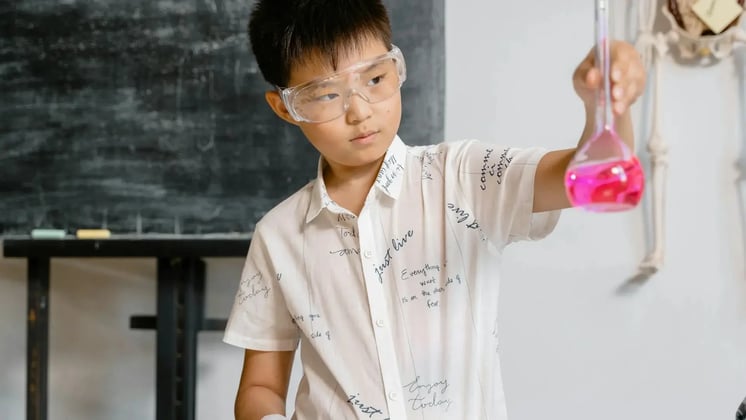
Sitting still is not learning. Physical play and movement can be a good way to teach real science ideas. Combining science with fitness keeps children engaged in both areas. This article presents simple experiments that can be used for active play, as well. It is the application of real science. No special equipment or fancy setup required. These activities can be done in your home, in your yard, or at school. They make abstract ideas something for kids to understand. It enables curiosity and physical activity at the same time. Parents do not need a science background to facilitate these experiments. Learning feels natural with simple explanations coupled with movement. Here are 4 practical experiments you can start with right away.
Why Combine Science and Fitness for Kids?

Physics is linked with physical activity so as to improve understanding through direct experience. Kids learn better when they see principles in action. This method is also very engaging and makes young students curious. Of course, movement will hold more attention than passive explanation alone. Physical activity in itself supports better focus during learning in general. The synergy makes play a meaningful experience of learning. It also lessens reliance on screens for entertainment or education. Children with high energy are particularly suited to active learning. The method is successful for a range of ages and environments. These activities can often be tried in simple household spaces. Combined, both these areas become more accessible and fun.
Fun Science Experiments That Double as Fitness Activities
Laws Of Motion
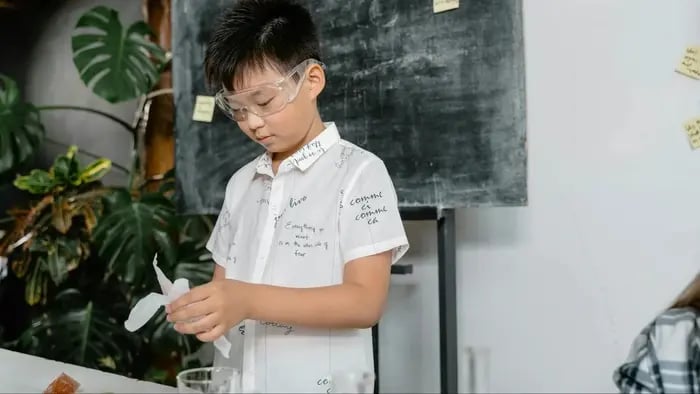
Testing the laws of physics in real life is one of the most interesting ways to enhance the activeness of children, along with displaying the physical experiment to help children understand better.
An Object in Motion Stays in Motion, and an Object at Rest Stays at Rest (Unless Acted Upon by an Unbalanced Force)
Take a football and head with your child outside, let your child kick it, and demonstrate how the ball is still in motion until it hits the goalpost. Help your kid understand that when you keep the ball on the ground, it does not move without any force.
But as soon as the child hit the ball, it moved with full force until it was stopped by any obstacle or goalpost. This action demonstrates the first law motion. Playing ball and learning about how the motion works can also help the kid stay active.
Acceleration is Directly Proportional to the Net Force Acting on an Object and Inversely Proportional to its Mass
Although this law is trickier to understand, it can be used as a great fun technique. Gather around a group of children and tell them to run according to their minds. Explain to the children that all of them are similar in age and weight, which can be taken as the same mass.
Their mind can act as an external force; the faster the child thinks they can go, the more speed they run. This law explains that acceleration can make the object go faster even if the masses are the same. Running around all day and figuring out this tricky law can help the children clear their concept of science with activeness.
For Every Action, There Is an Equal and Opposite Reaction
Parents can demonstrate this law while they are in the playground. Many playthings, such as slides and seesaws, can easily help children understand this law. Gather around two children to demonstrate the law with an experiment. Make them observe how the seesaw is built. There must be rubber tires rooted in the ground below the seats. Explain to children that this tire helps the seat go upwards as a reaction. If the seesaw seats do not land on the tires by force, the seesaw will not jump as high as it should. This phenomenon explains the third law of motion. Not only will it allow kids to enjoy a good play time staying active, but it will also make them understand better.
Static Energy
This is the funniest exercise a kid can experience, learning and staying active. Make the kids wear sweaters and tell them to rub their backs on each other as fast as possible. Now take some paper shreds and throw them in between them. Explain to kids how this magic works with static energy. Kids need to work hard and stay active during this experiment to see the most effect, helping the double effect of science and activity.
Conclusion
These experiments show that learning can occur simultaneously with movement. Often just simple everyday materials are required. Try one experiment and science can seem exciting and physical. This type of hands-on learning inspires curiosity and keeps kids very engaged.
Frequently Asked Questions
What age group are these science experiments best suited for?

These activities are for six to twelve years of age. Younger children need things explained simply; older children can be taken into deeper questions.
Do I need special equipment for these science-fitness activities?
No. Each experiment uses simple items you already have lying around the home. A ball, a balloon and open space will cover most of these activities.
How can science experiments help improve a child's physical activity levels?
Seeing movement as an experiment is more motivating than just working out. It encourages children to be active, inquisitive, and engaged.
Smriti is a content writer who creates clear, practical, and informative content backed by science and relevant data. With a strong understanding of structured writing, she breaks down complex topics into simple, actionable insights. Her work is focused on helping readers prepare, learn, and grow with confidence and clarity.
The views expressed are that of the expert alone.
Popular Topics