




 Parenting Guide


 Child Health & Growth


 Learning & Skills Development


 Food & Nutrition


 Bournvita




Introduction
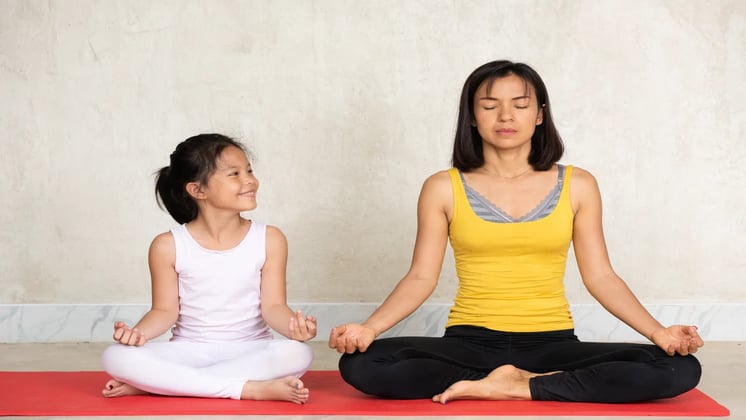
Staying present in the moment is very important for kids to grow up mindfully. Mindfulness is not an option but a necessity for children to make their personalities more confident and empathetic. There are different types of mindful exercises students and younger children can practice, from writing to breathing, getting hold of calmness.
Parents should always remember that pushing a child towards mindfulness will not work; it should be inculcated with daily habits and environment. Here are a few fun mindful breathing exercises that can help kids with various benefits in the future. Keep on reading to learn more about it.
Why Mindful Breathing Is Important for Children
Rising stress, distractions, and anxiety in children
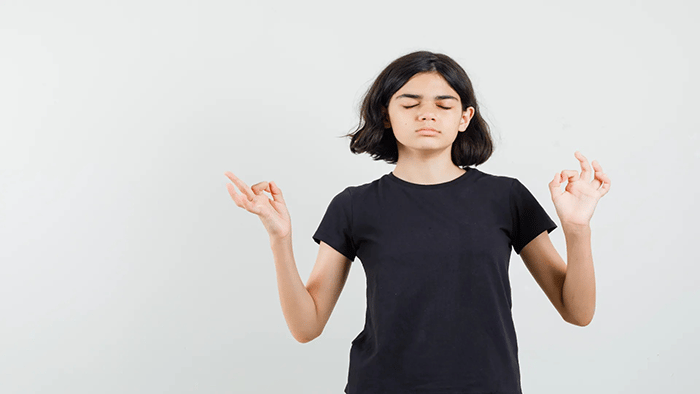
Indian school children also have examination pressure, academic competition and social media comparison. These stressors are compounded by reduced unstructured play time across the school-going years. This results in a baseline stress activation level that has never been experienced by previous generations. Chronic low-level stress both disrupts sleep, concentration, emotional regulation, and immune function. Breathing exercises for kids offer a daily intervention point to tackle this baseline activation. Physiological mechanisms operate independently of the child’s ability to cognitively cope with stress.
How breathing acts as an instant calming tool
Slow diaphragmatic breathing is the fastest physiologically valid method to reduce anxiety. Within seconds of initiating the deliberate practice, it fires up the vagus nerve. The nervous system moves to a parasympathetic dominant state, which anxiety cannot physiologically sustain.
Link between breathing, focus, and emotional control
Breathing exercises for focus work because voluntary breath control strengthens prefrontal regulatory pathways. And these same prefrontal pathways are just as important for sustained attention and emotional regulation. Training breath regulation trains the wider self-regulatory capacity that underpins all performance simultaneously. This collaborative pathway development benefits all domains of children’s performance and well-being.
What Is Mindful Breathing for Kids?
Simple explanation (awareness of breath)
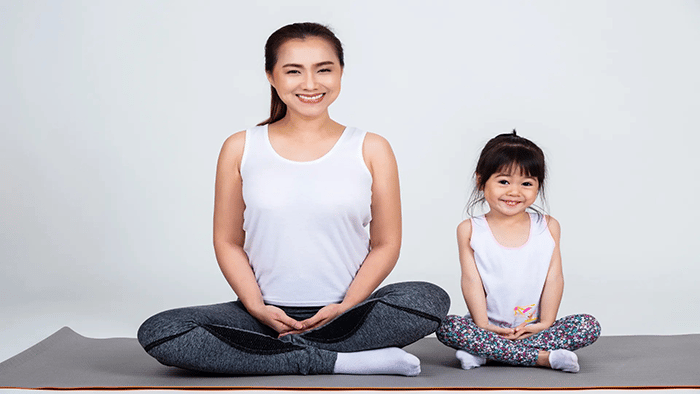
Mindful breathing for kids is purposefully paying attention to the breath as it is. Children are naturally aware of masses of air moving in and out of their noses. The rise and fall of the belly is noted, the slight pause between the breaths. At first no attempt at alteration or judgment of these observations is necessary.
Connection to mindfulness for kids, self-awareness, and emotional regulation
Mindfulness for kids uses breath as the main focus of attention throughout practice. Breathing is always happening in the here and now, so it is always available. Children can access it anywhere, in any state of mind, at any level of cognitive ability. Mindfulness for children, through awareness of the breath, develops the self-observation skill needed for emotional regulation. The signal recognition pathway looks something like this : see breath change, recognize an emotional state, and then select a response.
Difference Between Normal Breathing and Mindful Breathing
Normal breathing goes on without attention or intention all day, automatically. When kids add mindful breathing to this, it adds conscious awareness, directional intention, and pace regulation. Mindfulness turns an automatic physiological process into a deliberate self-regulatory practice. The physiological mechanics are the same , but different neural pathways are consciously activated. Conscious breath direction is never developed by automatic breathing and so provides regulatory benefits.
Why Breathing Exercises Help Kids Stay Calm
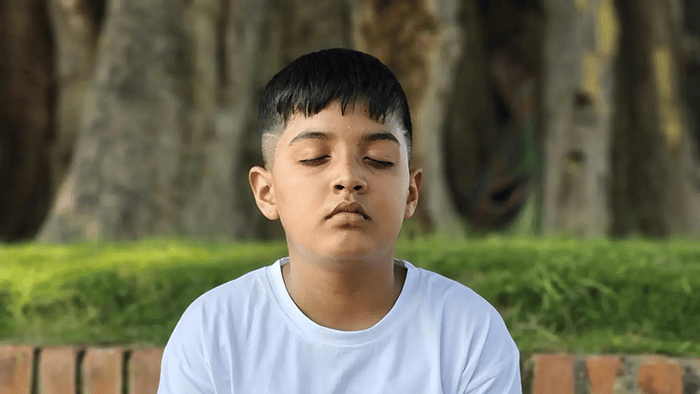
Regulates Emotions and Reduces Anxiety
Breathing exercises for anxiety work primarily by stimulating the vagus nerve. This pathway is activated in the first few cycles of slow diaphragmatic breathing. The vagus nerve is the main parasympathetic pathway from the brainstem to the organs. It decreases heart rate, blood pressure, cortisol secretion, and subjective experience of anxiety. A child can breathe towards physiological calm, rather than think through anxiety. Children don't need the cognitive capacity to engage with anxious thoughts for this to work.
Improves Focus and Concentration
Breathing exercises for focus involve voluntarily controlling your breath to engage the executive attention network. This training improves prefrontal systems that support voluntary sustained attention. Each time kids intentionally direct your breath, it is a training repetition for these pathways.
Helps with Sleep and Relaxation
Breathwork for sleep addresses the pre-sleep arousal state that anxiety sustains. This excited state is also sustained by exposure to the screen, which greatly postpones the natural onset of sleep. Slow, prolonged exhalations engage the vagal brake—slowing the heart rate. Kids need to bring their heart rate down before they can proceed to the next step in the sleep staging sequence. Consistent support for sleep onset with three to five minutes of deliberate slow breathing prior to bed. Regular practice each night as part of a bedtime routine reduces the time it takes to fall asleep.
Builds Self-Regulation Skills
Self-regulation activities based on kids’ breath control build voluntary regulation capacity. This goes beyond breath management to the whole range of self-regulatory behaviors. A child who has soothed anxiety through breathing has direct proof of their capacity. Self-efficacy for emotional management is developed from this direct personal regulatory experience. But this cannot be provided by external reassurance, as it depends on the presence of another person.
Benefits of Mindful Breathing Exercises for Kids
Reduces stress and nervousness
Slow, intentional breathing significantly reduces cortisol levels through physiological mechanisms. Activation of the vagus nerve downstream inhibits the hypothalamic-pituitary-adrenal axis. Children who breathe deliberately before examinations have lower observable anxiety signs. Better performance results than peers without any regulatory preparation practice.
Improves attention span and concentration
Better sustained attention results from a stronger prefrontal cortex due to breath control exercises. Training in breathing practice directly benefits academic tasks that require voluntary attentional control. Five minutes of attention to breath a day creates longer focus periods for children. Also, improved reading comprehension retention and improved mathematical problem persistence were developed. These improvements seem to occur within four to six weeks of daily practice.
Supports emotional regulation and behavior control
Breath awareness provides the cognitive space between stimulus and response that emotional regulation requires. Breath awareness provides a tool of physiological regulation between the triggering event and the behavioral reaction. Child mindfulness through breath creates this space through immediate physiological calming. The patterns of reactive escalation slow down before the level of behavioral expression that causes problems. This stops behavioral escalation, which is good for social relationships and adult relationships.
Enhances relaxation and sleep quality
Performing the breath practice daily for weeks improves the baseline regulation of the nervous system. Regular practice enhances sleep onset, sleep maintenance, and sleep quality. These improvements take weeks and do not require intervention prior to each sleep attempt. Lower baseline arousal. The nervous system is frequently physiologically calm. This means that it requires less time and physiological effort to successfully fall asleep.
Builds confidence and self-awareness
A child who can control his anxiety with breathing has real self-efficacy. No amount of adult reassurance can replace this direct regulatory experience for children. This creates real confidence based on evidence of individual regulatory competence over time. Each successful breathwork session builds incrementally on stable self-perception. Regular practice incorporates regulatory competence into the child’s enduring self-concept.
7 Simple Mindful Breathing Techniques for Kids
1. Belly Breathing (Diaphragmatic Breathing)
Belly breathing for kids means putting one hand on the belly and the other on the chest. Children breathe so they only move the hand on the belly with each breath. The chest stays pretty still during the entire breathing exercise. This trains the diaphragm's breathing pattern to most effectively activate the parasympathetic response. This practice replaces the shallow chest breath that is induced by stress and anxiety. Deep-breathing exercises for kids using belly breathing provide the most immediate physiological calming. This method results in the largest and most consistent vagal activation of any available breathing pattern.
2. Box Breathing (4-4-4-4 Technique)
Box breathing is four counts for inhale, hold, exhale, and hold. This brings the autonomic nervous system into measurable balance with a square pattern. This relaxing breathing exercise is particularly useful before exams and presentations. It decreases the activation of anxiety but does not entirely sedate the alertness that is also necessary for performance. Four to six rounds of it improve heart rate variability in children and adults. This rise in heart rate always leads to improved cognitive performance under pressure.
3. Balloon Breathing Exercise
Balloon breathing encourages children to visualize their belly inflating with air like a balloon. It slowly inflates on every breath in and fully deflates on every breath out. There is an optional imaginary balloon color to customize the visualization for each child. This mindfulness exercise is a great way to bring diaphragmatic breathing to life with the help of visual imagination. Young children are concrete operational thinkers and need tangible metaphors for body-focused awareness. The metaphor of a balloon inflating gradually naturally teaches children to pace their breathing. This slow pace results in the physiological calming effects that fast breathing cannot create.
4. Finger Counting Breathing
In this technique, the children hold one hand with the fingers spread wide. Breathe in, run a finger up, breathe out, and run a finger down. Five full cycles of breath are taken, guided by the contact of the fingers. This mindfulness practice successfully combines awareness of breath with touch-based kinesthetic engagement. The abstract practice of counting breath cycles becomes a concrete and independently executable practice. Children can do this anywhere and need nothing but their own hands. Finger tracing provides an external attention anchor during states of emotional activation. The attention shifts from spiraling thoughts to the physical practice that fosters calm.
5. Alternate Nostril Breathing (Pranayama for Kids)
To perform alternate nostril breathing (simplified version), gently place a finger over one nostril. Children breathe in through the open nostril and then switch sides for exhalation. This ancient pranayama practice is part of the Indian yoga tradition itself. This technique works by balancing the nervous system through controlled bilateral nasal airflow. This differentially activates autonomic nervous system pathways via left and right nasal dominance. This technique can be learned by older children aged eight and above with parental demonstration.
6. Guided Breathing Meditation
During practice, the guided breathing session provides verbal scaffolding needed by young children. Gentle directional cues guide what to notice, when to inhale, and when to exhale. Good guidance tells what to do when the mind wanders off. This scaffolded approach is most beneficial initially to young children and new practitioners. Children can benefit from sustained attention with guided breath instructions in meditation programs. The training has not yet fully developed the capacity for autonomous concentration during unaided practice.
7. Star Breathing Technique
Star breathing traces or pictures the form of a star with five points all throughout. The finger goes up to each star point, and the children inhale. They exhale as it goes down to each valley between points. In the single star-shaped trace, there are five full cycles of breathing. The regulatory benefits of five-cycle slow breathing are integrated with concrete visual and tactile engagement. The full regulatory sequence needed for calming maintains young children’s participation. Physiological calming is significant when the whole pattern is consistently completed.
Fun Ways to Teach Breathing Exercises to Children
Use Toys or Soft Toys for Breathing Practice
Belly breathing is tangible when a toy is placed on the belly. Assigning a stuffed animal a breathing friend role engages children in imaginative play. Each deliberate breath makes the toy rise and fall, turning abstract practice into observable activity. Children participate naturally through their play-based imagination, not through formal compliance.
Turn Breathing into a Game
Regulatory practices become real games for children when they are competitive breathing challenges. Who can make the belly go up the highest is a fun and motivating challenge. Breath-counting competitions and timing contests for the slowest exhale are just as effective. Children naturally want to participate in games through competitive and playful engagement. The child’s natural involvement in games serves the underlying regulatory purpose.
Use Stories and Visualization
Guided breathing stories are a journey, an adventure, with each breath. The deeds of a certain kind of character give children concrete imaginative experience. This narrative framing turns abstract breath instruction into intentional, story-based context. Adults are motivated by health benefit framing; young children need the context of a story. The narrative meaning makes the abstract breath practice feel meaningful and really engaging.
Practice Together as a Family
Parents who practice breathing with children model the normalcy of self-care regulation. This provides co-regulation that children in early stages of skill development need.” Children need to be co-regulated first before they can independently co-regulate when faced with actual stress. Family breathing practice offers developmental benefits for the child and real stress relief. Family practice sessions are beneficial for both the practicing parent and the child.
When Should Kids Practice Breathing Exercises?
Before exams or stressful situations
Box breathing, or belly breathing, for three to five minutes before exams is useful. It reduces performance anxiety that hinders working memory and the retrieval of information. This practice is most useful for students whose academic performance is most impacted by their anxiety.
At bedtime for better sleep
Doing breathing exercises for sleep is a nice complement to a regular bedtime routine. Need to support the physiological shift to parasympathetic dominance needed for sleep onset. Conditioning of the nervous system to associate the sequence of breathing with the approach of sleep. This Pavlovian conditioning builds up gradually over weeks through repeated nightly practice.
During emotional outbursts
First, calm-state practice needs to be done so that breathing can be taught as a first-response tool during emotional escalation. A child in full emotional activation is not able to learn new skills because of a lack of regulatory capacity. The tool that is available in difficult states is installed by practice in neutral states. Skills that have been practiced tend to be recalled more reliably than new techniques under mild stress. Newly introduced methods are far less accessible than those formerly used in acute distress.
As part of a daily mindfulness routine
Mindfulness exercises for kids that incorporate daily breath awareness lead to cumulative adaptation. Regular training of the nervous system lowers the baseline anxiety and increases concentration. This daily foundation provides the necessary regulatory capacity for challenging situations. An inadequately trained nervous system fails to provide regulation at the time of greatest need.
Tips for Parents to Teach Mindful Breathing
Keep sessions short (2–5 minutes)
Daily breath practice for two to five minutes is more developmental than occasional longer sessions. Short sustainable sessions have the consistency advantage that intensive unsustainable ones don’t. This is confirmed by all research on habit formation, regardless of the skill domain involved.
Avoid forcing the child
Children who are made to do breathing exercises regularly develop avoidance patterns consistently. These patterns do more damage to future practice than any technical limitation. Gentle, steady invitation yields better long-term results than any degree of enforcement. This is true whether the parent sees the practice as important for development or not.
Focus on consistency over perfection
A child who breathes imperfectly every day builds more regulatory capacity than one who practices intermittently. Frequency trumps quality in the strengthening of neural pathways through regular repetition. A rare, technically superior performance produces less lasting results than imperfect daily practice.
Use calm environments
Bright lights, ambient noise and visual distractions reduce the depth of nervous system calming. Otherwise, quiet, dim, calm environments maintain and settle alerting responses. A predictable environment will, over time, enhance the conditioned calming response. This conditioned response develops gradually with each week of practice with the same pairing with the environment.
Common Mistakes to Avoid
Expecting immediate results
Anxiety breathing exercises lead to cumulative neurological adaptations over four to six weeks. There will not be measurable regulatory improvement until there has been consistent daily practice. But parents who quit after 3 tries are losing the magic window of neurological adaptation. This is the adjustment period during which tangible results become reliable, according to the research.
Turning it into a discipline instead of a habit
Using breathing practice as a consequence for behavioral problems destroys its voluntary nature. All subsequent practice is undermined by aversive associations, no matter how it is later presented or framed. It kills the voluntary, curious engagement that makes the practice developmentally effective. One of the most damaging parental mistakes with mindfulness practices is discipline framing.
Overcomplicating techniques
Consistent, simple belly breathing on a daily basis leads to the development of increased regulatory capacity. Sporadic and partial application of an elaborate multi-technique protocol accomplishes less. The simplest method, consistently practiced, always produces the best developmental results. It’s this simplicity and accessibility that enable the frequency advantage required by daily practice maintenance.
Ignoring child’s comfort level
If any breathing technique causes discomfort, dizziness, or anxiety, it should be immediately substituted. The harm comes in forcing a child through real discomfort as a developmental hurdle. Calming breathing exercises should reliably produce calm, not distress, in every child. The first screening criterion must be child comfort, and technique selection must not be compromised on this.
Conclusion
Daily mindfulness and breathing exercises for anxiety are some of the simplest developmental investments kids can make. They are powerful, regardless of the child's age, background, or current emotional health. Small, consistent daily practices build long-term emotional resilience and focus in children. This develops the self-regulation skill every child needs to negotiate modern childhood. Children who acquire breath-based self-regulation skills early in life have a lifetime regulatory tool.
Frequently Asked Questions
What are the best breathing exercises for kids?

The best breathing exercises for children are belly breathing. Box breathing, balloon breathing, and finger-counting breathing—all are equally powerful choices.
How do breathing exercises help child anxiety?
Anxiety breathing exercises reduce child anxiety directly through vagal nerve stimulation. Diaphragmatic breathing shifts the nervous system from sympathetic arousal to parasympathetic calm. This reliably happens in the first few breath cycles of deliberate practice.
At what age can kids start mindful breathing?
Mindful breathing with belly breathing and simple visual techniques is beneficial, starting at age three. The playful, concrete formats make the practice accessible to the youngest age group. Older children, aged between 6 and 7, can benefit from more structured techniques, such as box breathing.
How long should kids practice breathing daily?
Preschoolers need 2-5 minutes of practice per day to get the frequency of practice required for neural adaptation. Five to ten minutes is beneficial for school-age children, resulting in consistent measurable regulatory improvement.
Can breathing exercises improve focus in children?
Focused breathing exercises lead to measurable Improvements in concentration by strengthening prefrontal pathways. Children continually practice the executive attention network by voluntarily controlling their breathing.
Smriti is a content writer who creates clear, practical, and informative content backed by science and relevant data. With a strong understanding of structured writing, she breaks down complex topics into simple, actionable insights. Her work is focused on helping readers prepare, learn, and grow with confidence and clarity.
The views expressed are that of the expert alone.
Popular Topics