




 Parenting Guide


 Child Health & Growth


 Learning & Skills Development


 Food & Nutrition


 Bournvita





Introduction
Before screens and smartphones, Indian children would play out in open courtyards, dusty lanes, and school grounds, full of energy and laughter. They ran, they strategized, they argued over rules, and they made up — all in the simple joy of play. Games of India in olden days were never mere games. They were fun-wrapped life lessons. They taught patience, teamwork, resilience, and respect—skills no classroom could ever completely replicate.
Many of these games are being rediscovered today by parents who want more for their children than screen time. “They want their children to move, connect, and experience the same joy they grew up with.” These traditional games for children are fun, promote physical activity, prevent boredom, and make leisure time real learning time. They incorporate culture, movement, and social skills in a natural and meaningful way.
Whether it’s at home, school, or during festivals, these games wonderfully bring families and communities together. These classics are still just right for kids today. This article discusses a few popular traditional games of India and the reason why every child should be given an opportunity to play them firsthand.
How traditional games help physical and mental development
Traditional games of India provide far simpler entertainment for growing children. They naturally improve physical fitness through running, jumping, and total body coordination. Regular play helps develop mental skills such as strategy, focus, and problem-solving. Children also learn teamwork, cooperation, and turn-taking in a social environment. These fun traditional games for children create a real link to the Indian culture and family history. Each game played is a small investment in your child's holistic development.
Benefits of traditional games vs. digital games for kids
Traditional games of India, on a day-to-day basis, provide distinct and valuable benefits over screen-based activities. They offer a lot more physical activity than any digital game ever could. In-person connection naturally fosters stronger friendships and genuine teamwork. Fun traditional games with family, authentic Indian culture for children. When kids are engaged in active outdoor play, screen time naturally decreases. Digital games are short-term entertainment, but traditional games build character, health and connection in the long run.
Traditional Games of India That Your Kid Will Enjoy
Playing games is not just about having a fun time. It is a great way of making your kid more social and cooperative with other kids. Other than having physical benefits, games may also enhance your child's concentration and creativity. Here are several traditional games of India that your child is going to love.
Chupan Chupai
Also called hide and seek in English, this game in India has been popular since the Vedic era. It is a game that involves problem-solving, teamwork, and high agility among kids. One kid who takes the term is supposed to find the other kids who get 30 seconds to hide in different places. The kid who gets caught first ends up taking the turn to find other kids. The cycle keeps repeating, and everyone gets a fair opportunity to hide as well as seek.
Pallankuzhi
This is a popular game from the southern part of India and traces its origin in Tamil Nadu. Later on, it became popular with other neighboring states like Karnataka, Kerala, and Andhra Pradesh. To play this game, one needs a rectangular game board that has seven vertical columns and two horizontal columns. Other than this, there are 14 cups on the board and 146 different counters. Traditionally, shells or tamarind seeds are used as counters. The game is generally played between two people.
Lattoo
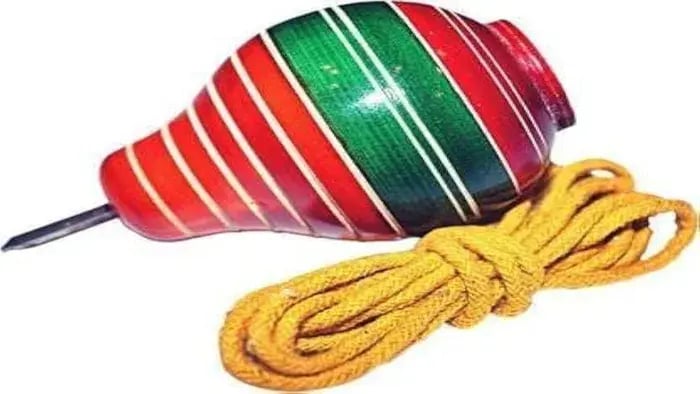
People from the 90s might have some very formed memories of spinning lattoo in the afternoon with their friends. It is believed that the toy goes back to at least 3500 BC and has been popular ever since then. Kids these days have the opportunity to find a variety of lattoo in various shapes and colors. It is a multiplayer game in which kids wrap their lattoo with the string and then unwind it at the same time. The child whose lattoo keeps spinning for the longest time ends up winning.
Kalaney Belaney
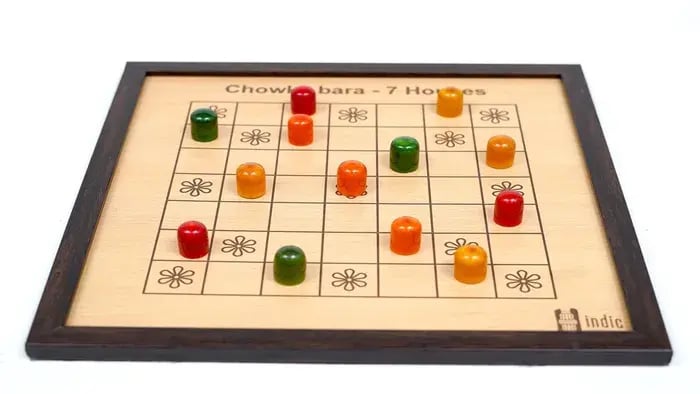
The game translates into black elephant and white elephant in English. It is believed that this game originated in Karnataka. Though a simple game, it's quite engaging and meant for two players. Each player will have a fixed number of pieces that they need to arrange on their side of the board. The game begins with the first player rolling the dice. As per the number of the dice, they would remove the opponent's pieces from the board. The player with the most number of pieces standing in the end is declared the winner.
Ashtapada
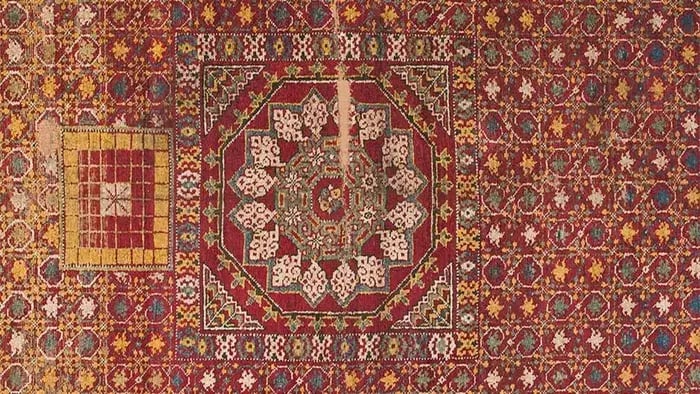
Ashtapada is considered a primitive version of modern-day chess. Just like chess, the board for this game has an 8×8 square grid. However, all the squares are of a similar color. It is played with a dice, and there are various markings around the corners in the center of the board. The game starts with each player having an equal number of pieces on their side of the board. The pieces are meant to move clockwise and enter the territory of the other player. Ultimately, the player who ends up reaching the castle of the enemy territory is considered the winner.
Chain
Chain is a highly engaging game that requires multiple players. One player starts with their turn, and all the other members have to run to avoid getting caught by that particular player. As the game proceeds, the player with a catching turn ends up tagging other players and forming a chain. With every consecutive turn, more people start getting added to the chain after being caught. The last man standing is declared the winner.
Aankh Micholi
Aankh-micholi is a very popular traditional game of India that is still played in many parts of the country. It is like a variation of hide and seek. One player is declared as the denner and is blindfolded. A boundary is created, and all the other players, along with the denner have to stay inside the boundary. The job of the other players is to tease and run around the denner. Whoever is tagged by the denner ends up getting blindfolded and becoming the denner.
Conclusion
Traditional games of India are a matter of pride and an important part of our cultural identity . They have brought joy to children and grownups through many generations. These games are, by their very nature, physical activity and mental strategy. That balance makes them perfect for the busy modern Indian family today. Have fun with these traditional games for children at home, at school, and at festivals.
Frequently Asked Questions
What are some popular traditional games of India for kids?

Kabaddi, Gilli-Danda, Kho-Kho, Hopscotch, and Lagori are played by many. These old Indian games are still popular and relevant for kids today.
How do traditional games help children’s development?
They build fitness, focus, teamwork, and true cultural pride together. Traditional games are fun for children and effective for mental and physical growth.
Are traditional Indian games safe for kids?
Yes, most traditional games in India are safe and suitable for children of all ages. When playing more physically active outdoor games, always supervise the younger children.
How can parents make traditional games fun for digital‑savvy kids?
Try introducing games during family time or festivals to spark initial interest. Once children have tried fun traditional games, they naturally enjoy and embrace the experience.
Pakhi writes with the belief that dessert isn’t just a dish—it’s a mood. Her work blends storytelling with tips, turning timeless treats and trendy bites into accessible moments of comfort, celebration, and creative expression.
The views expressed are that of the expert alone.
Popular Topics