



 Parenting Guide


 Child Health & Growth


 Learning & Skills Development


 Food & Nutrition


 Bournvita






Introduction
Sleeping close to parents often helps children feel safe and comfortable, especially during the early years. Many children enjoy sleeping with parents because it makes them feel less afraid at night. Parents may also choose this arrangement because it feels easier during infancy, illness, travel, or difficult times. However, as children grow older, many parents begin to wonder when it may be the right time for children to sleep in their own room or bed.
There is no exact age that is right for every child. Some children may feel ready earlier, while others may need more time. According to a study published in Biopsychosoc Med. 2021, children grow at different speeds, and sleep habits may change because of personality, family routines, or emotional needs. The most important thing is to notice when children begin showing signs that they are ready for more independence.
When Should Kids Stop Sleeping With Parents?
There is no single right age for every child, so families can instead look to four practical signals. One signal alone does not require a change, but together they show the overall pattern.
Sleep Quality
So, the first indicator of how rest is going is sleep quality—that's what families should look at first. Sharing beds can mean greater noise and less space and movement for all sleeping in them. Both children and parents may have more frequent night wakings, reducing the quality of sleep. Some children sleep better in a quiet bed, with familiar blankets and pillows. Parents may want to keep a simple log of night wakings for a couple of weeks before deciding. If everyone is having trouble sleeping, a separate sleeping area could help the whole family get more sleep. If everyone sleeps well, nothing needs to change, and the current arrangement will continue happily.
Children and Families' Preference
Children arrive at sleep decisions with their own feelings. Some children clearly want their own room or bed. Others still prefer to stay close to a parent at night. Parents bring feelings to the decision as well. Some parents feel ready for a change, while others feel uncertain. Family members can express their feelings without pressure or blame. Agreement rarely happens right away, so families need time. A child’s growing wish for independence can guide when changes make sense. Respecting both the child’s view and the parents’ view keeps the process steady. Everyone feels heard, valued, and included in the decision.
Space and Privacy
As children grow older, the need for privacy increases, and many want their own space to dress and sleep. Parents need some time together and some rest too, and that’s a lot harder when a bed is crowded. Comfort for everyone can be impacted by room size and bed size, especially in a smaller home. Having a separate bed in the same room is a good first step toward independence. If your space is small and you want privacy for your family, you can use curtains or screens to create it in a shared room. Space limitations are very common in many homes and do not indicate any real problem.
Readiness for a Gradual Change
Readiness appears through small, everyday signs that parents notice over several weeks. Fewer night fears often suggest a child is ready for more independent sleep. Calmer bedtimes can also signal growing comfort with separation. A child who settles well in new places, such as a relative’s home, may be ready to try a change. Gradual change usually works better than a sudden move. A sudden move can overwhelm a child and make the transition harder. Small steps give the child time to adjust at each stage. One approach starts with a separate bed inside the same room. The next step may move the child to a different room. Parents move to the next step only after the child has settled into the current one. Every step can take as long as the child needs. No fixed timeline suits every family.
Infant Bed-Sharing Is a Separate Safety Issue
Sharing a room isn’t the same as sharing a bed, and the two practices have different risks. Room-sharing means the baby is sleeping in the parents’ room but on a different, firm sleeping surface. The guidance advises against bed-sharing, where the baby sleeps in the same bed as an adult. Parents can put the cot or bassinet within arm’s reach of their bed to make it easy to feed and check.
The American Academy of Pediatrics recommends room sharing without bed sharing for at least six months. It advises putting babies down on their backs to sleep for every sleep period, including naps and nighttime sleep. These guidelines are for babies up to one year of age who require a firm, flat, separate sleeping surface and
Sleeping with a baby on a couch or armchair is very risky. The risk on soft sofas and cushions can be as much as 67 times higher. Soft beds, pillows, and loose blankets also increase the risk of suffocation for babies sleeping nearby. It’s especially dangerous for babies under four months, who are most at risk. In any shared sleeping arrangement with a baby, smoking, alcohol, and sedating medicines add extra risk.
A safe sleep space is easy: a firm, flat mattress in a cot or bassinet. You just need a fitted sheet, no pillows, bumpers, or blankets. Babies always sleep on their backs, and inclined sleepers and weighted products are not advised.
Many parents feed babies at night and may fall asleep unintentionally during these late-night feeds. It is safer to feed in an adult bed cleared of soft bedding than on a sofa. Once the parent is fully awake and alert, the baby is returned to a separate sleep surface. Parents can collaborate with a pediatrician to develop a safe plan for night feedings.
Gentle Transition Plan
The child has his or her own sleeping space in a separate bed, beginning in the parents’ room. Let the children help pick out bedding or a night light to make the space familiar. The best method is to introduce the new bed during the calm hours of the day, not at bedtime.
Distance can creep up in small increments, starting with the child’s bed next to the parents’ bed. After a few nights, the bed can be moved further out into the room and then toward the doorway. Then it can move to another room, pausing at each stage until the child is at ease.
A predictable routine signals to the body that it’s time to sleep, helping it prepare for sleep. A bath, pyjamas, a short story, and quiet music are a good bedtime sequence. Predictability comes from having the same routine each night, which helps children feel secure at bedtime. Turn off screens before bed. Going to bed at the same time each night helps the body prepare for sleep.
Conclusion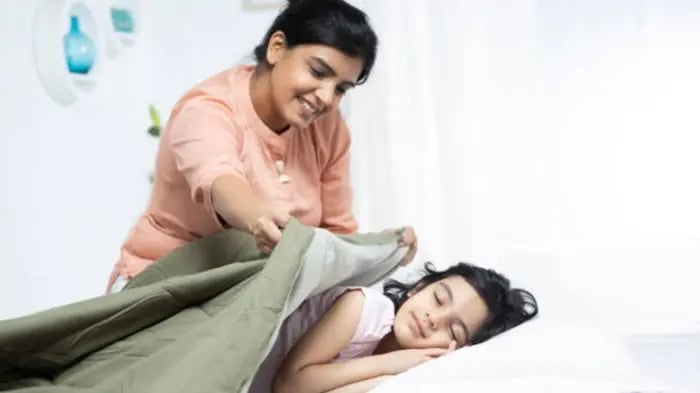
There is no perfect age when every child should stop sleeping with parents. Children often become ready at different times. The most important thing is to notice when children feel more confident and comfortable. With patience, simple routines, and gentle support, children can slowly learn to sleep on their own.
Frequently Asked Questions
At what age should a child sleep alone?

There is not one age for all children, so many families transition slowly. It’s usually more about sleep quality and readiness than about a specific birthday or calendar date.
Is it okay for an older child to co-sleep with parents?
Only if everyone sleeps well and actually agrees, because in many families shared sleep is common. If sleep is compromised, if the need for privacy is greater, a gradual change might be worth thinking about.
How can parents start the transition?
Parents can start with a separate bed in the same room and then add a bedtime routine. If you remain calm and consistent in your responses at bedtime, your children will feel secure as the distance slowly grows over time.
Smriti is a content writer who creates clear, practical, and informative content backed by science and relevant data. With a strong understanding of structured writing, she breaks down complex topics into simple, actionable insights. Her work is focused on helping readers prepare, learn, and grow with confidence and clarity.
The views expressed are that of the expert alone.