




 Parenting Guide


 Child Health & Growth


 Learning & Skills Development


 Food & Nutrition


 Bournvita





Introduction
A rainy afternoon used to mean a cancelled outdoor plan, until one child suggested using the living room floor as an obstacle course instead. That little shift from disappointment to invention is what lateral thinking looks like in daily practice.
It means looking at a problem from a different angle, not going for the first obvious answer. Children are usually more flexible in their thinking than adults who have become used to following fixed patterns and rules. If this instinct is not exercised, it will tend to fade as the child gets older and relies more on memorized routines.
What Is Lateral Thinking?
Edward de Bono came up with the term "lateral thinking" to describe problem solving that goes sideways rather than in a single straight, logical line. This way of thinking is often associated with the idea that imagination is more important than knowledge, an idea often attributed to Albert Einstein. Instead of settling on a single correct method, lateral thinking encourages exploring several possible paths before choosing one. Children who do this often learn to be comfortable holding several ideas at once, rather than leaping to the nearest answer. This approach to child development makes creativity much stronger and enables children to approach new problems with real confidence, both in the classroom and in everyday situations at home.
Ways to Develop Lateral Thinking in Your Child
Brainstorm
A simple strip of masking tape on the floor can be a tightrope, a river, or a balance beam, depending entirely on the imagination. If you ask a child what else the tape could be, you get a lot of creative, unexpected answers. And that’s what makes this exercise work so well—there are no wrong answers. By encouraging as many ideas as possible before judging any one of them, you can build real comfort with open-ended thinking early on.
Ask Questions
By answering a child’s questions positively, even when they ask them over and over, you encourage them to keep asking and keep wondering aloud. There’s almost nothing a parent can do unintentionally that will kill curiosity faster than a dismissive response. A real-life example of thoughtful exploration is showing genuine interest, even with questions that lack a clear or immediate answer. This habit of open, invited questioning often becomes the very foundation upon which lateral thinking is eventually built at home.
Think of Alternative Solutions to a Given Problem
As Edward de Bono once said, "The same thinking that gets you into a problem will not get you out." You are building that exact mental muscle by giving a child one scenario and asking for several different solutions. Some useful questions are
- What other way can you do this without the typical tools?
- What would happen if one well-known rule was taken away from the situation?
- How would a different person entirely do this same problem right now?
Solve Puzzles
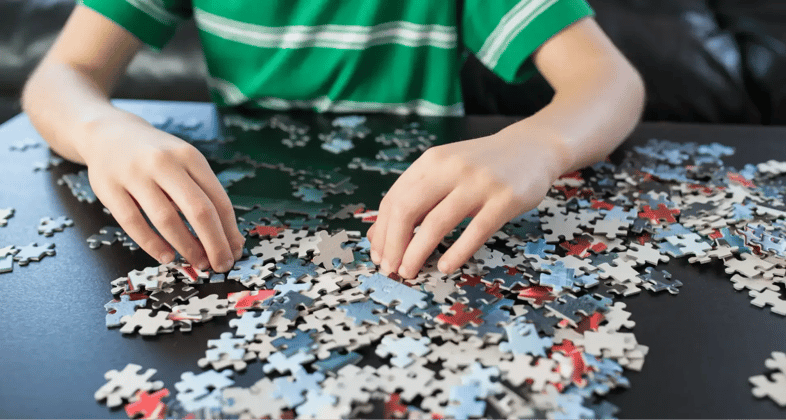
Doing puzzles is a great way to spend time as a family. Puzzles are a no-pressure, chill activity that’s great for a quiet night together. Often there is a true and memorable flash of surprise at the precise instant when a child finally sees the solution. That classic “how did I not see this?" reaction really emphasizes the importance of looking at problems from a new perspective. With just 15 minutes a day of regular puzzle time, you can build up this pattern-recognition muscle over several weeks.
Use Memory Games for Kids
Integrating a rotating selection of memory games for kids into weekly routines strengthens recall and at the same time, builds flexible, adaptive thinking. For most families, a good place to start is a simple, easy-to-remember, and pair game using common household objects. Or a one-word story where each person contributes a word to make a sentence. Some nice unpredictability. They also quietly build vocabulary, language fluency, and confidence with each and every round played together.
Tune In to Their Senses
Parents often don’t trust their own senses, and neither do children, without prompting to slow down first. Here are some simple and intentional activities to help a child reconnect with each of the five senses, one at a time:
- Find three matching colors somewhere in the room.
- Touch a number of different textures and say what each one is.
- Listen closely for different sounds for one minute of silence.
- Blindfolded, smell familiar smells, and guess where they come from.
The Benefits of Lateral Thinking
Boosts Thinking on a Higher Creative Level
A regularly lateral-thinking child will tend to come up with more original ideas in many different situations and subjects. This same style of thinking also bolsters sustained focus because generating multiple options requires truly active, engaged attention throughout the entire process. Creativity and concentration ultimately work together, building steadily through repeated, low-pressure practice rather than any one structured lesson.
Achieving Goals Becomes Easier
Lateral thinking helps to complete goals by a number of related abilities that work consistently over time. These consist of:
- A clearer, more accurate understanding of what the actual problem is being solved.
- Access to a wider range of creative problem-solving tools.
- A natural tendency to think outside the box under real pressure.
Keeps a Check on Anger and Frustration
Children who can view a setback from several different angles tend to remain much calmer when things don't go as planned. This flexibility reduces the frustration that often arises when only one solution seems available or possible. And this pattern, in time, makes a real difference in more stable emotional regulation and a more robust and resilient sense of overall confidence when things are hard or unexpected.
Better Performance in the Classroom
Lateral thinking helps kids perform better academically, as many subjects in school reward flexible, creative approaches more than rigid memorization. A child who is at ease with exploring multiple possible answers adapts more easily to unexpected questions and topics. This flexibility often shows up in test scores and general classroom participation, especially in subjects that reward creative thought.
Enhances Intellectual Process
Over the long term, viewing one single situation from many different angles greatly improves overall reasoning and analytical ability. This habit of thinking from multiple angles strengthens decision-making skills that go far beyond structured academic settings and formal schoolwork altogether. Children who do this regularly are likely to approach day-to-day choices with more thoughtfulness and consideration than before, not just problems in the classroom.
Simple Lateral Thinking Activities to Try at Home
Simple lateral thinking activities can be done at home. These activities will help kids develop lateral thinking skills. Here are some simple lateral thinking activities to try at home. Lateral thinking is the ability to think outside of the box.
The masking-tape brainstorm is a quick way to get things started, using only a roll of tape and a few open-ended questions. The memorize-and-match game is a good one to do with things already lying around most homes, without needing any special shopping trip ahead of time. A one-word story doesn't need any materials at all and is built together naturally during a car ride or family dinner.
In under fifteen minutes combined, these three activities cover brainstorming, memory strengthening, and spontaneous thinking. Busy parents can take turns with them during the week so practice stays interesting and doesn’t take up much more time. Begin with one activity and make steady, meaningful progress.
Conclusion
There is no syllabus for life. Thinking sideways often counts for more than following a rulebook. This week, one activity is the masking-tape brainstorm, which is something low-pressure and simple that most families can start with. It’s these little playful moments over time that build a flexible, confident thinker. If you’re developing this truly useful skill, consistency trumps complexity every time.
Frequently Asked Questions
What is lateral thinking, and why does it matter for kids?

Lateral thinking is thinking outside the box, approaching problems from unexpected angles rather than following the obvious path to solutions. Kids are naturally good at this kind of flexible thinking, and encouraging it helps develop creativity, confidence, and better problem-solving abilities throughout life.
What are simple games to develop lateral thinking at home?
This skill is effectively built up over time by brainstorming with everyday objects, solving puzzles together, and playing memory-based games. A fun format is a one-word story game, where each person adds a word. This also promotes spontaneous, flexible thinking.
Smriti is a content writer who creates clear, practical, and informative content backed by science and relevant data. With a strong understanding of structured writing, she breaks down complex topics into simple, actionable insights. Her work is focused on helping readers prepare, learn, and grow with confidence and clarity.
The views expressed are that of the expert alone.
Popular Topics