




 Parenting Guide


 Child Health & Growth


 Learning & Skills Development


 Food & Nutrition


 Bournvita





Introduction
Interesting facts for kids are better than lessons to spark curiosity. A surprising detail can make a child want to know more. This article contains eight fun and surprising facts about science, nature, and space. They all link to real-life ideas that children can explore further. These facts are good for casual conversation or for use in the classroom. They require no special knowledge for understanding or appreciating them. Plain facts are nowhere near as memorable as surprising details. This article also discusses why fun facts promote better overall learning. Each fact below is explained simply and correctly. Parents can use these to spark curiosity in the everyday moments. There is no better way to learn than with a real surprise. Here are 8 facts to get families started in a quick, fun way.
Why Fun Facts Help Kids Learn Better
Kids are naturally interested in surprising information; they are curious. That curiosity leads to more questions and more knowledge. Generally new facts are easier to remember than old facts. Learning through fun facts is great. They also learn to ask "why" questions about the world. This foundation makes for curiosity-led learning, not just fact acquisition. Simple surprises may open the door to much deeper interest.
8 Interesting Facts for Kids to Promote Curiosity and Understanding
Apples Can Float
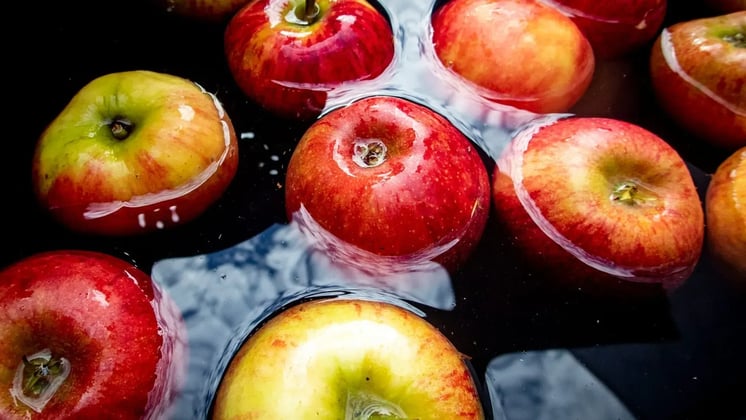
Several fruits can float in water. However, Apples can be a surprising one for many people because of their considerable weight. It's interesting to note that 25% of Apple is just air, which is what makes it so easy to float in water. As per the U.S. Department of Education, since Apple's volume is less dense than water, it is easily able to float in water. However, in some cases, one might have varied results because of the apple’s size, quality, and weight.
A Day On Venus Is Longer Than A Year
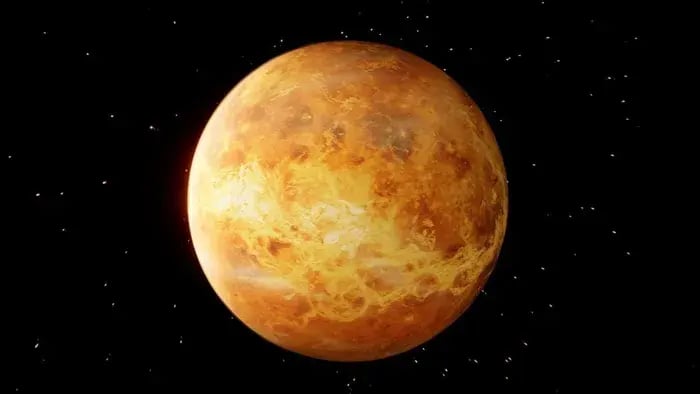
As mind-boggling as it may sound, it is true that a day on Venus is comparatively a lot longer than a year on Venus. As per NASA, a day on Venus lasts for 243 Earth days. On the other hand, a year on Venus lasts for 225 Earth days. The logical explanation behind this phenomenon is that Venus rotates extremely slowly on its axis. This is the reason why the revolution takes a lot less time as compared to Venus's one complete rotation.
Eiffel Tower Becomes Taller in Summer

This is not a rumor and has a scientific logic behind it. As per La Tour Eiffel, this phenomenon happens because of the thermal expansion that takes place in summer and causes the structure to expand up to 15 cm. However, the expansion may also vary with the temperature. This means that the more the temperature rises, the more the Eiffel Tower is likely to grow. During some years, it has grown by even 30 cm.
Frogs Can Resurrect After Freezing
Frogs are amphibians that can live on land as well as in water. This makes them an extremely dynamic organism. But what you may not know about frogs is that they can freeze and look like they have died and still come back to life. This is one of nature's wonders of keeping frogs safe during extreme temperatures. As per antioxidants published in 2021, winters, frogs may come in a constant state of being frozen and then start moving only when the temperature becomes more bearable and the winter begins to pass.
The Human Body Is Host to Multiple Bacteria
As per NIH, the human body contains at least 39 trillion bacteria that perform different functions. While the cell is considered the tiniest unit of life, the human body contains more bacteria as compared to cells. On average, a human being can have around 30 trillion cells in the body, which is significantly lower than the average number of bacteria in a human body.
Triple Point Effect
It is a commonly known fact that the freezing temperature for water is 0°C. On the other hand, the boiling temperature for water is 100°C. However, as per International Journal of Science, Engineering and Technology, there is a special phenomenon called the triple point, in which the pressure and temperature are optimal for the water to be present in all three states. This includes being in a solid, liquid, and gas state all at once. It may also be called the state of thermodynamic equilibrium. The temperature for the same is 0.01°C, and the pressure is generally required to be somewhere around 611.73 pascals.
Octopus Has Three Hearts
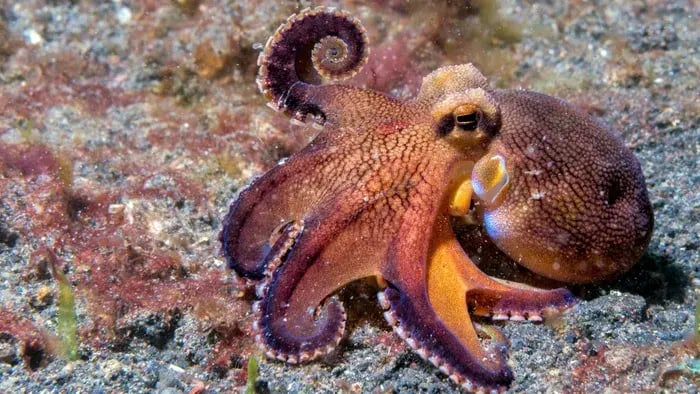
While human beings and many other organisms have a single heart, it is not a common trait among all living beings. As per NLM, octopus is one of those organisms that has three hearts. Each of these hearts has a specific function to perform. The first two hearts are responsible for pumping blood to the gills of the octopus. The third heart is responsible for pumping blood to the rest of the body of the octopus. Additionally, octopuses also have blue blood. The reason for this color can be attributed to the presence of copper-rich protein in the body of the octopus.
Honey Never Spoils
Honey is naturally acidic and contains very little moisture. Because of these properties, it is resistant to bacteria and spoilage. Archaeologists have dug up pottery containing ancient honey, which was edible. Some of the samples, recovered from tombs of ancient times, were thousands of years old. This fact introduces the idea of conservation of nature. And it ties food science to real historical discovery. This one, children find, is often all the more memorable, all the more surprising.
Conclusion
These eight facts are simple, memorable insights into how the world works. For a little more fun, turn them into a quick quiz or a dinner-table discussion. This keeps curiosity a natural part of everyday family life. A little surprise engenders a true love of learning.
Frequently Asked Questions
Why is it important to teach kids fun facts?

Fun facts pique curiosity and make learning seem exciting instead of routine. Often this results in children asking deeper and more thought-provoking questions.
What are some easy science facts for kids?
Fun facts like apples float or octopuses have 3 hearts . These are simple, visual and easy to understand for children.
What are some space facts kids will find fascinating?
Children are often surprised to learn that on Venus a day is longer than a year. And facts about planetary motion are likely to excite a keen curiosity in space.
Smriti is a content writer who creates clear, practical, and informative content backed by science and relevant data. With a strong understanding of structured writing, she breaks down complex topics into simple, actionable insights. Her work is focused on helping readers prepare, learn, and grow with confidence and clarity.
The views expressed are that of the expert alone.
Popular Topics