




 Parenting Guide


 Child Health & Growth


 Learning & Skills Development


 Food & Nutrition


 Bournvita




Introduction
India’s beautiful cultural heritage is not only seen in its vibrant festivals, delicious food, and many languages, but in the simple yet exciting games that children have enjoyed for generations. Traditional Indian games for kids have been an integral part of their childhood. They were designed to keep them fit, sharp-minded, connected with others, and happy all at the same time.
Back in the day, games that Indian kids played were always played out in the open, whether that was a big field, a family courtyard, or a village street and were always at the same time a fun event that brought all the children together every evening. These games were a great way for kids to develop teamwork, strategy, strength, and a general sense of joy, all without the need for screens or gadgets. But sadly, with the growth of digital entertainment, many of these timeless outdoor games in India are now becoming a thing of the past.
Traditional sports of India are vital for kids' futures, and playing them again can give today's kids a chance to connect with their roots in a fun and enjoyable way.
Traditional Sports Of India: The Rich History Of Sports In India
In ancient India, education always included physical training and competitive play. Traditional sports of India formed a core part of the Gurukul system, where students lived and learned alongside their teachers for years at a time. Dhanurvidya, or archery, was one of the most disciplined and respected of these activities. It required a lot of focus and breath control, which helped with mental training for all other subjects. Malla-Yuddha, or wrestling, built both physical strength and strategic thinking. To beat an opponent, you had to read their movement patterns and predict their responses instead of just using force.
In ancient Indian intellectual life, board games were just as important as other things. Chaturanga, which means "four parts" in Hindi, was the first version of chess. It was meant to teach military strategy and how to make decisions under stress. Pachisi was played on a cross-shaped board and rewarded players who were patient, knew how likely things were to happen, and planned instead of making quick decisions. These old games in India were not recreational distractions from learning. They were known to help people develop the same cognitive skills that formal academic study was meant to build. This is why they were used in royal courts, monasteries, and everyday homes. The local games of India that emerged across different regions carried this same philosophy of learning through physical and mental engagement.
Top Traditional Outdoor Games
Traditional games not only promote physical - mental health, but can also bring your child closer to their roots and heritage. Here is a list of extremely engaging traditional games your child might enjoy.
Kabaddi
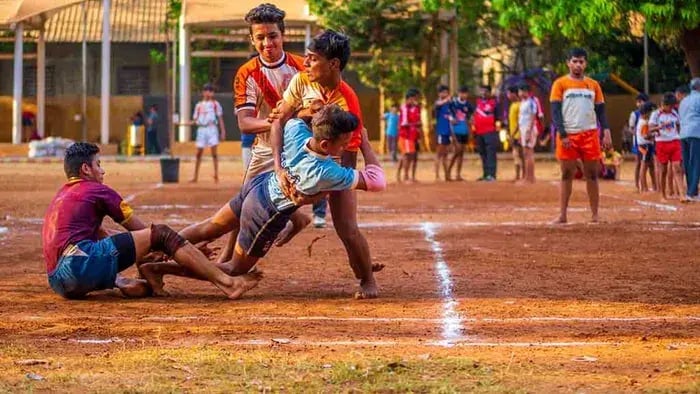
Kabaddi is still a very popular game in India and has become famous in the past few years. The game is pretty easy to understand as it is played between two teams with an equal number of members. One player from each team simultaneously takes their turn to sprint and cross the centre line of the other team. They gain a point if they can touch or tag the opponent team member and get back into their territory. However, if the player is caught and not allowed to go back, then that player is instantly eliminated.
Kho Kho
Kho Kho is one of the fastest-paced local games of india and remains a staple of school sports programs across the country for good reason. On a rectangular field, two teams of twelve players each compete. One team sits in opposite directions along a central row of poles, while active chasers chase runners from the other side. A chaser touches a seated teammate and calls out the word kho to pass the chase duty to them. This creates a relay of tag that requires quick thinking and good spatial awareness. Kho Kho is one of the oldest games in India that is still played at the national competitive level.
Gilli Danda
Gilli Danda is one of the oldest games in India, and it has been played for more than 2000 years. It is a multiplayer game that requires a stick called a danda and a small oval-shaped ball-like structure called a gilli. The gilli is flipped in the air with the help of the danda, and the other players strike it on its elevated end with their respective sticks. The players are supposed to hit the gilli as far as it can go. While the gilli is in the air, the same player is supposed to go and touch a pre-decided part of the boundary line. If the player gets late, the opponent teams end up stealing the gilli.
Lagori
Lagori is a conceptually engaging game played with a rubber ball and a row of 7 flat stones. These seven flat stones are put on top of each other, and one requires at least three players to play this game. Once the rocks have been arranged vertically, each player gets an equal opportunity to knock down that vertical tower of stones while being at a distance. If a player is unsuccessful in hitting the stone tower, the opponent can throw the ball below the knee level of that player to get them eliminated.
Nondi
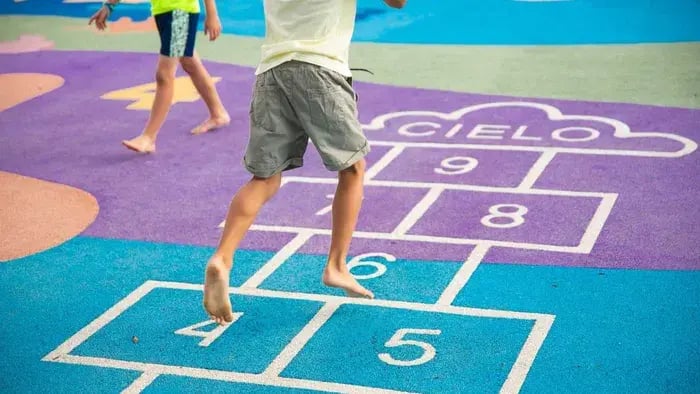
Also called hopscotch in English, it has been one of the most popular games in India for a long time. This is played by drawing grid boxes with numbers on the ground. It is drawn in the pattern of a ladder on the floor, and the child is supposed to jump with one leg without stepping out of the boundary zone. Anyone who ends up losing their balance is instantly eliminated.
Kancha
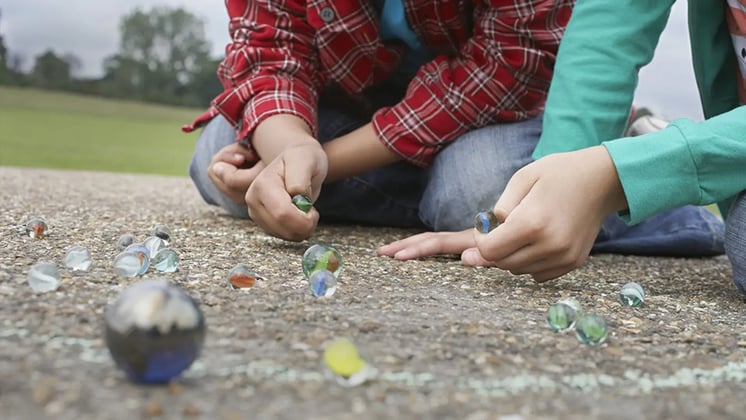
This game is also called Kancha and is generally played with dark green glass marbles called Kancha in Hindi. There are a lot of ways to play this game. One can play a simple version or make it as complex as they want. The basic concept is to hit the target with green marbles in various directions. Traditionally, the concept is that the winner takes away all the marbles they have hit, and the losers end up giving them to the winner.
Gutte
Gutte is an extremely popular game from India still played in many parts of the country, especially in the countryside. To play this game, one has to arrange tiny stones. Now the player must pick one of the stones from the ground and toss or spin the stone in the air. Whilst the stone is still in the air, the player must pick up as many stones as possible from the ground. The process is repeated until all the stones are collected. The player who is able to collect all the stones within the fewest attempts ends up winning.
Ancient Indian Board Games
Chaturanga: The Ancestor of Chess
Chaturanga, a Sanskrit word that means "four divisions," was the name of the game in India long before it came to Persia or Europe. The four divisions were the infantry, cavalry, elephants, and chariots that made up an ancient battle formation. This old games in india classic was not designed purely for entertainment. It taught how to plan ahead and think about the consequences of your actions, as well as military strategy. Each piece on the board stood for a real battlefield role, making each game a simulation of strategic leadership that sharpened the minds of students, soldiers, and rulers throughout Indian history.
Pachisi & Chaupar: The Royal Games
People played Pachisi and its close cousin Chaupar on cloth boards shaped like crosses, using cowrie shells as dice. The fact that they were played in Mughal courts shows that they were important cultural activities, not just games. These traditional sports of india board games, rewarded patience, probabilistic thinking, and the ability to adapt a long-term strategy when circumstances shifted mid-game unexpectedly. Historically, Emperor Akbar played a human-sized version of Pachisi in his palace courtyard at Fatehpur Sikri, with servants acting as living pieces. For kids today, learning how to play these games links their own play habits to a long history of smart people that goes back more than 2,000 years.
Snakes and Ladders (Moksha Patam)
Most kids who have played Snakes and Ladders don't know that they are using one of the oldest moral education tools in Indian history. Originally called Moksha Patam, the game was made by saints to teach kids that good actions, represented by ladders, bring a person closer to freedom, while bad actions, represented by snakes, bring them closer to punishment. Among local games of Indiawith documented philosophical intent, Moksha Patam is the most direct example of traditional communities embedding ethical instruction inside play. British versions from the colonial period took out the moral framework and kept the mechanics, making the board game popular across the globe.
Traditional Martial Arts Of India
Kalaripayattu (Kerala)
Historical records say that Kalaripayattu has roots in Kerala that go back more than three thousand years. It is widely thought to be one of the oldest martial arts systems still in use today. Practitioners learn how to move their bodies in flexible ways, how to use weapons, and how to use pressure points. All of these things require both great physical fitness and mental discipline. Among the most respected traditional sports of india, Kalaripayattu influenced several Southeast Asian martial art traditions through ancient trade and cultural exchange routes. Training in Kalari helps kids become more aware of their posture, learn how to control their breathing, and gain physical confidence that they can use in school and in everyday life in ways that few other sports can.
Silambam (Tamil Nadu)
Silambam is a martial art from Tamil Nadu that uses a staff. It has been around for over 2,000 years and is mentioned in ancient Sangam literature as a respected and practiced form of combat. People who practice this use a long bamboo staff called a silambam to make quick, fluid movements that require their hands, feet, and eyes to all work together perfectly. As one of the most technically demanding old games in India and martial traditions, Silambam builds bilateral coordination, spatial awareness, and reactive speed in children from a young age. Its recent inclusion in competitive sports events all over South India has sparked new interest among younger generations who might not have otherwise come across this amazing regional tradition.
Gatka (Punjab)
Gatka is the traditional martial art of the Sikh community. It started in Punjab as a way to fight with weapons and has been improved over hundreds of years of war and spiritual practice. Practitioners train with swords, shields, and wooden sticks. They do choreographed sequences that mix offensive and defensive moves in a flowing, rhythmic way. Among the local games of India with the strongest living community practice, Gatka remains central to Sikh cultural celebrations, particularly during Gurpurab processions, where demonstrations draw large public gatherings across Punjab and the diaspora. Gatka training teaches kids discipline, physical courage, and a strong connection to their cultural heritage that they can't get from just going to school.
Mallakhamb
Mallakhamb is another interesting game that combines martial arts, yoga, and other physical exercises. This game is also popularly known as the ‘Mother Sport’ of India, as it was practised by people in the old times to develop mobility and strength. The title of this game means a gymnastic pole, which is why one needs a gymnastic pole to play this game. Players compete on a 2.6 m tall wooden pole with the help of a rope that is hung from a chain or a hook. It can be an effective game for children who like gymnastics and other agility exercises.
Conclusion
Each of these traditional sports of India can bring out the best in your child by keeping them physically fit, agile, and mentally active. Additionally, these games are essential for your child to learn from a cultural and traditional perspective.
Pakhi writes with the belief that dessert isn’t just a dish—it’s a mood. Her work blends storytelling with tips, turning timeless treats and trendy bites into accessible moments of comfort, celebration, and creative expression.
The views expressed are that of the expert alone.
Popular Topics