



 Parenting Guide


 Child Health & Growth


 Learning & Skills Development


 Food & Nutrition


 Bournvita




Introduction

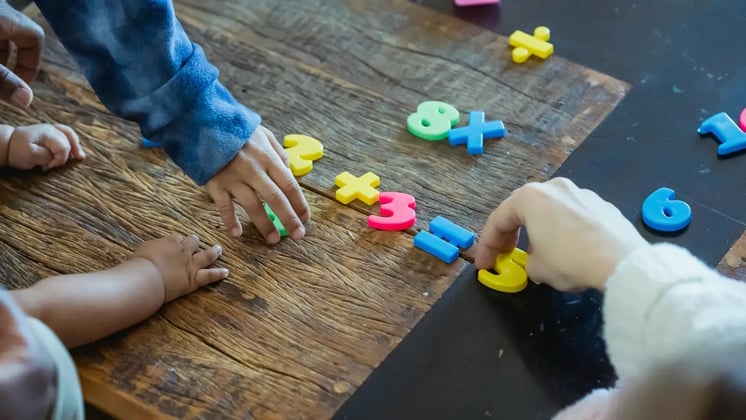
Teaching numbers and counting gives children an early foundation for mathematical learning. Counting games for kids can make practice more interactive by letting children touch, move, sort and compare objects while learning. Simple activities at home, such as counting toys, finding numbers, building towers and playing board games, can help children practise number recognition and basic counting skills without making learning feel like a formal lesson.
What Skills Do Counting Games Build?

Counting activities can help children practise several early maths skills:
- One-to-one correspondence:Matching one number word to one object.
- Cardinality:Understanding that the final number counted tells how many objects there are.
- Numeral recognition:Connecting written numerals with quantities.
- Comparison:Identifying which group has more, fewer or the same number.
- Patterns:Recognizing and continuing simple number sequences.
The goal is not to make every activity a test. Repeated, playful practice gives children opportunities to develop these skills at their own pace.
Low-Prep Counting Games at Home
Snack Sharing
Give your child a small number of suitable food pieces and ask them to count and distribute them between plates.
Variation:Ask, “How many does each person have?” or “Who has more?”
Safety:Use age-appropriate foods and textures and supervise young children while eating to reduce choking risks. Consider food allergies when choosing snacks.
Toy Sorting and Counting
Ask your child to group toys by type, colour or size and then count each group.
Variation:Ask which group has more, fewer or the same number.
Number Hunt
Hide number cards around the room and give the child a number to find.
Variation:After finding a card, ask the child to collect that many objects.
Pretend Shop
Create a pretend shop using toys or household objects. Give each item a simple price and let the child count play money to “buy” it.
Variation:Older children can add two prices or work out how much money remains.
How to Adjust When Counting Is Difficult
If a child struggles with counting, make the activity smaller and more hands-on. Start with three to five objects, ask them to touch or move each object as they say the number, and use visual supports such as ten frames or number cards.
Repeat the same game in different ways instead of immediately increasing the number range. If a child skips objects or counts one object twice, slow down and model one-to-one counting.
Counting Games for Kids to Teach Them Numbers
Here are some simple number counting games that parents can use at home.
Counting Toys
- Age:2–5 years
- Objective:Practise one-to-one counting and quantity.
- Materials:Toys, blocks or large household objects.
- Number range:1–10
Steps:
- Place a small group of toys in front of the child.
- Ask them to touch each toy while saying one number.
- Ask, “How many toys are there?”
- Repeat with different quantities.
Variation:Use Lego-style blocks or other large pieces that are safe for the child's age.
Observation prompt:Notice whether the child counts each object once and understands the final number represents the total.
Number Hunt
- Age:3–6 years
- Objective:Practise numeral recognition and matching numbers with quantities.
- Materials:Number cards and household objects.
- Number range:1–20
Steps:
- Place number cards around a safe area.
- Give the child one number to find.
- Once they find it, ask them to collect that many objects.
- Count the objects together.
Variation:Ask the child to find numbers in order or find the number that comes before or after a given number.
Observation prompt:Check whether the child can recognise the numeral and connect it with the correct quantity.
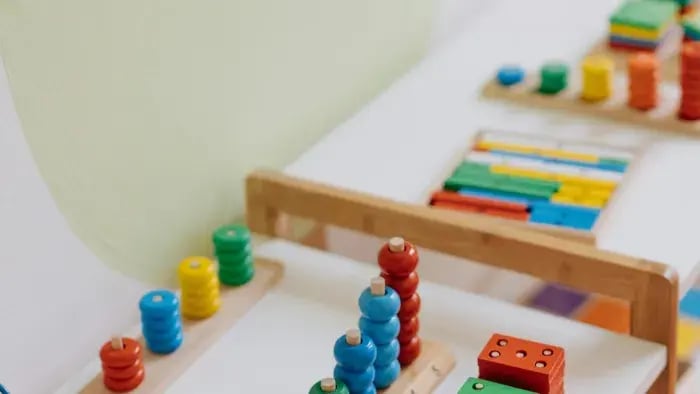
Building Towers with Blocks
- Age:3–6 years
- Objective:Practise counting, quantity and following number instructions.
- Materials:Large age-appropriate building blocks.
- Number range:1–20
Steps:
- Ask the child to choose some blocks.
- Give a number, such as five.
- Ask them to build a tower using exactly five blocks.
- Count the blocks together.
Variation:Ask, “Can you make a tower with two more blocks?” for older children.
Observation prompt:See whether the child can stop at the requested number rather than simply continuing to build.
Safety:Avoid small blocks or loose pieces with children who may put objects in their mouths.
Making a Number Book
- Age:4–7 years
- Objective:Practise numeral writing, counting and quantity matching.
- Materials:Paper, crayons, glue and age-appropriate craft supplies.
- Number range:1–20
Steps:
- Make simple pages for different numbers.
- Write one numeral on each page.
- Ask the child to draw or paste the matching number of large pictures or stickers.
- Count them together.
Variation:Older children can add simple addition or subtraction questions.
Observation prompt:Check whether the child connects the written numeral with the correct number of objects.
Safety:Supervise scissors and glue and choose craft materials suitable for the child's age.
Drawing a Number Line
- Age:4–7 years
- Objective:Practise number order and counting forwards or backwards.
- Materials:Paper, pencil, crayons and stickers.
- Number range:1–20
Steps:
- Draw a straight line and mark equal spaces.
- Write numbers in order.
- Ask the child to place stickers under selected numbers.
- Count forwards and backwards together.
Variation:Leave some numbers blank and ask the child to fill them in.
Observation prompt:Notice whether the child understands which numbers come before and after a given number.
Board Games
- Age:4+ years
- Objective:Practise counting, number recognition and simple comparison.
- Materials:Age-appropriate board games, dice, counters or number cards.
- Number range:Depends on the game.
Steps:
- Choose a game with simple counting rules.
- Ask the child to count spaces when moving a counter.
- Encourage them to identify the number shown on cards or dice.
- Compare positions or scores when appropriate.
Variation:Use a homemade number track for younger children.
Observation prompt:Watch whether the child counts spaces accurately and recognises the numbers used during play.
Counting Games by Age and Number Range
| Age | Suggested number range | Materials | Progression |
| 2–3 years | 1–5 | Toys, blocks, household objects | Count small groups with adult support |
| 3–4 years | 1–10 | Blocks, cards, stickers | Count objects and recognise some numerals |
| 4–5 years | 1–20 | Number cards, dice, counters | Count, compare and match quantities |
| 5–6 years | 1–50 | Number lines, counters, board games | Count forwards/backwards and compare numbers |
| 6+ years | 1–100+ | Cards, dice, puzzles | Practise skip counting, patterns and simple calculations |
Conclusion
Counting does not need to be limited to worksheets. Counting games for kids can turn everyday objects, toys, food and simple play into opportunities to practise numbers. Start with quantities your child can manage, repeat activities regularly and gradually increase the number range as their skills develop.
Frequently Asked Questions
What are fun counting games for kids?

Toy counting, number hunts, block towers, snack sharing, number books and simple board games can make counting practice interactive.
What counting skills should preschoolers practise?
Preschoolers can practise one-to-one counting, numeral recognition, quantity, number order and comparing groups with more or fewer objects.
How can parents teach one-to-one counting?
Ask children to touch or move one object for every number they say, helping them connect each number with one object.
What games help with counting beyond 10?
Number hunts, number lines, board games, block challenges and pretend shops can help children practise counting beyond 10.
Her love for storytelling began with reading her grandfather’s speeches, where Tarishi saw the power of words in creating lasting memories. Combining her passions for food and writing, she has turned her life into a fulfilling path of sharing stories that celebrate flavours and how food brings communities together.
The views expressed are that of the expert alone.