




 Parenting Guide


 Child Health & Growth


 Learning & Skills Development


 Food & Nutrition


 Bournvita





Introduction
Mathematics is the common tongue of all human knowledge. Kids who learn about numbers early get a competitive advantage for a lifetime.Child Development (2020) shows that early math skills were better predictors of academic success than reading scores. Math riddles for kids are one of the best tools parents have. They transform scary numbers into fun, brain-teasing puzzles. Math riddles for kids are free of the anxiety that traditional worksheets generate. Riddles make math interesting for kids who are scared of math. The puzzle's format hints that math is a game, not a test.
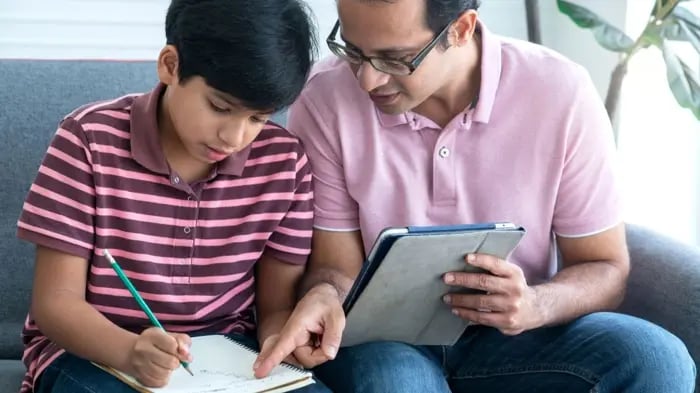
Math riddles for kids develop logical reasoning along with creative thinking. Children learn to hold multiple pieces of information in mind simultaneously. This working memory skill is the foundation of all academic learning. Math riddles for kids also turn dinner table conversations into a really educational experience. Parents don’t have to be teachers to use them well. Math riddles for kidsare the most under-utilized tool in the parent toolbox.
10 Math Riddles for Kids With Answers
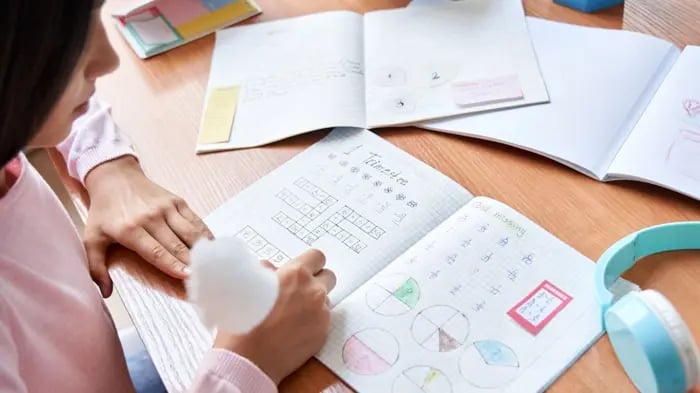
Riddle 1: I am an even number. Take away one letter and I become odd. What am I?
Answer:Six (remove the "s" — it becomes "ix," which is not a word, but "Six" remove the "s" sounds like "ix" — classic wordplay riddle).
Traditional Answer: Six → S-i-x → remove S = "ix" = odd!
Riddle 2: If you have 8 apples and you take away 3, how many apples do YOU have?
Answer:3 apples. You took them, so you have them now.
This riddle teaches reading comprehension within math, a critical thinking skill.
Riddle 3: A farmer has 17 sheep. All but 9 run away. How many sheep remain?
Answer:9 sheep. "All but 9" means 9 stay behind.
This riddle builds careful reading and number language understanding.
Riddle 4: I am a two-digit number. My tens digit is 3 more than my units digit. I am less than 50. What am I?
Answer:41, 52 — but less than 50, so the answer is 41.
This riddle introduces logical elimination and number properties together.
Riddle 5: How many times can you subtract 5 from 25?
Answer:Only once. After the first subtraction, it is no longer 25.
This riddle challenges children to think beyond standard computation.
Riddle 6: I am always in front of you but cannot be seen. I can be measured but never held. What am I?
Answer:Time.
This riddle connects mathematics to abstract concepts like measurement and units.
Riddle 7: Two fathers and two sons sit down to eat. There are only 3 plates but everyone gets one. How?
Answer:There are only 3 people — a grandfather, a father, and a son.
This riddle develops family math and relationship-based reasoning skills.
Riddle 8: A clock shows 3:15. What is the angle between the hour hand and the minute hand?
Answer:7.5 degrees. The minute hand is at 3 exactly, the hour hand has moved a quarter past 3.
This riddle introduces geometry and clock-reading skills together elegantly.
Riddle 9: I have a head and a tail but no body. What am I?
Answer:A coin — which introduces the concept of probability and chance.
This riddle bridges everyday objects and mathematical probability concepts.
Riddle 10: If there are 3 apples and you take 2 away, how many apples do you have?
Answer:2 apples. You took 2, so you have 2.
This riddle reinforces careful language reading within mathematical problem-solving.
Things to Keep in Mind When Parents Make Riddles
Being able to think upmath riddles for kidsat home is a useful parenting skill. Here are five tips to help parents craft good, age-appropriate riddles:
1. Match the riddle difficulty to your child's grade level
A riddle too easy bores children and does not build new skills. The harder the riddle, the quicker the frustration and avoidance of math. Learn your child's current Math comfort zone before writing riddles. For the best challenge, start one step above their comfort level. Math puzzles for children are most effective when they are at the point of understanding.
2. Always connect the riddle to a real-world object or situation
Children find it harder to work with abstract numbers in their minds. Numbers are given reality by apples, coins, clocks and family members. The more you know about a situation, the more you are able to think mathematically. Household items make math riddles for kids especially accessible. Children see math everywhere when riddles use familiar surroundings.
3. Give thinking time before offering any hints
Parents often rush in too soon when a child stalls or goes quiet. When kids are silent while someone is giving them a riddle, the brain is working hard. Give the first gentle hint after at least 60 seconds. The deepest learning is in the struggle itself.” Math riddles for kids build resilience only when children are allowed to struggle.
4. Celebrate the reasoning process, not just the correct answer
A wrong answer that shows logical thinking deserves real celebration. The powerful feedback is "I love how you thought about it that way." When children are praised for their thinking, they try harder next time. Never let a child feel stupid for a wrong mathematical guess.
Math riddles for kidsbuild confidence only in a safe environment.
5. Make riddles a daily routine, not a special occasion
Ten minutes at dinner makes for a predictable, low-pressure math culture. Kids exposed to math daily quickly get over their fear of numbers. Short, frequent study sessions are always better than long, infrequent ones. Create a family riddle tradition and make it something everyone will look forward to.
Math riddles for kidsare most powerful when they’re a fun habit.
Conclusion
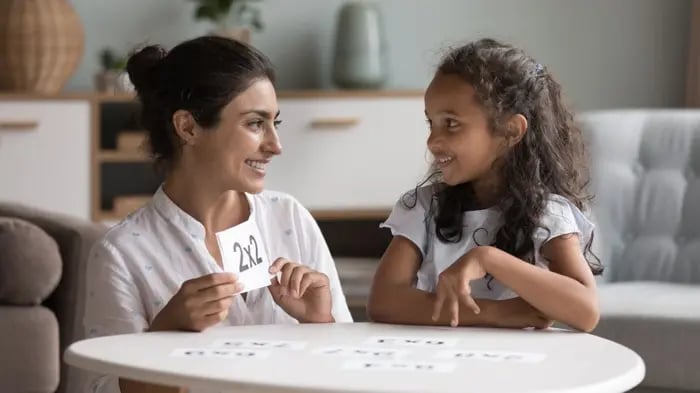
Math riddles for kids turn number threats into adventures. They reduce logic, language, and reasoning to a short puzzle. Math puzzles for children require no special equipment or teaching experience. All you need is a willing child and a curious parent. Turnmath riddles for kidsinto a daily family ritual and watch confidence blossom.
Frequently Asked Questions
Q1. Why are math riddles for kids a useful learning activity?

Math riddles for kids encourage logical thinking and problem-solving while making numbers feel less intimidating and more enjoyable to explore.
Q2. Can math riddles help improve math skills?
Yes. Solving math riddles for kids helps strengthen reasoning, mental math, pattern recognition, and confidence when working with numbers.
Q3. What types of math riddles are best for children?
Age-appropriate math riddles for kids involving counting, shapes, patterns, and simple calculations are often the most effective and engaging.
Smriti is a content writer who creates clear, practical, and informative content backed by science and relevant data. With a strong understanding of structured writing, she breaks down complex topics into simple, actionable insights. Her work is focused on helping readers prepare, learn, and grow with confidence and clarity.
The views expressed are that of the expert alone.
Popular Topics