
 Parenting Guide


 Child Health & Growth


 Learning & Skills Development


 Food & Nutrition


 Bournvita





Introduction
Teaching kids to clean up after themselves is an important part of helping them develop good hygiene, responsibility, and independence. Children can gradually learn simple habits such as washing their hands after using the bathroom, disposing of tissues and other waste properly, keeping shared spaces clean, and taking care of their personal belongings. These habits may look small, but they teach children to understand how their actions affect their own hygiene and the people around them. Parents do not need to expect perfection from the beginning; children learn best when adults demonstrate the habit, explain why it matters, and give them opportunities to practise.
As children grow, these responsibilities can become more age-appropriate, moving from simple tasks such as putting rubbish in a bin to managing their own personal spaces and following bathroom hygiene routines. Learning these habits early can also make children more confident in handling everyday tasks without constant adult help. With patience, consistency, and positive reminders, cleanliness can become a natural part of a child's daily routine rather than something they see as a chore.
What Does "Cleaning Up After Themselves" Really Mean?
Cleaning up after themselves means taking responsibility for personal hygiene and leaving a space clean after using it. For children, this can include learning bathroom hygiene, such as cleaning themselves properly after using the toilet, flushing, and leaving the bathroom ready for the next person. It can also mean picking up tissues, food wrappers, or other rubbish after eating or playing in shared spaces such as parks, classrooms, or family areas.
Why Teaching Kids to Clean Up After Themselves Matters
Teaching children to clean up supports both personal hygiene and respect for their surroundings. For example, leaving a bathroom unclean can affect the hygiene and comfort of the next person who uses it, while leaving rubbish on the ground can make a shared space unpleasant for everyone. These simple habits also teach children responsibility, courtesy, and awareness of how their actions affect others.
How to Teach Kids the Importance of Cleaning Up After Themselves
The best way to teach these habits is through simple instructions, regular practice, and consistent encouragement.
Washing Hands
Handwashing is one of the most important hygiene habits children can learn. Teach your child to wash their hands after using the bathroom, before eating, after playing outside, and whenever their hands become visibly dirty.
Show them how to use soap and water properly and make handwashing a regular part of their daily routine.
Disposing of Garbage Correctly
Teach children that rubbish belongs in the appropriate bin rather than on the floor or ground. This includes tissues, wrappers, and toilet paper where appropriate.
Explain that cleaning up waste keeps shared spaces pleasant and helps children take responsibility for the mess they create.
Cleaning and Sanitizing Shared Spaces
Children should learn to leave shared spaces ready for the next person. After using the bathroom, teach them to flush the toilet and check that toilet paper or other waste has been disposed of properly.
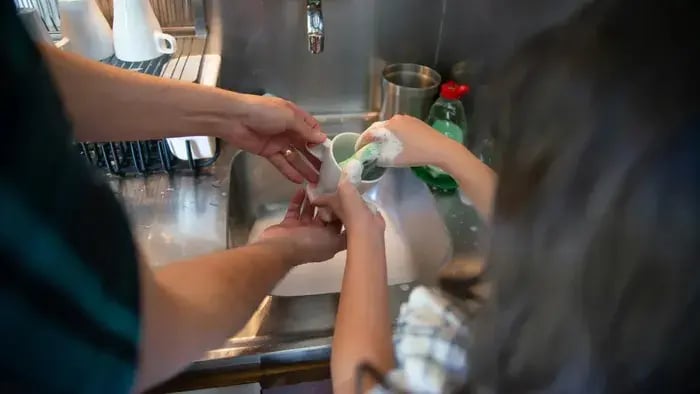
For older children, simple tasks such as wiping a table after eating or putting away shared items can also become part of their routine.
Neatness and Organizing Personal Spaces
Encourage children to put toys, books, clothes, and school supplies back in their proper places after use. Keeping personal spaces organised reduces repeated cleaning and helps children become more responsible for their belongings.
Age-Appropriate Ways to Introduce These Habits
Children can learn cleaning and hygiene responsibilities gradually as their independence develops.
| Age group | Habits to introduce |
| Toddlers | Putting toys away, throwing tissues in the bin, washing hands with help |
| Preschoolers | Washing hands independently, putting belongings away, helping clean small spills |
| 5–8 years | Keeping their study area tidy, disposing of rubbish, following bathroom hygiene routines |
| 9–12 years | Organising personal belongings, cleaning after meals, keeping shared spaces tidy |
| Teenagers | Managing personal hygiene |
Keep expectations realistic for your child's age. Demonstrating the task first and allowing them to practise can make new habits easier to understand.
Conclusion
Teaching children to clean up after themselves is about more than keeping a space tidy. It helps them develop good hygiene, responsibility, independence, and respect for their surroundings. By introducing simple habits early and increasing responsibilities as children grow, parents can help cleanliness become a natural part of everyday life.
Frequently Asked Questions
At what age should kids start learning to clean up after themselves?

Children can start with simple tasks during the toddler years, such as putting toys away and throwing tissues in the bin. Responsibilities can gradually increase as their skills and independence develop.
How can I encourage my child to clean up without constant reminders?
Use clear routines, demonstrate the habit, and give specific praise when your child completes a task independently. Making cleanup part of the normal routine can reduce the need for repeated reminders.
What are simple hygiene habits toddlers can learn first?
Toddlers can begin learning to wash their hands with help, cover coughs and sneezes, throw tissues into a bin, and put toys away after playing.
Her love for storytelling began with reading her grandfather’s speeches, where Tarishi saw the power of words in creating lasting memories. Combining her passions for food and writing, she has turned her life into a fulfilling path of sharing stories that celebrate flavours and how food brings communities together.
The views expressed are that of the expert alone.
Popular Topics