



 Parenting Guide


 Child Health & Growth


 Learning & Skills Development


 Food & Nutrition


 Bournvita




Introduction
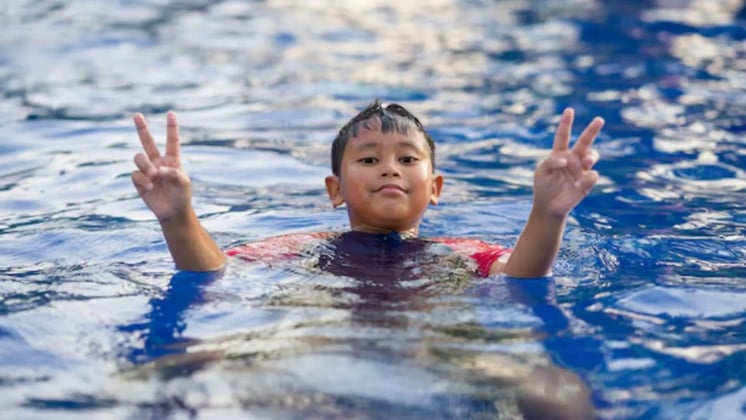
Water-based exercises for kids are a fantastic way for them to stay active and have fun. Whether it is in pools, lakes, or at the beach, these activities offer a unique combination of exercise and play. Water exercises are gentle on the joints while providing a great workout for the entire body. They help improve cardiovascular health, build strength, and improve flexibility, all while keeping kids cool and entertained.
Swimming, for example, is an excellent full-body workout that boosts lung capacity and endurance. Splashing around in a lake or playing games at the beach can also help kids develop better coordination and balance. Water resistance adds an extra challenge to movements, making muscles work harder without the risk of injury that high-impact exercises might bring.
Beyond the physical benefits, water-based activities are a great way for kids to socialize and build confidence. Learning to swim or mastering new water games can be incredibly rewarding and fun. Plus, spending time in the water can be a refreshing break from the heat, making it a perfect summer activity.
Why Water-Based Exercises Are Good for Kids
Water exercise for kids is uniquely beneficial among physical activities. Water provides resistance to challenge the muscular system and buoyancy to reduce joint stress. Water also has thermal properties to support comfortable sustained exertion at intensities that equivalent land-based exercise makes considerably more demanding on a child's developing cardiovascular system.
How Water Resistance Supports Strength and Endurance
Water is about 800 times thicker than air, meaning that every movement a child makes in the water requires a lot more muscular effort than the same movement on land. This resistance is uniform in all directions of movement as opposed to only opposing gravity, as land-based resistance does. This makes water exercise for kids a truly whole-body strength stimulus that develops muscular endurance, the foundation of sustained physical performance.
Why Water Activities Support Coordination and Balance
The movement through water requires continuous repositioning of the body, spatial awareness of the body, and coordination of limbs in response to unpredictable patterns of resistance of the fluid medium, patterns that are not produced by land surfaces.
Why Low-Impact Exercise Can Benefit Growing Bodies
The skeletal system of a growing child contains growth plates, which are vulnerable to stress injury with the repetitive high-impact loading that running, jumping, and contact sports consistently produce. In chest-deep water, buoyancy supports about 90% of body weight.
Water Exercises for Kids Across Pools, Lakes and Beaches
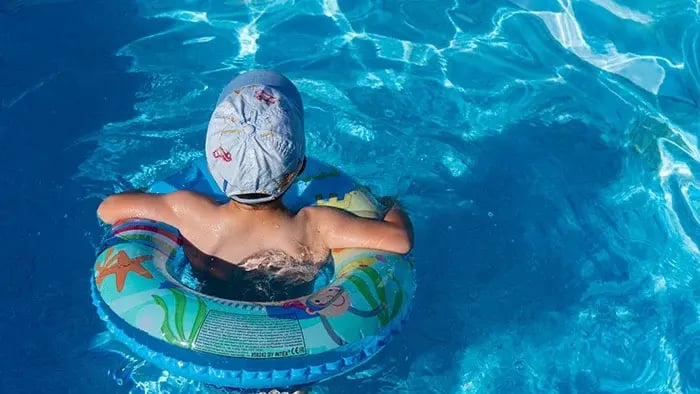
1. Pool-Based Exercises
Kickboard Races
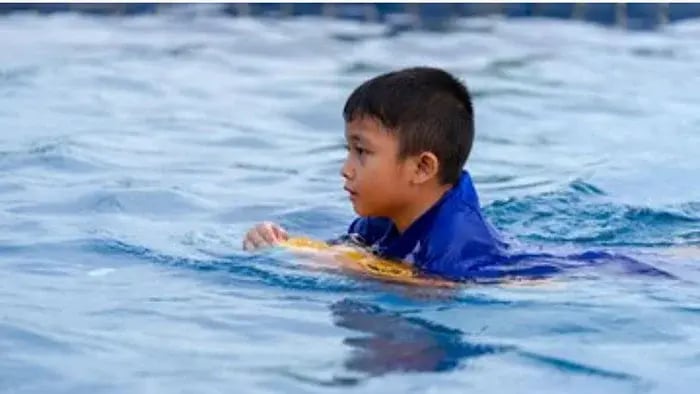
Kickboard races build lower body endurance, kick technique, and competitive motivation in a safe pool environment where kids can see their progress through lap counts, not abstract fitness measures.
Pool Running
Running in chest-deep pool water provides cardiovascular training at land-running intensities while removing the ground impact forces that lead to shin splints, knee stress, and ankle strain in children who are still developing technical consistency in their running form.
Treading Water Challenges
Timed treading water tests develop whole-body muscular endurance, breath control, and water confidence in one single exercise, needing no equipment other than adequate pool depth. Over weeks of practice your kids slowly increase the target time from 30 seconds to 5 minutes.
2. Lake-Based Exercises
Shallow Water Jogging
Adding shallow lake water at knee to hip depth gives your child the resistance benefits of pool running with the environmental variation of natural water settings that kids find far more interesting than pool lanes during long activity sessions.
Paddle Resistance Walking
Walking forward through water that is waist-deep while paddling the arms through the resistance provides simultaneous upper and lower body muscular demand that neither swimming nor walking on land provides at the same combined intensity.
Water Relay Sprints
Team-based competitions that children are more motivated to participate in than individual endurance events combine the cardiovascular demand of sprinting with the resistance challenge of water movement in shallow-water short-distance sprint relays.
3. Beach-Based Exercises
Sand Sprint Runs
Running on soft dry sand is about 1.6 times more energy demanding than running on firm ground at the same speed. Beach sprint training is a very efficient cardiovascular endurance builder, and children will find it truly challenging without having to spend long sessions to get meaningful stimulus.
Crab Walk Races
Children find it more entertaining than laborious to crab walk over beach sand in a competitive race format that develops shoulder stability, core endurance, hip flexibility, and wrist-loading tolerance through a whole-body strength activity.
Wave-jumping drills
Jumping on the timing to clear incoming waves builds reactive agility, leg strength, anticipation of wave reading, and balance recovery in a natural setting that provides true physical and cognitive engagement at the same time.
Benefits of Water-Based Exercises for Kids
Supports Full-Body Strength
Water has omnidirectional resistance, meaning that no single movement pattern dominates the muscular demand of aquatic exercise. Strength development is distributed across the upper body, core, and lower body simultaneously as opposed to isolating specific muscle groups as land-based resistance training tends to do.
Helps Build Endurance and Stamina
Cardiovascular demand is sustained throughout the entire sessions in water-based exercise without the natural breaks that happen in land-based games in the form of direction changes, rule stoppages, and equipment retrieval. Over weeks, as kids regularly engage in aquatic activities, this repeated cardiovascular stimulus gradually improves heart efficiency, lung capacity, and muscular endurance.
Improves Flexibility
Now, water is buoyant, so children can move limbs through the ranges of motion that gravity, body weight, and muscle tightness restrict on land. Over the course of regular aquatic activity sessions, joint mobility, muscle length, and movement quality can all improve.
Frequently Asked Questions
How often should children swim to improve stamina?

Three sessions per week, each lasting 30 to 45 minutes, provide sufficient stimulus frequency for meaningful cardiovascular endurance improvement.
Is swimming a good sport for kids who tire easily?
Swimming is ideal for children with low baseline stamina, as buoyancy reduces gravitational load, but water resistance still provides sufficient stimulus for endurance adaptation.
Can kids get vitamin D through food alone?
Dietary sources like fatty fish, fortified milk, and egg yolks rarely provide the daily requirement of 600 IU of vitamin D without supplementation from the sun in addition to food intake.
Her love for storytelling began with reading her grandfather’s speeches, where Tarishi saw the power of words in creating lasting memories. Combining her passions for food and writing, she has turned her life into a fulfilling path of sharing stories that celebrate flavours and how food brings communities together.
The views expressed are that of the expert alone.
Popular Topics