




 Parenting Guide


 Child Health & Growth


 Learning & Skills Development


 Food & Nutrition


 Bournvita






Introduction
All parents want their children to be successful in physical activity and sport. Most parents don't think about the five minutes before an activity starts. A good warm-up is essential to the physical health of all children. Children’s warm-up exercises are designed to prepare the cardiovascular system, muscles, and joints for the physical demands they will be making on them. Warm muscles are less likely to tear when stressed suddenly in an athletic event . Cold muscles are more likely to tear. Kids who don’t warm up are much more susceptible to strains, sprains, and muscle pulls. The warm-up also prepares children mentally to shift from a resting state to an active, focused performance state. Before sports or physical activity, children are advised to do dynamic warm-up exercises. These exercises involve active movement, not static stretching. Pre-sport preparation is better with movement-based warm-ups, as static stretching results in a temporary reduction in explosive power before physical activity. Warm-up exercises for kids are always included by parents and coaches before each session, which is a real investment in performance and injury prevention.
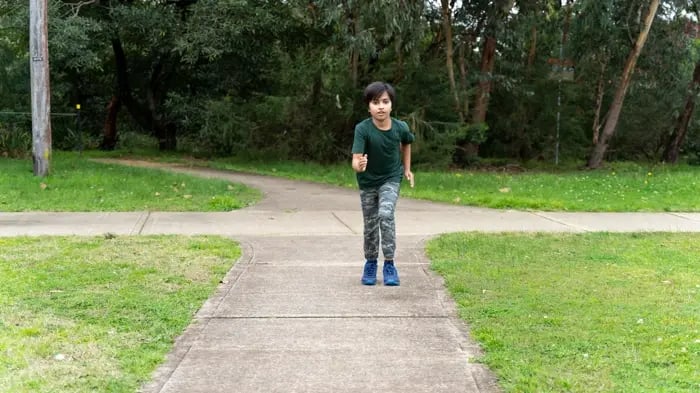
9 Quick And Dynamic Warm-Up Exercises For Kids Before Sports Or Physical Activities
1. Jumping Jacks
Jumping jacks are the most common warm-up exercise for kids all around the world. They engage the hip abductors, warm up the shoulder joints, and get the heart rate up simultaneously. The children start with their feet together and their arms at their sides. They jump out and kick their legs and reach their arms over their heads. Return to the starting position, and kids have completed one repetition of this compound movement . It takes twenty times thirty seconds for the core body temperature to be high enough for lighter activities. This is a suitable warm-up exercise for kids of all ages from six to fifteen.
2. High Knees
High knees is a dynamic movement that activates the cardiovascular system, core stabilizers, and hip flexors simultaneously. Children run on the spot as fast as they can and raise each knee alternately to hip height as they run. The arms pump against each leg movement, so the upper body is fully engaged throughout. This warm-up for kids is designed to prepare them specifically for running sports such as football, athletics, and relay races. Regardless of fitness, in most children there is a large cardiovascular increase after thirty seconds of continuous high knees. The movement also activates the proprioceptive systems, which are responsible for spatial awareness of the body and balance during sport. Parents need to supervise the form of their children to ensure that they actually get to hip height with each knee lift.
3. Arm Circles
Arm circles are meant to warm up the rotator cuff musculature and the shoulder joint capsule for racquet sports or throwing. First, the kids do slow circles backwards and stretch both arms out to the side at shoulder level. As the number of repetitions increases from one to ten, the diameter of the circle also increases until the arm is rotated through its full range. The change of direction after fifteen repetitions guarantees the balanced warming of the anterior and posterior shoulders. It is especially important that children do warm-up exercises before any overhead sport, such as cricket bowling, basketball shooting, or swimming. When the shoulder girdle releases from postural tightness, it's common for tension in the neck to ease up during an arm circle warm-up.
4. Leg Swings
Leg swings. One of the best leg warm-up exercises for kids to prepare their hamstrings and hips for sports. The children stand next to a wall or post, putting one hand on it for support and balance. They repeatedly swing the free leg back and forth in an arc motion that is controlled. Each time kids move, hips become more mobile, and with ten reps, the arc opens. While still in the same standing position, do some side-to-side swings to warm up the hip abductors and adductors. This warm-up exercise for kids is designed to help reduce the risk of hamstring injuries before activities like gymnastics, football, and dancing. This initial movement ensures that both legs are given equal attention before any physical activity is started.
5. Butt Kicks
Butt kicks are a running movement that mimics sprinting mechanics, which activates the quadriceps and knee joint. Children run on the spot, alternately kicking their heels up to their buttocks. Once the children have found their preferred tempo in the exercise, they discover a rhythmic, natural movement. Butt kicks are done for thirty seconds. Quad activation is like several minutes of slower warm-up movements. This warm-up exercise for kids is particularly important prior to exercising in sports that require a high output of explosive power of the lower limbs, such as cycling and running. Parents can turn this into a fun contest by keeping track of how many kicks kids can do in 30 seconds. The whole body takes part in the movement, with the swing of the arms corresponding to the swing of the legs.
6. Inchworms
Inchworms are one smooth warm-up exercise for kids that incorporates hamstring flexibility, core activation, and shoulder preparation. Children stand upright, feet hip-width apart, before hunching forward at the hips. Hands walk forward on the floor until they arrive at a high plank. In plank position, the hands go back to the feet after three slow shoulder taps. After each full inchworm cycle, children return slowly and under control to standing. Five to eight inchworm repetitions are a full-body warm-up for gymnastics, swimming, and martial arts activities. Besides warming up the body, the movement in particular enhances body awareness and coordination.
7. Lateral Shuffles
Lateral shuffles warm up the inner and outer thigh muscles for any sport involving side-to-side changes of direction. The children take a quarter squat and shuffle quickly sideways for five meters and return to their original position. The motion remains low so that the gluteal and thigh muscles are always engaged. A particularly good warm-up exercise for kids before they play badminton, tennis, football, and basketball is the following. This exercise is especially effective because warm-ups that involve only forward running seldom help to develop lateral movement ability. Children who do not perform lateral warm-up exercises while performing abrupt changes of direction in sports are at greater risk of groin strain. Four to six 5-meter lateral shuffle sequences will provide adequate inner thigh preparation for most court and field sports.
8. Toy Soldier Walk
The toy soldier walk is an active, upright walking motion that dynamically stretches the hamstring and increases hip flexor strength. The children walk forward, each leg’s toes pointed to the sky as it is lifted straight to the outstretched hand from the other side. The torso is not leaning forward with any kick. The movement is controlled and tall. 10 steps forward and 10 steps backward; this movement will fully engage the bilateral hamstrings and hip flexors. This warm-up exercise for kids also improves the coordination of the body, which is responsible for the connection between the movement of the upper and lower limbs during athletic activity. By performing this movement prior to long-distance running, the children feel a significant reduction in tightness of the lower back and hamstrings during and after the run. The controlled tempo negates the risk of an explosive hamstring strain from fast, uncontrolled kicking.
9. Bear Crawl
The bear crawl is the most complete warm-up exercise for children in this collection, warming up the entire body. Starting on hands and feet, the child's back should be flat and parallel to the floor, not on their knees. They move in a coordinated crawling pattern, moving with their opposite hand and foot . The 10 meters forward and 10 meters back movement heats up the core, shoulders, hips, and wrists. This warm-up exercise for children activates the deep core stabilizers that protect the spine during strenuous physical activity. Regular bear crawl warm-ups benefit athletes in wrestling, gymnastics, swimming, and contact sports the most. The movements also improve the brain’s neurological coordination with the body, which is a key part of athleticism.
Safety Tips For Warm-Up Exercises For Kids
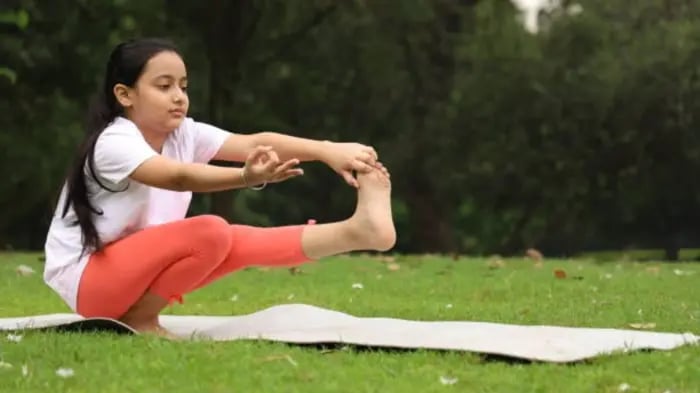
- Never skip warm-up exercises for kids, no matter how short on time you are before a practice or competition. A five-minute warm-up can prevent injuries that could take weeks to recover from fully and properly.
- The warm-up exercises for children should be performed at moderate intensity, not maximum intensity. The purpose of the warm-up is to prepare the tissues for the main activity, not to put the body through a performance test or exhaust it.
- Children should be encouraged to continue breathing throughout each warm-up activity, as holding one’s breath hinders the delivery of the oxygen muscles require to prepare for physical activity and raises intra-abdominal pressure.
- The footwear worn during warm-up exercises in children should be the same as the footwear worn during the primary activity. This is because of the biomechanical inconsistencies that occur as a consequence of the change in shoe type between the warm-up and primary activity.
- According to the American Academy of Pediatrics, kids who consistently do sport-specific warm-up routines during their training seasons have significantly lower overall injury rates and better long-term athletic progress.
Conclusion
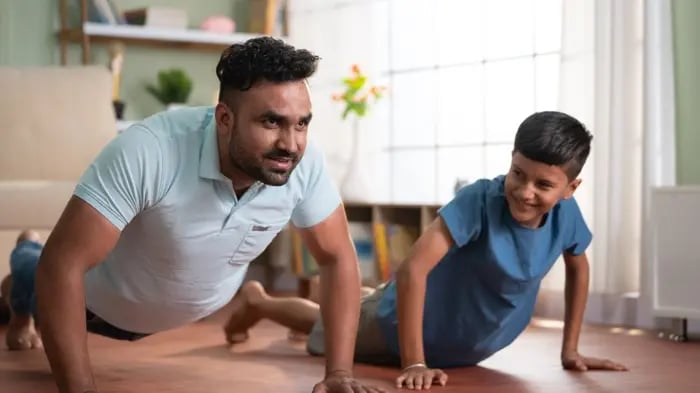
The best investment in injury prevention for children is warm-up exercises that should be done before any physical activity. If children do five minutes of dynamic warm-up exercises on a regular basis. It will protect the muscles, get the joints moving, and prepare children mentally for the sport activity they’re about to do.
Smriti is a content writer who creates clear, practical, and informative content backed by science and relevant data. With a strong understanding of structured writing, she breaks down complex topics into simple, actionable insights. Her work is focused on helping readers prepare, learn, and grow with confidence and clarity.
The views expressed are that of the expert alone.
Popular Topics