



 Parenting Guide


 Child Health & Growth


 Learning & Skills Development


 Food & Nutrition


 Bournvita





Introduction

You cannot always send children outside to play. Rain, extreme heat, cold weather, or other seasonal changes may make outdoor play difficult. During these times, fun, easy indoor games can keep kids active, engaged, and away from excessive screen time.
From creative games to movement-based activities, parents can choose indoor games for kids at home based on their child's age, interests, available space, and energy level. These activities can also encourage creativity, problem-solving, communication, and physical movement.
Fun Indoor Games for Kids to Keep Them Active
There are plenty of fun and energetic games for you to indulge your kids in, especially during times of pervasive and unpleasant weather conditions. Most of them are downright easy and sociable, not to mention the exuberance that kids show when playing them. Here is a list of some fun indoor games for kids to play at home:
Balloon volleyball
Improvisation is the key here. Instead of buying a standard volleyball, kids can blow up a balloon to play with. Create a makeshift net by hanging a cloth or bedsheet on a string or a chord. The kids can be divided into teams and scores are maintained on a blackboard to keep track of points during the play.
- Materials:Balloon, bedsheet or cloth
- Setup Time:5 minutes
- Age:4+
- Safety:Keep the play area clear of sharp or breakable objects.
Hide and seek
The fun of being able to hide in your space while someone seeks you and then finds you cannot be explained. Most importantly, children realize the joy of being hidden without caring about being found. But then, remember to demarcate areas as off-limits in your house to avoid possible accidents.
- Materials:None
- Setup Time:2 minutes
- Age:4+
- Safety:Avoid stairs, balconies, kitchens, bathrooms, and locked spaces.
Charades
What if your kids were asked to guess a word or phrase with simple hand movements? This game is a fantastic move to unite the whole family. There is fun involved with each family member vying to make correct guesses. The player must mime the word or phrase. In other words, he should neither speak nor point at an object nor make a noise. It can also be a fun indoor party game for kids to compete and win prizes.
- Materials:Paper slips with words, if needed
- Setup Time:5 minutes
- Age:5+
- Safety:Keep enough open space for children to move comfortably.
Building blocks with Legos

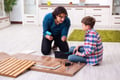
Kids love to build as much as they love to destroy. Building blocks with Legos let their imagination run wild with kids trying to create new things, be it buildings, ships, statues, or any other using them. More than just passing them, this game sparks creativity in young minds as this game allows kids to build from scratch using their imagination. One of the most mentally stimulating and active games for kids, this can just be the right choice for you.
- Materials:Building blocks or LEGO
- Setup Time:2 minutes
- Age:3+
- Safety:Keep small pieces away from younger children who may put objects in their mouths.
Fort building competition
Arouse the competitive streak in your kids by engaging them to build forts with blankets, pillows, plastic chairs, and more. Children will treat this fort-building competition as nothing short of an adventure. They will play relentlessly unless they have created a fort in sync with their ideas. Tell your kids to furnish their forts with drawings, toys, and artificial lights. They can then fill up these forts with their favorite books, cozy blankets, and pillows so that they may retreat after lunch or dinner. This is one of the most engaging and fun games to play indoors.
- Materials:Blankets, pillows, cushions, lightweight chairs
- Setup Time:5–10 minutes
- Age:4+
- Safety:Avoid unstable furniture and keep pathways, doors, and windows clear.
Keeping Your Kids Indulged
Active Indoor Games
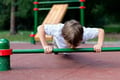
Indoor games that keep children physically busy are great for rainy days when it’s impossible to play outside. Parents can introduce simple games that involve movement such as jumping, balancing, stretching, dancing, or crawling. These can be fun physical activities, promoting coordination, flexibility, body awareness, and healthy movement habits through playful family involvement.
Creative Activity
Children can express their imagination and keep active indoors through creative activities. Creativity and self-expression can be encouraged by drawing, coloring, crafts, storytelling, building blocks, and pretend play. Parents can join in the activity from time to time or give simple prompts; children can create by themselves while developing concentration, communication, problem-solving, and imaginative thinking skills.
Learning Games
Learning-based games can help make educational activities feel less like structured study and more like play. Depending on the age of their child, parents can introduce puzzles, memory games, quizzes, word games, counting challenges, or simple experiments. These activities can stimulate curiosity, concentration, logical thinking, memory, and problem-solving and keep children busy in a positive manner.
Games for the Family
Indoor play shouldn't be an individual activity. Family games provide chances for children and parents to do together. Communication and cooperation can be encouraged through games such as board games, charades, treasure hunts, storytelling challenges, and guessing games. Having the family involved on a regular basis can also make play more fun and provide shared experiences that children look forward to.
Games for Everyday Activities
If you make the task interesting, even mundane household chores can be turned into simple games. Parents can turn tidying toys, arranging objects, folding clothes, or organizing books into playful challenges. This way, the children can be involved in the daily running of the house without it being a chore. It also teaches responsibility, self-reliance, coordination, and practical skills.
Yoga for Children
1. Pose Balance
Tadasana and Vrikshasana make balance practice for children a fun challenge. These poses help them focus on keeping their bodies steady and controlled. Parents can make this a game by having the children hold each pose while they count slowly. It also provides a fun way for children to practice coordination and body awareness.
2. Yoga Animals
Animal poses can make moving so much more exciting for younger children. Try Cat-Cow, Downward-Facing Dog or Butterfly Pose in a playful session. For extra fun, ask children to copy the way each animal moves or sounds. This kind of yoga can feel less formal and more about getting kids to move, stretch and participate.
3. Breathing practice
A few simple breathing exercises can be a calming activity that children can easily do indoors. Ask them to slow their breathing, to pretend they are smelling a flower or blowing a candle out. These fun prompts make it easier to understand and follow the breath. Children learn mindful movement in a few minutes of practice.
4. Yoga for stretching
The stretching postures can help children to feel comfortable with different types of movement. Both Child Pose and Seated Forward Bend are easy to bring up in practice. Instruct children to stretch as far as they are comfortable. The experience becomes enjoyable, not demanding, when the movements are kept slow and relaxed.
5. Mindfulness for Relaxation
Shavasana is a silent moment to end yoga for kids after their active movements. 4. Tell them to get comfortable and close their eyes and breathe slowly for a few minutes. You can also play soft sounds or guide them into simple relaxation. This makes for a calm ending that children can become familiar with slowly.
Indoor Activities by Type

Active Movement Games
Animal walks, balloon volleyball, dancing, yoga, and simple obstacle courses encourage children to move while using limited indoor space.
Art and Craft Activities
Drawing, colouring, paper crafts, origami, and simple DIY projects give children opportunities to create while practising fine motor skills.
STEM and Learning Activities
Building challenges, puzzles, sorting games, and simple science experiments combine play with age-appropriate learning and problem-solving.
Sensory Play
Playdough, rice bins, water play, and texture-matching activities provide hands-on experiences that engage children's senses.
Quiet Activities
Reading, colouring, puzzles, storytelling, and board games are useful options when children need calmer indoor play.
Indoor Activities by Age Group
Ages 3–5
Choose simple activities such as blocks, colouring, animal walks, sensory play, and easy puzzles with close supervision.
Ages 6–9
Try charades, forts, building challenges, crafts, board games, and simple STEM activities that encourage independent play.
Ages 10+
Older children can try strategy games, complex building challenges, creative projects, yoga, puzzles, and family competitions.
10-Minute No-Prep Indoor Games
Try Simon Says, freeze dance, charades, animal walks, I Spy, storytelling, shadow guessing, counting challenges, or a quick scavenger hunt using objects already available at home.
Small-Space Indoor Activities
For smaller homes, try balloon volleyball, animal walks, yoga cards, and tape-line balance. These activities need little equipment and can be adapted to the available floor space.
Indoor Activity Safety Checklist
- Keep sharp, fragile, and electrical items out of reach.
- Keep stairs, balconies, and unsafe rooms off-limits.
- Use age-appropriate toys and materials.
- Supervise younger children during play.
- Leave enough space for movement.
- Check toys for loose or broken parts.
Conclusion
The above comprehensive list of indoor games for kids may help parents keep their children engaged in more experiential learning activities. Even when the weather isn't favorable for outdoor play, these games can come in handy to keep a kid occupied and reduce screen time.
Frequently Asked Questions
What can kids do indoors without screens?

Children can try drawing, building blocks, puzzles, reading, charades, crafts, forts, and movement games without screens.
Which indoor games keep children physically active?
Balloon volleyball, animal walks, dancing, yoga, hide-and-seek, and indoor obstacle courses encourage movement.
What are easy activities with household items?
Children can build forts, create tape-line games, play charades, make paper crafts, or use cushions for simple challenges.
Her love for storytelling began with reading her grandfather’s speeches, where Tarishi saw the power of words in creating lasting memories. Combining her passions for food and writing, she has turned her life into a fulfilling path of sharing stories that celebrate flavours and how food brings communities together.
The views expressed are that of the expert alone.