


 Parenting Guide


 Child Health & Growth


 Learning & Skills Development


 Food & Nutrition


 Bournvita






Introduction
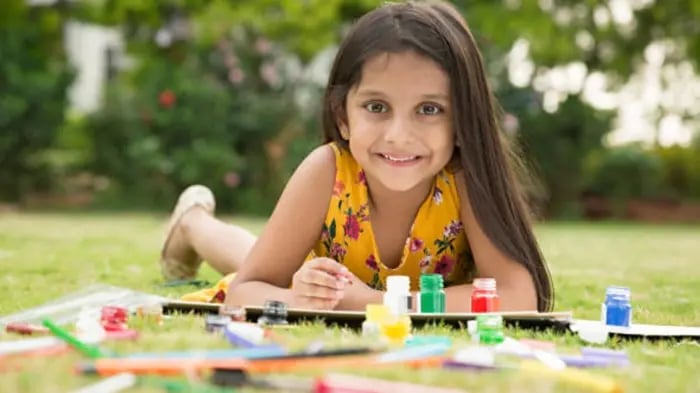
Watercolor is one of the most accessible art forms for children today. You hardly need any equipment, and you will achieve really amazing results from the first session. Parents are often hesitant to introduce painting because of the overwhelming sense of mess. But watercolor is far more eco-friendly than the acrylic or oil-based alternatives. The children are introduced to visual art in a structured way with simple landscape watercolor painting. Landscapes are particularly advantageous because they do not require the ability to draw figures accurately. All your kid needs is a horizon line, a sky, and some simple shapes. Painting landscapes, meanwhile, cultivates children’s color mixing intuition, spatial awareness, and visual patience. The process of building a scene from the background to the foreground also teaches sequential thinking, along with artistic skill. Easy landscape watercolor painting for beginners also helps to increase the ability to look at the natural world more carefully and with more purpose. According to the American Art Therapy Association, children who participate in regular visual art activities during the primary school years have measurably stronger emotional regulation, spatial reasoning, and creative self-expression.
5 Step-By-Step Easy Landscape Watercolor Painting For Beginners
1. Sunset Over the Hills
The easiest and most forgiving landscape watercolor painting for beginners is a sunset. The first step for children is to wet the entire surface of the paper with clean water. This technique prevents the formation of hard edges when adding color. They paint in yellow at the horizon and gradually shift to orange as they rise. The deep red color flows naturally to the top edge of the paper in a stunning way. Once the sky is dry, simple dark hill silhouettes are added at the bottom horizon line. This landscape painting, easy for kids, uses the wet-on-wet technique of blending warm colors. Paint moves on the wet paper independently, and this is a real surprise and delight to children. The unpredictable blooming of colors teaches children to work with the medium rather than against it. Wet-on-wet watercolor's beautiful accident quality promotes creative confidence.
2. Monsoon Village Scene
A monsoon village scene introduces the children to the concept of atmospheric grey-blue color mixing. This easy landscape watercolor painting for beginners captures the essence of rainy Indian landscapes beautifully. The overcast sky for children is made of a touch of grey mixed with ultramarine blue. They paint this mixture loosely on the upper two-thirds of the paper. Dark brown or black simple hut silhouettes make strong anchors for the lower horizon line. Rain falls through the scene in diagonal brushstrokes of diluted blue-grey in a very natural way. Children learn the use of diagonal marks to communicate movement and weather in a still image. This landscape painting is easily accessible to children and becomes a point of reference to their lived experiences of monsoons. The use of familiar subject matter considerably heightens the emotional investment in the painting process. Developing a sense of observation confidence in children who draw as they grow older.
3. Snowy Mountain Reflection
Through a snow-capped mountain and its reflection in the water, the children learn the concept of symmetry in painting. For this easy landscape watercolor painting for beginners, the snow highlights should be left on the white paper. The children paint a sky that is blue-purple on the white peaks of the mountains, and they do not touch the peak parts. The lake below the mountain is reflecting the mountain in slightly blurred reflections, which adds to the visual appeal. Horizontal strokes in the lake area show water movement; little skill is needed. In this landscape painting, the white mountains are an easy way for kids to get a grasp on negative space. What children choose not to paint is as important as what they do paint. Purple, blue, and white are mixed to give the mountains and snow the cool tones they require. By using the technique of reflection, children are introduced to the idea that paintings can have a visual logic of their own.
4. Golden Wheat Fields at Harvest
Children learn about how to mix warm ochre and yellow colors in golden harvest fields. Horizontal bands of color are used to create depth in this simple beginner's watercolor. The top third of the paper is filled with a pale blue sky. Golden yellow bands fill the middle section with broad horizontal brushstrokes across the paper. Depth contrast – The bright field below contrasts with the dark silhouettes of trees on the horizon. Horizontal lines help children learn the visual language of great open agricultural landscapes. The simple landscape painting for children also naturally teaches the compositional principle of the rule of thirds. In a composition, it is more visually pleasing to position the horizon two-thirds down the frame instead of in the center. The golden palette enables children to understand the relationships of the warm seasonal colors through hands-on mixing experiences. In addition to the art lesson, this painting can be a jumping off point for conversations about food systems and farming with parents.
5. Seashore at Dusk
A seashore at twilight is a combination of three different color zones in one composition. easy landscape watercolor painting for beginners teaches kids to handle several color transitions in series. Children start with a gradient sky that goes from orange at the horizon to pink and purple. The middle zone is a dark blue-green sea with free brush strokes of horizontal wave patterns. The foreground band below is finished with pale gold and ochre sandy-beach tones. A landscape painting simple enough for children to finish, yet it achieves natural atmospheric depth through shifts in color temperature. Cool colors tend to recede, while warm colors tend to advance toward the viewer. This painting will make kids feel really good about finishing it. It looks professionally impressive.
Painting Essentials Every Kids Should Have
| Item | Purpose | Recommended For | Where To Find |
|---|---|---|---|
| Watercolour paper 300gsm | Prevents buckling during wet-on-wet work | All projects | Art supply shops |
| Round brush size 10 | Broad washes and sky coverage | Sky areas | Art supply shops |
| Round brush size 4 | Detail work and silhouettes | Trees, buildings | Art supply shops |
| Flat brush size 12 | Horizon lines and flat washes | Fields, sea bands | Art supply shops |
| 12-colour watercolour set | Standard colour mixing | All projects | Stationery shops |
| Masking fluid | Preserving white areas like snow | Snowy mountain project | Art supply shops |
| Water containers x2 | Rinse dirty water, maintain clean water | All projects | Kitchen or craft shop |
| Palette or ceramic plate | Colour mixing surface | All projects | Kitchen or craft shop |
| Washi tape | Securing paper to board flat | All projects | Stationery shops |
| Drawing board or clipboard | Keeping paper flat during painting | All projects | Stationery or hardware shops |
Conclusion
A simple landscape watercolor painting gives children real access to the world of visual art. Every landscape project develops a particular technical skill and a confidence in creativity. Landscape painting, which is easily accessible to children, helps children develop a sense of color and spatial and sequential thinking through authentic artistic involvement. When parents do weekend painting sessions, they are giving their kids developmental benefits that outlast any one finished piece of art.
Smriti is a content writer who creates clear, practical, and informative content backed by science and relevant data. With a strong understanding of structured writing, she breaks down complex topics into simple, actionable insights. Her work is focused on helping readers prepare, learn, and grow with confidence and clarity.
The views expressed are that of the expert alone.
Popular Topics