

 Parenting Guide


 Child Health & Growth


 Learning & Skills Development


 Food & Nutrition


 Bournvita






Introduction

Many children are very fussy about waking up in the morning and brushing their teeth. Most parents are very worried about their children's habits and reluctant to brush their teeth and eat sweets regularly.
Oral hygiene is something that helps kids in a long way. Parents need to inculcate hygiene habits, especially oral hygiene habits, in children for their physical and mental betterment in the future. It might be weird to think that oral hygiene affects someone mentally, but having a great smile gives the first impression and boosts out the confidence that lifts mental well-being, making it important for children to have oral hygiene both ways, i.e., physical and mental. Keep on reading to learn more about it.
Why Is Oral Hygiene Important for Children?

Good oral hygiene helps prevent cavities, gum disease, and bad breath in children, but its benefits extend beyond the mouth. Tooth decay left untreated can lead to real pain, eating difficulties, and sleep disruption, all of which impact a child’s mood, concentration, and performance at school. Children only get one set of adult teeth for the rest of their lives, and the habits they form early on in brushing, flossing, and routine dental visits will significantly impact how well those teeth will last for decades to come.
There’s a real social and emotional component to oral health too—a child embarrassed by visible cavities or chronic bad breath may feel less confident in peer interactions, while healthy teeth and an easy smile help maintain routine social confidence. Starting regular oral hygiene routines early (rather than treating brushing as a sporadic chore) leads to healthier teeth and fewer painful, disruptive dental problems later in childhood and beyond.
Oral Care by Age
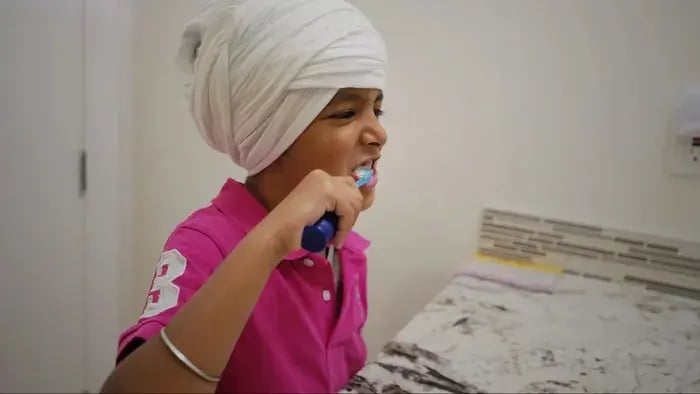
Birth – 6 months’ First tooth: After feeding, wipe an infant's gums gently with a clean, damp cloth to remove bacteria buildup, even before any teeth have appeared.
First tooth by 3 years: Start brushing twice daily as soon as the first tooth appears using a soft-bristled toothbrush that is appropriate for your child’s age and a smear of fluoride toothpaste no larger than a grain of rice.
Ages 3-6: Increase to a pea-sized amount of fluoride toothpaste, brushing twice daily. Introduce flossing once teeth touch each other, with most brushing still done by a parent.
Ages 6–8 and beyond: You’ll want to continue helping them brush until they’re around 7 or 8 years old, since kids typically don’t have the fine motor skills or reliable swallowing reflex to brush thoroughly and spit out toothpaste on their own until then.
Brushing and Flossing Steps
- Pick the right tools: Pick a toothbrush with soft bristles that is the right size for your child’s age. Use a fluoride toothpaste that is the right amount for their age group.
- Don’t use too much toothpaste: A smear the size of a rice grain for children under 3 and the size of a pea from age 3 to 6 helps limit fluoride intake while still protecting teeth.
- Brush at an angle of 45°: Angle the brush toward the gum line and use gentle circular motions to clean the outer, inner, and occlusal surfaces of all teeth.
- Brush for a full 2 minutes: The goal is two minutes, twice a day. If you have young children, use a timer or a favorite short song to keep them on task for the full two minutes.
- Floss where teeth meet: If two of your child’s teeth are touching, floss gently between them every day to remove food particles that a toothbrush can’t reach.
- Promote spitting, not rinsing: After brushing, have your child spit out the toothpaste and not rinse right away so the fluoride can continue to protect teeth a bit longer.
When to See a Dentist
The American Academy of Pediatric Dentistry recommends that children see a dentist by their first birthday, or within six months of their first tooth, whichever comes first. This early visit allows the dentist an opportunity to check for proper development, detect any early problems, and provide parents with personalized guidance on brushing technique and fluoride use.
Most children will need to have a dental check-up every six months after this first visit, although a dentist may recommend a different schedule depending on the individual needs and risk factors of the child. When a child complains of tooth pain, has visible discoloration or spots on teeth, has swollen or bleeding gums, or suffers any dental injury such as a knocked-out or chipped tooth, parents should seek prompt dental attention beyond routine visits, as some of these situations benefit from timely professional care rather than waiting for the next scheduled visit.
Conclusion
Now that parents know about the importance of dental hygiene and how oral hygiene can be taught in kids as a proper habit to maintain a white smile and good breath to avoid any awkwardness and cavities. Children should be encouraged for brush time and oral hygiene to properly maintain their teeth. Children get only one set of adult teeth, which goes on throughout their entire lifetime. Make the children understand how to care for them to have good teeth even in old age.
Frequently Asked Questions
Why is oral hygiene important for children?

Good oral hygiene benefits children by preventing cavities, gum disease, and pain and supporting comfortable eating, sleeping, and social confidence.
When should brushing begin?
You should start brushing as soon as the first tooth erupts—usually at about 6 months of age—with a smear of fluoride toothpaste.
How much toothpaste should children use?
Use a rice-grain-size smear of fluoride toothpaste for children less than 3 years of age, and a pea-sized amount for children 3 to 6 years of age.
When should a child first visit the dentist?
Your child should see the dentist for the first time by their first birthday or within six months of their first tooth erupting.
Smriti is a content writer who creates clear, practical, and informative content backed by science and relevant data. With a strong understanding of structured writing, she breaks down complex topics into simple, actionable insights. Her work is focused on helping readers prepare, learn, and grow with confidence and clarity.
The views expressed are that of the expert alone.