


 Parenting Guide


 Child Health & Growth


 Learning & Skills Development


 Food & Nutrition


 Bournvita




Introduction
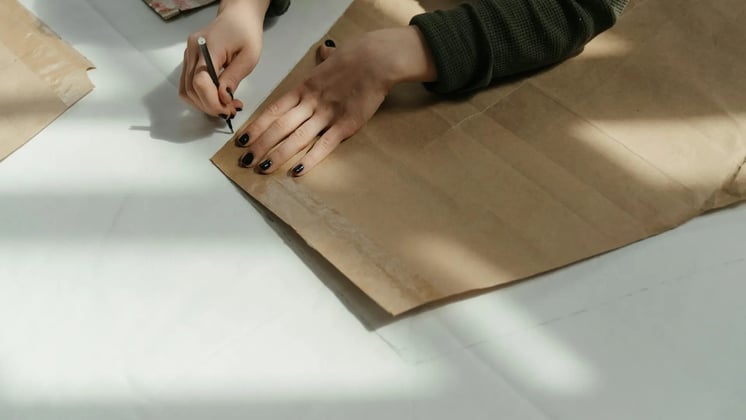
In a world full of buzzing screens and tech, allowing kids to explore possibilities and art can be a great way to teach them creativity. As per UNESCO, art can help a child express themselves, explore new ideas, and see the world through tinted sunglasses. It is a world where children are not limited by the restrictions of what is doable and what isn't.
Drawing is a form of art where kids can draw inspiration from their surroundings, creating beautiful landscapes, objects, people, and animals. It can help them spark a passion for making art and use all their brushes, sketchbooks, and other things to jump into the world of storytelling.
What Are Some Easy Drawing Techniques for Beginners?
- Line Drawing: Practise straight, curved, wavy and zigzag lines to improve pencil control.
- Shape Drawing: Use circles, squares, triangles and rectangles to create simple pictures.
- Tracing: Trace basic shapes or simple outlines to become familiar with different forms.
- Doodling: Draw random patterns, swirls, dots and small objects to explore creative ideas.
- Pattern Drawing: Repeat lines, shapes or symbols to create interesting designs.
- Basic Shading: Press the pencil lightly or firmly to create different shades and add depth.
- Connecting Shapes: Combine basic shapes to draw objects such as houses, trees, cars and animals.
Easy Drawing Techniques for Kids to Try
These easy drawing techniques for kids use simple steps to help them create pictures and practise new skills. Children can begin with familiar objects and gradually experiment with more detailed drawings.
Drawing with Basic Shapes
How to try it:
- Choose an object, such as a house, cat or car.
- Break it into basic shapes, such as circles, rectangles and triangles.
- Draw the shapes lightly with a pencil.
- Add small details, then erase any unnecessary lines.
Doodle Drawing
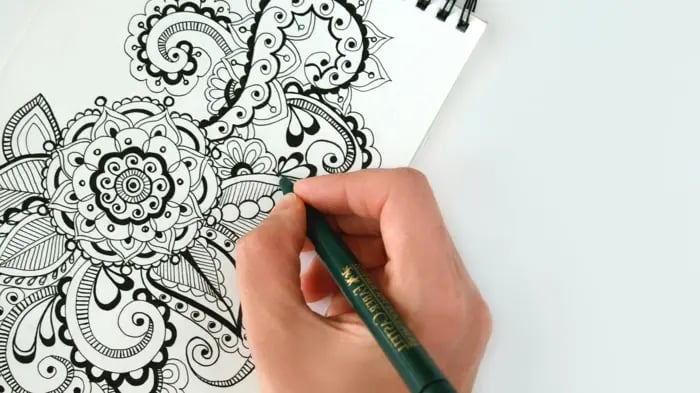
How to try it:
- Start with a blank sheet of paper.
- Draw small shapes, swirls, stars, hearts or flowers.
- Connect some of the shapes to create a larger design.
- Add colors or patterns to make the doodle more interesting.
Drawing with Dots and Lines
How to try it:
- Make a few dots across the page.
- Connect the dots using straight or curved lines.
- Add more lines to create a picture or abstract pattern.
- Color the finished design if desired.
Symmetrical Drawing
How to try it:
- Draw a light vertical line down the middle of the paper.
- Draw half of a butterfly, flower or simple face on one side.
- Repeat similar shapes on the other side.
- Add details and colors to complete the picture.
Pattern Drawing
How to try it:
- Choose a few simple shapes, such as circles, triangles or squares.
- Repeat them in a row or across the page.
- Change their sizes or directions to create variety.
- Color alternate shapes to make the pattern stand out.
Different Drawing Techniques for Kids to Explore
Drawing is not just about outlining and then filling the outline with colors. It's more than that and can be done in various ways. Here are some of the top drawing techniques that one can explore.
Tracing Adventure
Tracing is a very easy technique and can be super fun for kids who are not yet comfortable with shapes and outlines. There is no pressure to draw everything from scratch and perfect it. It can also help build a child's confidence and help them understand how shapes can come together. One simple way to trace objects is by picking them up from one's surroundings. One can gather interesting shapes such as bangles, kitchen tools, cardboard boxes, building blocks, and other items that a child may trace. Hand tracing or foot tracing can be another classic activity. One can also try shading inside the traced objects.
Directed Drawing Fun
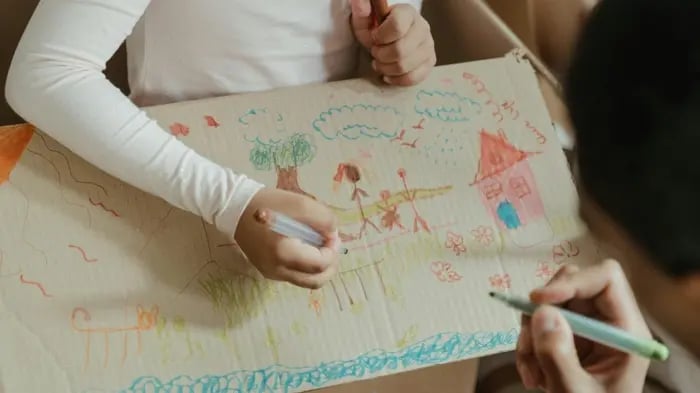
Directed drawing is a step-by-step guide towards creating a picture. It is like an in-depth tutorial where one person shows another a simplified version of drawing a complicated picture. The child has to follow every step to reach the event output. It generally starts with the basic shapes, such as an oval, a circle, or a triangle. Then, other smaller shapes are added to this larger shape, and minute features are incorporated to enhance the overall look.
Doodle Discoveries
Doodling is another interesting form of drawing in which one can make whatever comes to their mind without a specific plan. It's about letting one's imagination flow and creating whatever shapes and lines one feels like. It's a great way of sparking creativity and improving fine motor skills. The best part is that there are no rules when it comes to doodling, which makes it perfect for kids who get a bit nervous while drawing. The other cool thing about doodling is that it can often lead to a lot of surprises and discoveries about one's talent.
Contour Lines Magic
Another cool technique of drawing is contour drawing. It is all about the outline and edges of something. Instead of worrying too much about the details inside, one can just focus on renting the shape of the outside. It is a great way for kids to improve their observation and is also very fun. In a continuous line drawing, a child outlines without lifting their pen or pencil. This can help them see the flow of the curves in the object. Blind contour drawing is an even bigger challenge, as one has to look at the object and not the paper on which they are drawing. One can take simple things such as a piece of fruit, a toy, or even one's hand.
Shape-Based Wonder
This is one of the easiest and most effective ways to teach kids how to draw by using simple shapes as a starting point. Different shapes like circles, triangles, ovals, and rectangles can be put together to create various objects and characters. This helps simplify the overall process of drawing and makes it less intimidating. The best part is that kids can also learn more about shapes and how the larger world is composed of small shapes. Parents can try this with their child, and once the child gets good at it, they can be taught other types of drawing.
Basic Drawing Materials Kids May Need
- Drawing paper or sketchbook: Provides a clean surface for practising lines, shapes and pictures.
- Pencils: HB pencils are useful for outlines and everyday drawing practice.
- Eraser: Helps children correct mistakes and refine their drawings.
- Pencil sharpener: Keeps pencils ready for drawing fine lines and details.
- Color pencils: Allow children to add colors without needing paint or water.
- Crayons: Work well for bold colors and simple illustrations, especially for younger children.
- Sketch pens or markers: Help children outline shapes and add details to finished pictures.
- Ruler: Useful for drawing straight lines and practising geometric shapes.
- Stencils: Provide outlines of shapes, letters and other simple designs for beginners.
Tips to Help Kids Improve Their Drawing Skills
- Start with simple subjects: Encourage children to draw familiar objects, such as fruits, toys, flowers and pets, before trying complicated pictures.
- Practice a little every day: Set aside 10–15 minutes for drawing, allowing children to work at their own pace.
- Encourage experimentation: Let children try different lines, shapes, colors and patterns without worrying about mistakes.
- Use step-by-step tutorials: Break a drawing into smaller steps so children can focus on one part at a time.
- Draw together: Join your child in drawing activities to make practice more engaging and encourage shared creativity.
- Praise effort, not perfection: Appreciate their ideas and progress instead of comparing their drawings with others.
- Keep their artwork: Save drawings in a folder or sketchbook so children can see how their skills develop over time.
- Explore different subjects: Introduce animals, landscapes, cartoons, people and everyday objects to help children discover what they enjoy drawing.
Conclusion
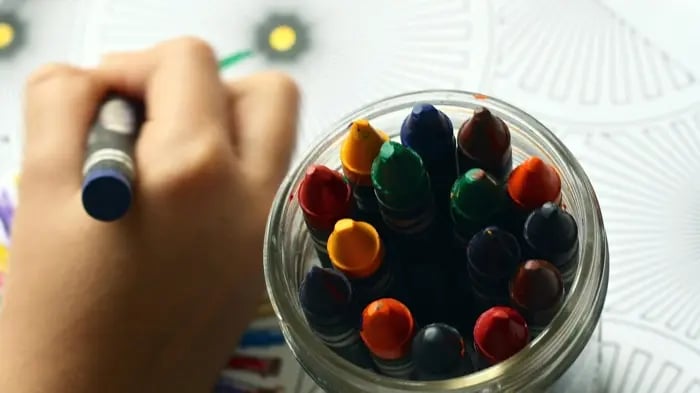
These are some of the drawing techniques that parents may use to teach their kids the art of drawing. However, it's important to take care that the child is given a specific drawing space where they can concentrate. Besides this, the right kind of stationery, such as pencils, crayons, markers, and coloured pencils, is required. One can focus on the fun of drawing and not just the finished product. It is also important to give kids constructive criticism and encouragement during the learning process. If possible, parents can also enrol their kids in a professional art class to help them get the needed guidance.
Frequently Asked Questions
What are the easiest drawing techniques for beginners?

Basic shapes, line drawing, doodling, simple patterns and tracing are beginner-friendly techniques that help children practise pencil control and develop confidence.
How can kids learn to draw step by step?
Children can start with basic shapes, add outlines and details, then colour their pictures. Regular practice helps them improve gradually.
What materials do children need to start drawing?
Children can begin with drawing paper, pencils, an eraser, a sharpener and colour pencils. Additional supplies are optional for beginners.
How often should children practise drawing?
Children can practise drawing for 10–15 minutes daily or several times weekly, depending on their interests, attention span and schedule.
How can parents help children improve their drawing skills?
Parents can provide simple materials, demonstrate techniques, encourage experimentation and praise effort while allowing children to develop their own creative styles.
Her love for storytelling began with reading her grandfather’s speeches, where Tarishi saw the power of words in creating lasting memories. Combining her passions for food and writing, she has turned her life into a fulfilling path of sharing stories that celebrate flavours and how food brings communities together.
The views expressed are that of the expert alone.