




 Parenting Guide


 Child Health & Growth


 Learning & Skills Development


 Food & Nutrition


 Bournvita





Introduction

Helping kids learn doesn't have to be about textbooks or structured lessons. In fact, some of the most valuable learning happens when children are genuinely enjoying themselves. That's where creative and educational activities come in—where playtime and learning become one and the same.
When kids are engaged in hands-on projects like drawing, crafting, building, or experimenting-they're not just passing the time. They're developing skills that will last a lifetime. You see fine motor control in cutting and coloring, problem-solving through puzzles and games, and communication through storytelling and role-play. Those are the building blocks of lifelong learning.
As a parent or caregiver, offering fun learning opportunities at home gives your child the chance to build confidence, creativity, and a love for knowledge. And you get to bond with them and really understand what they love.
Why Creative and Educational Activities for Kids

Love Learning
When kids learn through play, they enjoy the process. Creative activities make learning not stressful, but fun, and help kids develop a natural curiosity and positive attitude towards education.
Critical Thinking and Problem Solving
Puzzles, building blocks, and simple experiments teach kids to think, explore, and find solutions. These skills are not just important in school but in life too.
Emotional Expression
Through drawing, storytelling, or role play, kids can express themselves in a safe and creative way. This helps build emotional awareness and self-confidence.
Fine Motor and Coordination
Hands-on activities like painting, cutting, or crafting help kids develop hand-eye coordination and fine motor skills, which are important for writing and other daily tasks.
Communication and Social Skills
Group activities encourage kids to work together, share ideas, listen, and communicate. These interactions build teamwork and help them to express themselves clearly.
Focus and Patience
Completing a creative project teaches kids to focus on one task, follow steps, and see a job through to the end – skills that support academic success.
7 Creative and Educational Activities To Do With Kids
DIY Science Experiments
Kids are scientists at heart; they love to ask questions and investigate. Simple experiments like making a volcano with baking soda and vinegar, growing a bean in a jar, or creating a rainbow with water and sunlight will spark curiosity and teach basic science concepts. These hands-on activities improve observation skills, introduce cause and effect, and make learning about nature and chemistry fun. You don’t need fancy equipment, just everyday items and a sense of adventure.
Safety Note: Use child-safe quantities; adults should handle experiments involving heat, glass, or strong reactions.
Story Building and Puppet Shows
Get your child to create their own stories and bring them to life through puppet shows or homemade books. They can use socks, paper bags, or craft materials to make their characters. This activity develops imagination, language skills, sentence formation, and vocabulary. Performing the story also builds confidence and helps children express emotions in a fun way.
Safety Note: Choose large, secure craft pieces and supervise younger children around small accessories.
Art and Craft Projects

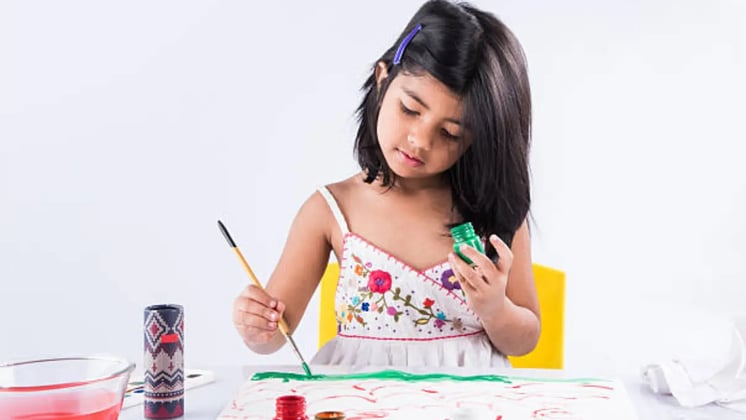
Art isn’t just about drawing; it’s a way for kids to express themselves. From collages and paper crafts to painting or sculpting with clay, art develops fine motor skills, patience, and planning. It also encourages problem-solving when they figure out how to turn an idea into a finished product. Let your child choose the materials and theme; it boosts their independence and sense of achievement.
Safety Note: Use washable, non-toxic supplies and provide age-appropriate scissors.
Educational Board Games and Puzzles
Board games like word scrambles, memory games, or basic math games make learning fun and interactive. Puzzles, whether picture-based or logical, teach patience, concentration, and visual-spatial awareness. These games also promote healthy competition, teamwork, and critical thinking. When played together, they become a fun bonding activity that’s pressure-free learning.
Safety Note: Check pieces for choking risks, particularly with younger children.
Nature Walks and Observation Journals
Take learning outside with a simple nature walk. Have your child collect leaves, observe insects, or look for patterns in the environment. At home, have them create an observation journal where they draw what they saw, write notes, or ask questions about the natural world. This activity builds curiosity, attention to detail,l and writing skills and connects them to nature.
Safety Note: Avoid touching unknown plants, insects, or potentially contaminated objects.
Cooking and Baking Together
Get your child involved in age-appropriate cooking or baking tasks. Measuring ingredients, mixing, and following simple recipes will improve their math, reading,g and sequencing skills. It’s also a chance to teach them about nutrition and kitchen safety. Plus, cooking together is great for communication and teamwork – and they get to eat what they helped make!
Safety Note: Adults should handle ovens, hot pans, and sharp knives; check ingredients for allergies.
Building and Construction Play
Use building blocks, LEGOs, or recyclable materials and have your child design and build their own creations. Whether it’s a tower, a bridge, or a mini city, these activities encourage engineering thinking, creativity, and problem-solving. They also improve hand-eye coordination and require planning and decision-making. Give your child challenges like “build something that can hold a book” to make it even more fun.
Safety Note: Avoid unstable structures and small pieces for children who may put objects in their mouths.
How to Choose a Creative Activity
The most suitable creative activities for kids are age-appropriate, fun, and easy to implement. Choose activities in accordance with the interests of the child, offer choice, and use common materials.
A simple activity checklist
- Age: Adjust instructions and materials to the child’s developmental stage.
- Interest: Follow what your child naturally enjoys exploring.
- Time: Pick quick projects for busy days and longer ones for weekends.
- Materials: Use easily available, child-safe household or craft supplies.
- Supervision: Stay nearby when activities involve heat, cutting tools, or small parts.
- Sensory needs: Offer alternatives for children who dislike messy textures, strong smells,s or loud sounds.
Creative Activities by Age Group
| Age group | Suitable activities | Simple adaptation |
|---|---|---|
| Preschool | Painting, sensory crafts, simple building | Use larger materials and short instructions |
| Ages 6-8 | Science experiments, puzzles, cooking, puppet shows | Add simple challenges and step-by-step tasks |
| Ages 9-12 | Journals, construction projects, experiments, baking | Let children plan, measure, and modify projects |
| Mixed ages | Storytelling, nature walks, building | Give each child a role suited to their age |
Activity Comparison Table
| Activity | Objective | Materials | Setup | Duration | Mess | Supervision |
|---|---|---|---|---|---|---|
| Science experiment | Explore cause and effect | Baking soda, vinegar | Low | 15-30 min | Medium | Adult nearby |
| Puppet show | Practise storytelling | Socks, paper, craft items | Low | 20-40 min | Low | Minimal |
| Art and craft | Explore creative choices | Paper, colors, glue | Low | 20-45 min | Medium | Cutting support |
| Board games | Practice rules and problem-solving | Game or puzzle | Very low | 15-30 min | Low | Minimal |
| Nature journal | Observe and record | Notebook, pencils | Low | 30-60 min | Low | Outdoor guidance |
| Cooking | Practice measuring and sequencing | Ingredients, utensils | Medium | 30-60 min | Medium | Required |
| Building play | Plan and construct | Blocks or recyclables | Low | 20-60 min | Low | Small-part awareness |
How to Extend the Learning
Once the activity is completed, ask simple questions like "What have you noticed?" "What would you change?" or "How did you do that?"Let the children draw the results, describe the process, vary the activity, or create something new. Don't narrow the discussion to one right answer only.
Frequently Asked Questions
What are creative ideas for kids at home?

The following creative activities for kids at home can be considered: painting, putting on a show, science experiments, baking, block building, puzzles, and nature journaling. Choose the ones based on age, interest, material availability, and supervision requirements.
Which activities combine fun and learning?
Science experiments, cooking, board games, storytelling, building, and observing nature can be both fun and provide the opportunity to practice such skills as measuring, sequencing, communication, observation, and problem-solving.
What creative activities suit different ages?
Younger children can paint, experiment with sensory crafts, and build. Children aged 6-8 years can try puzzles and experiments. Older children can bake, construct things, and complete their creative tasks independently.
How can parents encourage creativity without directing the outcome?
Provide materials and a simple suggestion to start. Then let kids make their decisions. Ask questions regarding the children's decisions but not the results, to leave the activity to be child-led.
Deepali is a senior food and wellness writer with over a decade of experience in top media houses, crafting engaging narratives. She is a professional home baker and loves exploring food from every corner of the world to reading cookbooks. She believes a healthy lifestyle is a combination of both mental and physical fitness. Her goal always remains to keep moving, eating seasonal and practicing gratitude.
The views expressed are that of the expert alone.