




 Parenting Guide


 Child Health & Growth


 Learning & Skills Development


 Food & Nutrition


 Bournvita


Frequently Asked Questions
Academics
Back to FaqsHelp your child follow a timetable by creating a realistic schedule, setting achievable goals, using visual planners, maintaining consistent routines, offering positive reinforcement, and allowing short breaks to keep them motivated and engaged.
Support your child by identifying learning gaps, breaking lessons into smaller steps, practising regularly, using interactive learning methods, encouraging questions, and celebrating progress. Seek additional help from teachers or tutors when necessary.
Improve reading comprehension by reading together daily, asking open-ended questions, discussing stories, teaching new vocabulary, encouraging summarising, and choosing age-appropriate books that match your child's interests and reading ability.
Develop creative writing skills by encouraging daily writing, storytelling, journalling, reading different genres, expanding vocabulary, using writing prompts, and providing constructive feedback that builds confidence, imagination, and effective expression.
Students can improve reading comprehension through regular reading, highlighting key ideas, summarising passages, asking questions, learning new vocabulary, discussing texts, and practising comprehension exercises consistently to strengthen understanding and critical thinking.
Easy maths riddles involving numbers, shapes, patterns, addition, subtraction, and logical thinking make learning enjoyable. They improve problem-solving skills, critical thinking, mathematical reasoning, and classroom engagement through fun activities.
Choose simple, age-appropriate science projects using safe household materials. Encourage children to ask questions, make predictions, observe results, and explain their findings to develop curiosity, scientific thinking, and problem-solving skills.
Innovative school projects include rainwater harvesting models, solar-powered devices, recycling crafts, kitchen gardens, weather stations, robotics, simple coding projects, and environmental awareness campaigns that encourage creativity and practical learning.
Encourage brainstorming, explore your child's interests, discuss real-world problems, research together, visit libraries or museums, and allow creative freedom. Guiding rather than completing the project builds confidence and independent thinking.
General knowledge activities include quizzes, current affairs discussions, educational board games, newspaper reading, science experiments, geography challenges, history timelines, and educational apps that improve awareness, curiosity, and critical thinking skills.
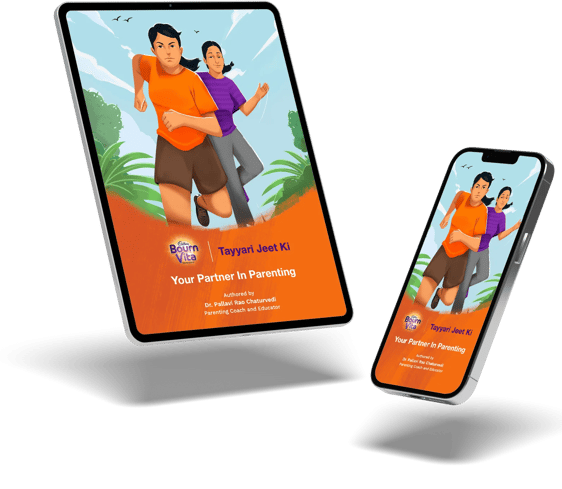
Free parenting e-book authored by parenting coach, Dr Pallavi Rao Chaturvedi
We know that searching for answers everywhere can be tough on parents. Here’s a hand-book to equip you with information you need to get your kids ready for a bright future!
Download Parenting E Book