




 Parenting Guide


 Child Health & Growth


 Learning & Skills Development


 Food & Nutrition


 Bournvita


Frequently Asked Questions
Technology & Digital Skills
Back to FaqsChildren's screen time guidelines suggest toddlers should have less than an hour of screen time, young children should have one to two hours and older children should have about two hours per day.
Experts recommend varying screen time allowances by age, from minimal to no exposure for toddlers to progressively higher limits for older children, all in conjunction with exercise, sufficient sleep, and offline engagement.
This means that for adolescents this corresponds to around two hours per day of recreational screen time, additionally taking into account any further use for school purposes and a clear and consistent prioritization of sufficient sleep.
Kids should not share personal information, check sources before believing content, use privacy settings, not interact with strangers online, and tell parents immediately if they see anything uncomfortable or suspicious online.
Too much screen time can overstimulate the brain and make it much more difficult for growing and developing children to focus on offline tasks for extended periods of time.
Long-term effects of too much screen exposure are eye strain, bad posture, interrupted sleep, less physical activity, and potential effects on social skills, emotional regulation, and total academic concentration.
Students should learn basic technology skills such as word processing, online research, online safety, responsible digital communication, and how to use educational tools to enhance learning inside and outside the classroom.
Online learning has the advantages of flexibility, an individualized pace, and access to a variety of resources and interactive tools that could reinforce understanding. But it is most effective when it is well balanced with offline physical activity.
Some important social media safety tips includes – protecting personal information, recognizing manipulation tactics, avoiding strangers, reporting inappropriate content, and maintaining open and honest communication with parents about online experiences and any concerns.
The best educational games mix fun gameplay with clear learning objectives that include topics such as math, language, and logical reasoning, allowing kids to develop their academic skills while participating in interactive screen-based activities safely and responsibly.
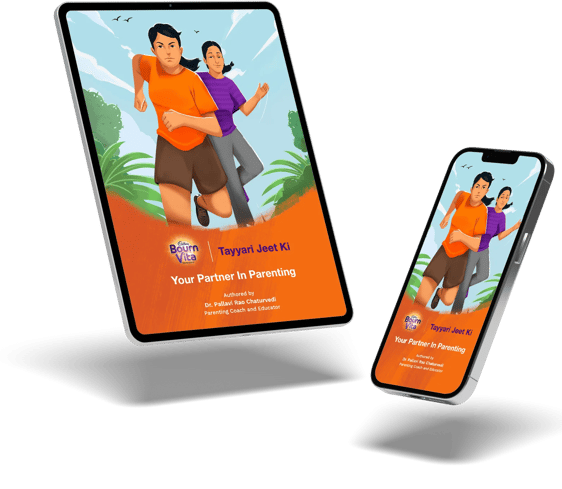
Free parenting e-book authored by parenting coach, Dr Pallavi Rao Chaturvedi
We know that searching for answers everywhere can be tough on parents. Here’s a hand-book to equip you with information you need to get your kids ready for a bright future!
Download Parenting E Book