




 Parenting Guide


 Child Health & Growth


 Learning & Skills Development


 Food & Nutrition


 Bournvita


Frequently Asked Questions
Creative & Expressive Skills
Back to FaqsCreative expression skills are a child's natural ability to express thoughts, emotions, and ideas through art, music, writing, dance, or drama. They promote imagination as well as steady emotional and cognitive development.
Simple activities like finger painting, paper collage, clay modeling, DIY greeting cards, and recycled craft projects using household items need minimum materials and ignite imagination and hands-on learning at home.
Yes, active music engagement activates multiple regions of the brain at the same time, which strengthens children's memory, pattern recognition, and concentration. It also consistently promotes emotional expression and improved academic focus over time.
Creative skills help children process emotion healthily and boost their confidence and problem-solving skills, as well as help them to focus, communicate, and perform better in school through thinking creatively, self-expression, and regular reflection.
Encourage your child to read widely, journal daily, and use imaginative prompts to improve their creative writing skills. Discuss stories together and let them express ideas freely without early emphasis on grammar, spelling, or strict perfection.
Typically, children can manage three to five hours per week of creative activities, along with academic work and play, giving them sufficient opportunity for exploration while not overburdening their entire daily routine.
By developing their creative and expressive skills, children gain confidence, learn to process their feelings in healthy ways, think independently, and communicate effectively. These skills also lay the groundwork for their overall development and long-term success in school.
Support creativity by giving open-ended materials, imaginative questions, flexible instructions, and praise for effort instead of perfection. Allow plenty of unstructured time in each day for children to explore ideas freely, curiously, and independently.
Creative skills help children to regulate their emotions, to have more confidence, to solve problems, and to communicate. They also help children to be flexible in their thinking, which helps them to learn academically.
Creative skills in early childhood include imaginative play, storytelling, drawing, singing, and building activities, which allow toddlers to explore new ideas, express emotions, and progressively develop cognitive and fine motor skills.
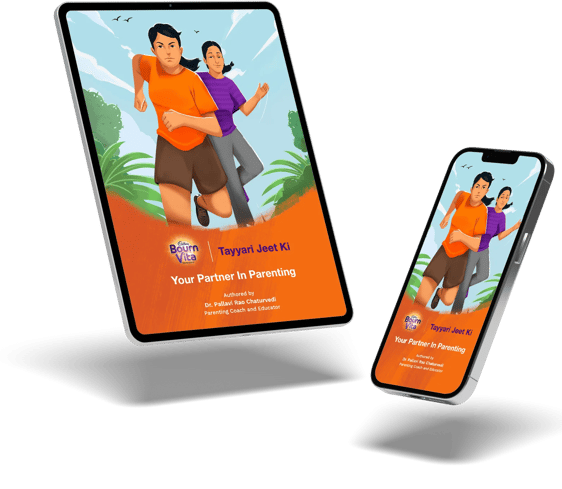
Free parenting e-book authored by parenting coach, Dr Pallavi Rao Chaturvedi
We know that searching for answers everywhere can be tough on parents. Here’s a hand-book to equip you with information you need to get your kids ready for a bright future!
Download Parenting E Book